


Winemaker Notes
To create this Édition of Krug Grande Cuvée, the Cellar Master looked to accentuate the year’s elegantly diverse aromatic expressions with different plots’ reserve wines from 10 other years, giving it a unique fullness of flavours and aromas, impossible to express with the wines of a single year. The careful attention given to the vines and Krug’s unique respect for the individual character of each plot and its wine enabled the depth of expression of this Édition of Krug Grande Cuvée. It is the full orchestra, playing together the symphony of Champagne.
In all, reserve wines from the House’s extensive library made up 42% of the final blend, bringing the breadth and roundness so essential to each Édition of Krug Grande Cuvée.
The final composition of this Édition of Krug Grande Cuvée is 44% Pinot Noir, 36% Chardonnay and 20% Meunier.
Professional Ratings
-
James Suckling
The tightness and tension of this is impressive considering the youngest wine from this is 2015 (hot and dry year), with some wines going back to 2000. Ginger and orange zest. Some creme brulee. It's medium-bodied with apple, pie crust and floral character. It's salty and zesty yet, at the same time, complex and gorgeous. Chamomile and other floral teas highlight everything. Turns rich and flavorful at the finish. Terrific release. Really takes off at the end. Drink or hold.
-
Tasting Panel
A blend of 131 wines from 12 different vintages - the youngest being 2015, the oldest 2000 - this extraordinary beauty consists of 45% Pinot Noir, 37% Chardonnay, and 18% Meunier. With all the easeful poise and underlying complexity of a Slim Aarons composition, it abounds in aromas of white flowers intertwined with brioche; preserved lemon and makrut lime; nuts (almond, pistachio); pie spice including cinnamon and ginger; and a smoky, almost salumi-like dash of cracked white pepper plus a whiff of earth. The entry is so cashmere-smooth and the finish so long that the palate seems - like its super-fine mousse - near-endless as it offers up grilled lemon, cream-splashed yellow plum, lime curd-topped biscuit, and a lithe throughline of salinity. It's the epitome of finesse.
-
Wine Enthusiast
Deliciously balanced, this Champagne is impressive. The iconic wine is in its 171st blend, meaning it combines vintages for the best result for each bottling, not a specific vintage. The 171st essence is dry, while also having fine textured fruit. This is a magnificent wine and worth aging for another year.
-
Wine Spectator
A vivid Champagne, with chiseled acidity and a fine, vivacious mousse creating a buoyant frame for layered flavors of crushed black raspberry, grilled nuts, pink grapefruit sorbet and coffee liqueur, plus fragrant accents of ground ginger and anise, graphite and lime blossoms. Long and expressive on the finish, crackling with a lingering fleur de sel note. Pinot Noir, Chardonnay and Meunier.
-
Decanter
Two years on from its disgorgement, this 2015-based edition has settled beautifully, showing all the sunniness of the base year with its mandarin and apricot plushness, surprisingly smooth and silky up front before settling into its broad, inviting range of praline, cappuccino and bitter almond aromatics and subtle fruit skin chewiness. It's a punchy, fulsome edition thanks to the base year's intensity, but it has been beautifully tamed into a characteristically suave and multilayered Grande Cuvée. A blend of 131 wines, with reserves back to the year 2000.
-
Vinous
The NV Grande Cuvée 171ème Édition, based on the 2015 vintage, is every bit as impressive as it was the last time I tasted it. Creamy, layered and resonant, the 171 is seriously impressive. The style is one that favors tension over volume. Lemon peel, white flowers and white pepper open first. Hints of marzipan, tangerine peel and spice add an exotic flair to this mid-weight, understated Grand Cuvée. Floral notes and bright acids perk up the finish. The 171 is wonderfully fresh and vibrant from start to finish. The blend is 45% Pinot Noir, 37% Chardonnay and 18% Meunier, vintages 2015 through 2000.
-
Jeb Dunnuck
Spanning from 1998 through the 2015 vintage, the NV Champagne Grande Cuvee 171 is lush with a kaleidoscope of aromas including orange marmalade, toasted brioche, almond, and ripe peaches. Full-bodied and rounded, it has a hint of warmth on the finish, but it’s highly attractive, balanced, and long, with outstanding depth and richness. This fantastic expression of the Grand Cuvee is gorgeous right out of the gate and will be a great addition for collectors to enjoy over the coming two decades.
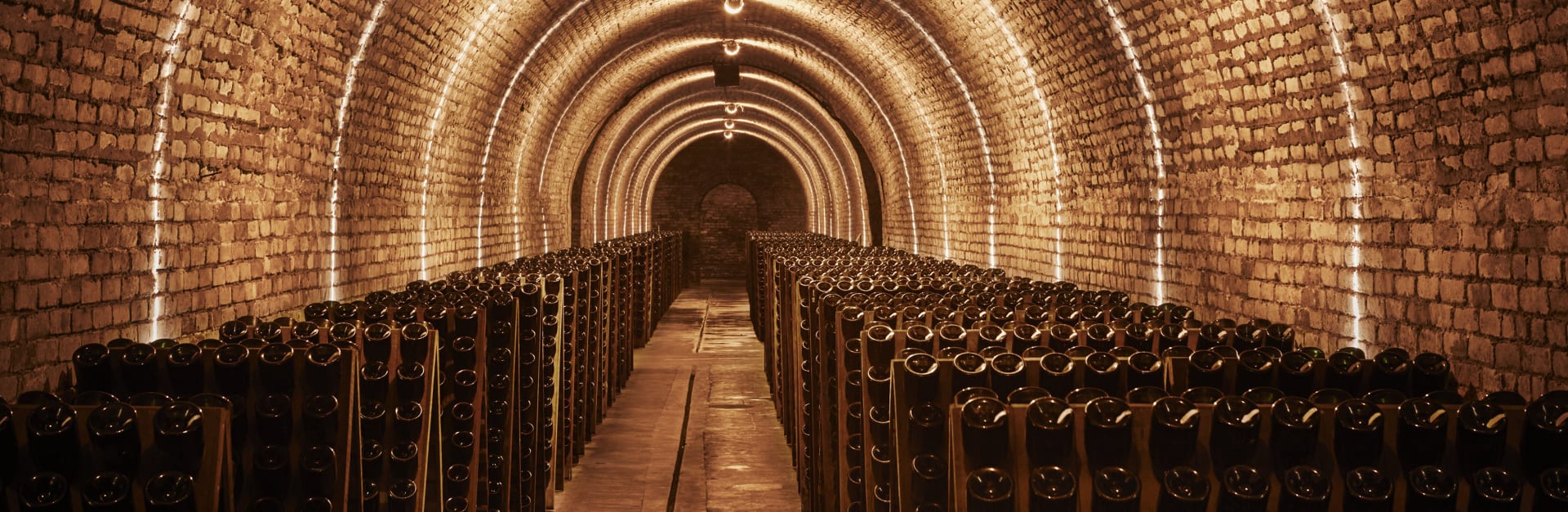




Krug has always lived up to its reputation as the first and only Champagne House to create exclusively prestige Champagnes every year since its foundation.
The House was established in Reims in 1843, by Joseph Krug, a visionary non-conformist with an uncompromising philosophy. Having understood that the true essence of Champagne is pleasure itself, his dream was to craft the very best Champagne he could offer, every single year, regardless of annual variations in climate. Paying close attention to the vineyard’s character, respecting the individuality of each plot and its wine, as well as building an extensive library of reserve wines from many different years allowed Joseph Krug to fulfil his dream.
With a very original approach to Champagne making, he decided to go beyond the notion of vintage to create the most generous expression of Champagne, every year. Thus, he founded a House in which all Champagnes are of the same level of distinction.
Six generations of the Krug family have perpetuated this dream, enriching the founder’s vision and savoir faire.
Further elaborating on the notion of individuality, for Krug’s Cellar Master Julie Cavil, each plot of grapes, through its wine, is like a single ingredient to a chef: carefully selected, and critical to the final composition. Each year, Krug honors this philosophy by inviting chefs from around the world to interpret a single ingredient, crafting unexpected recipes to pair with a glass of Krug Grande Cuvée or Krug Rosé. This year’s ingredient is the Onion.
The unspoken onion is a key component of almost every fundamental recipe from stocks, sauces and stews to baked goods and roasts. Its multifaceted expressions beautifully marry both the fullness of flavors and aromas of Krug Grande Cuvée the elegance and boldness of Krug Rose.

A term typically reserved for Champagne and Sparkling Wines, non-vintage or simply “NV” on a label indicates a blend of finished wines from different vintages (years of harvest). To make non-vintage Champagne, typically the current year’s harvest (in other words, the current vintage) forms the base of the blend. Finished wines from previous years, called “vins de reserve” are blended in at approximately 10-50% of the total volume in order to achieve the flavor, complexity, body and acidity for the desired house style. A tiny proportion of Champagnes are made from a single vintage.
There are also some very large production still wines that may not claim one particular vintage. This would be at the discretion of the winemaker’s goals for character of the final wine.

Associated with luxury, celebration, and romance, the region, Champagne, is home to the world’s most prized sparkling wine. In order to bear the label, ‘Champagne’, a sparkling wine must originate from this northeastern region of France—called Champagne—and adhere to strict quality standards. Made up of the three towns Reims, Épernay, and Aÿ, it was here that the traditional method of sparkling wine production was both invented and perfected, birthing a winemaking technique as well as a flavor profile that is now emulated worldwide.
Well-drained, limestone and chalky soil defines much of the region, which lend a mineral component to its wines. Champagne’s cold, continental climate promotes ample acidity in its grapes but weather differences from year to year can create significant variation between vintages. While vintage Champagnes are produced in exceptional years, non-vintage cuvées are produced annually from a blend of several years in order to produce Champagnes that maintain a consistent house style.
With nearly negligible exceptions, . These can be blended together or bottled as individual varietal Champagnes, depending on the final style of wine desired. Chardonnay, the only white variety, contributes freshness, elegance, lively acidity and notes of citrus, orchard fruit and white flowers. Pinot Noir and its relative Pinot Meunier, provide the backbone to many blends, adding structure, body and supple red fruit flavors. Wines with a large proportion of Pinot Meunier will be ready to drink earlier, while Pinot Noir contributes to longevity. Whether it is white or rosé, most Champagne is made from a blend of red and white grapes—and uniquely, rosé is often produce by blending together red and white wine. A Champagne made exclusively from Chardonnay will be labeled as ‘blanc de blancs,’ while ones comprised of only red grapes are called ‘blanc de noirs.’