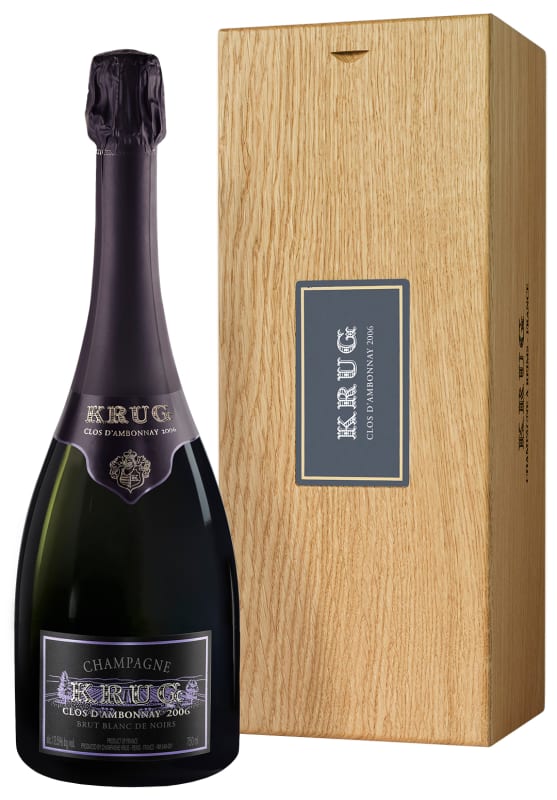


Winemaker Notes
At first sight, a bright and luminous golden color. On the nose, aromas of candy apple, liqueur and hazelnut powder give way to generous bitter orange and dates with beautiful expression, impeccably balanced. On the palate, an enticing structure reveals concentrated notes of almond powder, toasted flavors, praline, lemon zest and beautiful bitters, with an airy yet round expression. An inviting finish on redcurrant calls for another sip.
Krug Clos d'Ambonnay 2006 may be enjoyed with flavorsome meat recipes such as filet mignon of veal in a cranberry emulsion or osso bucco with lemon. It will also pair nicely with recipes from the ocean, including turbot or wild seabass with fennel, a simple seafood platter, grilled calamari or octopus, or mussels marinière style. Hearty vegetable preparations like mushrooms with onion stuffing and onion rings with barbecue sauce will also enhance the tasting experience of this elegant Champagne.
Blend: 100% Pinot Noir
Professional Ratings
-
Vinous
Krug’s 2006 Clos d’Ambonnay is superb. It offers a beguiling interplay of richness from the warm, solar year and strong mineral underpinnings that wrap it all together. Hints of apricot, plum, baked apple tart and spice soar out of the glass. Soft, curvy and exceptionally well-balanced, the 2006 is the most sensual young Clos d’Ambonnay I have tasted. This is a magnificent showing from Krug. That’s pretty much all there is to it. Best of all, the 2006 is a rare Clos d’Ambonnay that can be enjoyed upon release. Harvest took place over two days and wrapped up on September 22, considered late at the time.
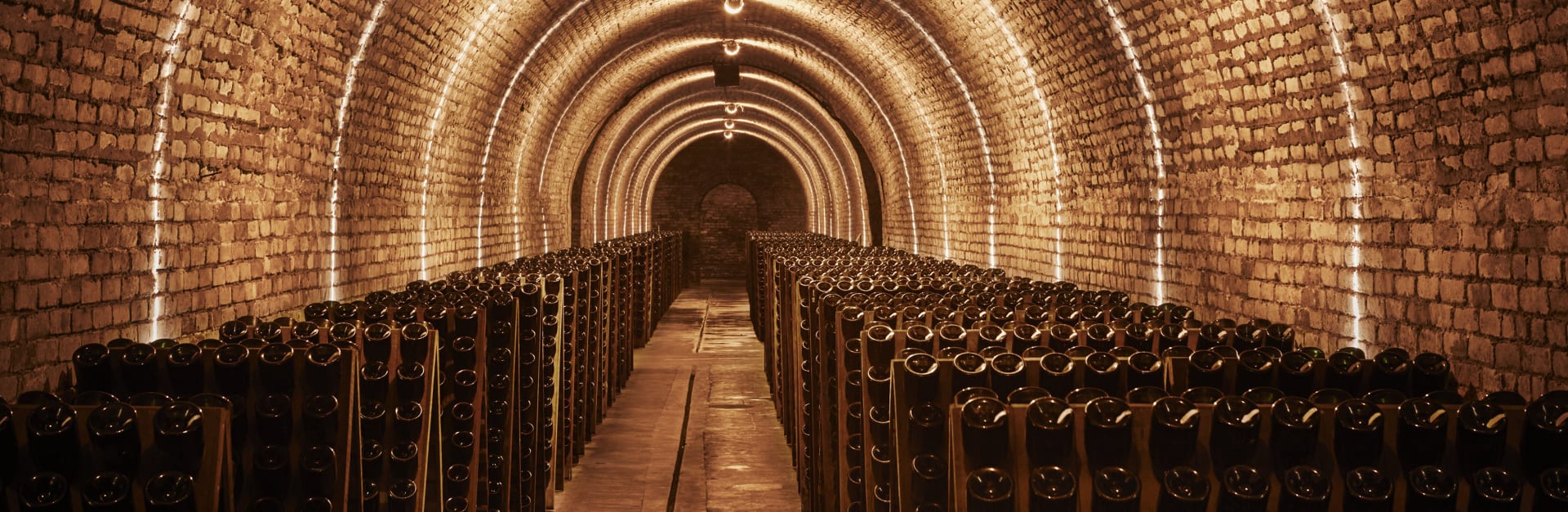




Krug has always lived up to its reputation as the first and only Champagne House to create exclusively prestige Champagnes every year since its foundation.
The House was established in Reims in 1843, by Joseph Krug, a visionary non-conformist with an uncompromising philosophy. Having understood that the true essence of Champagne is pleasure itself, his dream was to craft the very best Champagne he could offer, every single year, regardless of annual variations in climate. Paying close attention to the vineyard’s character, respecting the individuality of each plot and its wine, as well as building an extensive library of reserve wines from many different years allowed Joseph Krug to fulfil his dream.
With a very original approach to Champagne making, he decided to go beyond the notion of vintage to create the most generous expression of Champagne, every year. Thus, he founded a House in which all Champagnes are of the same level of distinction.
Six generations of the Krug family have perpetuated this dream, enriching the founder’s vision and savoir faire.
Further elaborating on the notion of individuality, for Krug’s Cellar Master Julie Cavil, each plot of grapes, through its wine, is like a single ingredient to a chef: carefully selected, and critical to the final composition. Each year, Krug honors this philosophy by inviting chefs from around the world to interpret a single ingredient, crafting unexpected recipes to pair with a glass of Krug Grande Cuvée or Krug Rosé. This year’s ingredient is the Onion.
The unspoken onion is a key component of almost every fundamental recipe from stocks, sauces and stews to baked goods and roasts. Its multifaceted expressions beautifully marry both the fullness of flavors and aromas of Krug Grande Cuvée the elegance and boldness of Krug Rose.

Representing the topmost expression of a Champagne house, a vintage Champagne is one made from the produce of a single, superior harvest year. Vintage Champagnes account for a mere 5% of total Champagne production and are produced about three times in a decade. Champagne is typically made as a blend of multiple years in order to preserve the house style; these will have non-vintage, or simply, NV on the label. The term, "vintage," as it applies to all wine, simply means a single harvest year.

Associated with luxury, celebration, and romance, the region, Champagne, is home to the world’s most prized sparkling wine. In order to bear the label, ‘Champagne’, a sparkling wine must originate from this northeastern region of France—called Champagne—and adhere to strict quality standards. Made up of the three towns Reims, Épernay, and Aÿ, it was here that the traditional method of sparkling wine production was both invented and perfected, birthing a winemaking technique as well as a flavor profile that is now emulated worldwide.
Well-drained, limestone and chalky soil defines much of the region, which lend a mineral component to its wines. Champagne’s cold, continental climate promotes ample acidity in its grapes but weather differences from year to year can create significant variation between vintages. While vintage Champagnes are produced in exceptional years, non-vintage cuvées are produced annually from a blend of several years in order to produce Champagnes that maintain a consistent house style.
With nearly negligible exceptions, . These can be blended together or bottled as individual varietal Champagnes, depending on the final style of wine desired. Chardonnay, the only white variety, contributes freshness, elegance, lively acidity and notes of citrus, orchard fruit and white flowers. Pinot Noir and its relative Pinot Meunier, provide the backbone to many blends, adding structure, body and supple red fruit flavors. Wines with a large proportion of Pinot Meunier will be ready to drink earlier, while Pinot Noir contributes to longevity. Whether it is white or rosé, most Champagne is made from a blend of red and white grapes—and uniquely, rosé is often produce by blending together red and white wine. A Champagne made exclusively from Chardonnay will be labeled as ‘blanc de blancs,’ while ones comprised of only red grapes are called ‘blanc de noirs.’