

Winemaker Notes
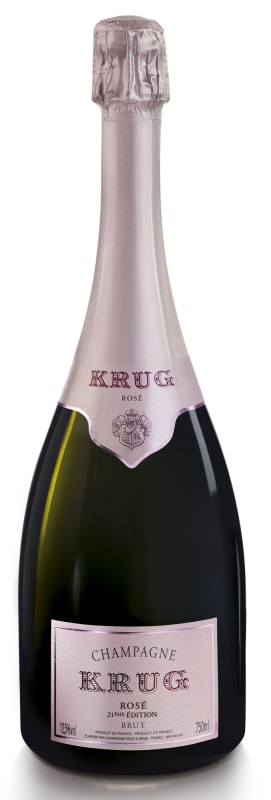
Krug Rose 21st Edition is a blend of 57 wines, the youngest of which dates back to 2008 and the oldest to 2000. Its final composition is 51% Pinot Noir, 41% Chardonnay and 8% Meunier.The addition of 10% traditionally macerated Pinot Noir red wine from the House’s plot in Ay gives Krug Rose 21st Edition its enchanting color, length, and spiciness. Krug Rose 21st Edition spent at least seven years in Krug’s cellars developing its particular expression and elegance.
At first sight, its subtle pale pink color holds a promise of elegance. On the nose, aromas of rose hips, cured ham, mulberries, redcurrant, peony, pepper & pink grapefruit. On the palate, delicate flavors of honey, citrus & dried fruit with a long finish, enhanced by its fine bubbles.
Krug Rose can be enjoyed alone or with foie gras, lamb, game, white meat, venison, anchovies or even dishes with spices.Krug Rose is not recommended for desserts, unless they are not too sweet, and best accompanies very savory dishes.
Professional Ratings
-
Wilfred Wong of Wine.com
One of the most elegant wine in all the world, the stylish and persistent Krug Champagne Rosé always has a special place in my heart. In a lifetime of popping corks, I have always found myself thrilled at the opportunity to savor this wine. At the Wine & Spirits Top 100 Tasting, I made certain not to miss it. Introduced in 1983 and made in small quantities each year, it not only met all expectations but even exceed them. Showing a bare salmon in color, pinpoint bubbles, a steady mousse, and classic wild strawberry flavors, it was my favorite of all the wines of the event. (Tasted: October 10, 2016, San Francisco, CA)
-
James Suckling
Super fresh and bright with musky red fruit aromas as well as gently marzipan scented biscuits on the nose; spices all here too. Great complexity and depth, really elegant, assertive and deep. Long and even, superb depth through the finish. Great wine. Drink young and precocious. Krug ID 313042
-
Tasting Panel
Deep salmon pink; smooth, elegant nose; lush and mouthfilling but refined and elegant; seamless, complex, layered and masterful.
-
Wine Spectator
Aromatic, with orchard blossom, ginger and kumquat hints, this vibrant rosé shows a beautiful marriage of intense acidity and flavor range, allowing notes of peach skin, blood orange granita, toasted coconut and Marcona almond to play and expand on the palate as they ride the lovely, lacy mousse. Offers a lasting, racy finish. Disgorged spring 2016. Drink now through 2025.
-
Wine Enthusiast
This is an onion-skin-colored wine, ripe and showing some maturity as well as rich red and citrus fruits. It is beautifully balanced, the pure, crisp fruit elegantly integrated into the lightly mineral texture. This stylish bottling is ready to drink.
-
Connoisseurs' Guide
High in autolyzed yeast and showing the layered complexity of lengthy aging, this non-vintaged bottling is a classic expression of the Krug style. It is, in all truth, not as concerned with fruit as many, but its very firm balance, fine foamy mousse and its long, brisk flavors will not disappoint aficionados.
-
Robert Parker's Wine Advocate
Krug’s NV Brut Rose ID 212020 – disgorged in spring, 2012, and as always for this cuvee, featuring slightly fewer and younger components than the Grande Cuvee, and an addition of still red Pinot – makes a bright, juicy impression of red raspberry and red currant mingled with fresh lime and tingling with mouthwatering mineral salts. Firmer in feel than the Grande Cuvee and without that bottling’s remarkable juxtaposition of creaminess with brightness, nor indeed its complexity, this finishes with the invigoration of red berry seed-crunching; a piquant hint of orange rind; and fascination of alkaline, saline and chalky nuances. It might well prove interesting to follow for a few years, though I haven’t the experience to address this cuvee’s track record.
-
Wine & Spirits
Copper-edged pink in color, this is an earthy release of Krug Rosé, its tight red-currant flavors lasting with cumin-like spice. It gains depth and breadth over the course of several days, ghosting its red fruit and dark spice through a smoky, flinty finish.
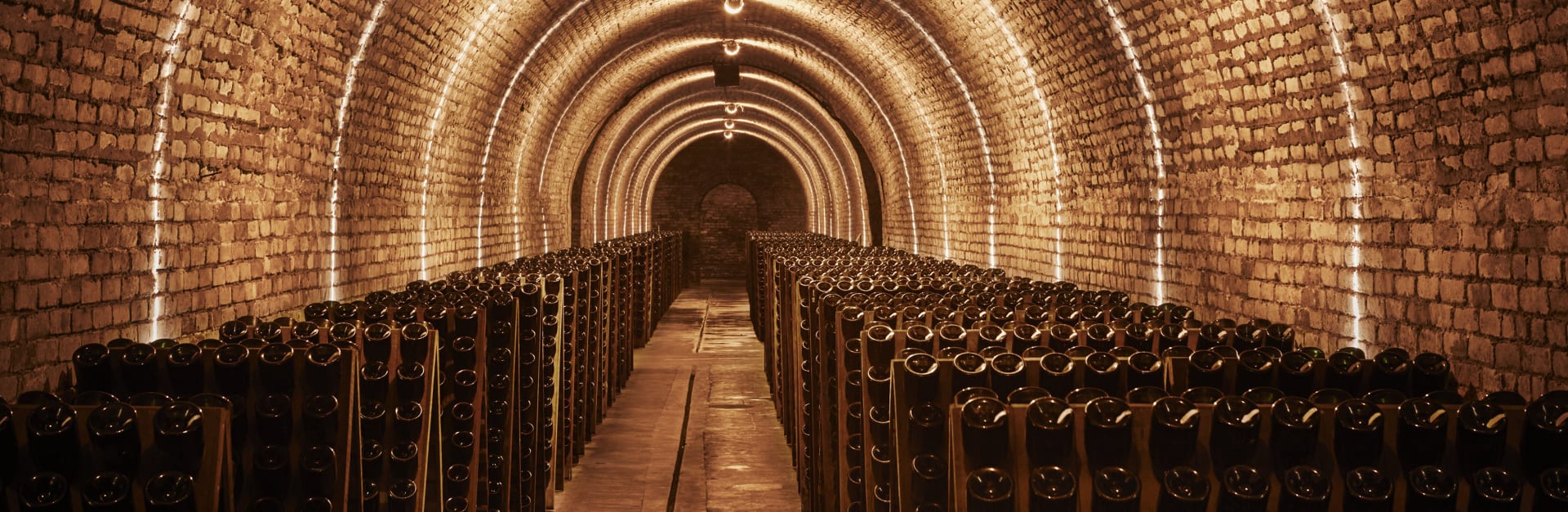




Krug has always lived up to its reputation as the first and only Champagne House to create exclusively prestige Champagnes every year since its foundation.
The House was established in Reims in 1843, by Joseph Krug, a visionary non-conformist with an uncompromising philosophy. Having understood that the true essence of Champagne is pleasure itself, his dream was to craft the very best Champagne he could offer, every single year, regardless of annual variations in climate. Paying close attention to the vineyard’s character, respecting the individuality of each plot and its wine, as well as building an extensive library of reserve wines from many different years allowed Joseph Krug to fulfil his dream.
With a very original approach to Champagne making, he decided to go beyond the notion of vintage to create the most generous expression of Champagne, every year. Thus, he founded a House in which all Champagnes are of the same level of distinction.
Six generations of the Krug family have perpetuated this dream, enriching the founder’s vision and savoir faire.
Further elaborating on the notion of individuality, for Krug’s Cellar Master Julie Cavil, each plot of grapes, through its wine, is like a single ingredient to a chef: carefully selected, and critical to the final composition. Each year, Krug honors this philosophy by inviting chefs from around the world to interpret a single ingredient, crafting unexpected recipes to pair with a glass of Krug Grande Cuvée or Krug Rosé. This year’s ingredient is the Onion.
The unspoken onion is a key component of almost every fundamental recipe from stocks, sauces and stews to baked goods and roasts. Its multifaceted expressions beautifully marry both the fullness of flavors and aromas of Krug Grande Cuvée the elegance and boldness of Krug Rose.

What are the different types of sparkling rosé wine?
Rosé sparkling wines like Champagne, Prosecco, Cava, and others make a fun and festive alternative to regular bubbles—but don’t snub these as not as important as their clear counterparts. Rosé Champagnes (i.e., those coming from the Champagne region of France) are made in the same basic way as regular Champagne, from the same grapes and the same region. Most other regions where sparkling wine is produced, and where red grape varieties also grow, also make a rosé version.
How is sparkling rosé wine made?
There are two main methods to make rosé sparkling wine. Typically, either white wine is blended with red wine to make a rosé base wine, or only red grapes are used but spend a short period of time on their skins (maceration) to make rosé colored juice before pressing and fermentation. In either case the base wine goes through a second fermentation (the one that makes the bubbles) through any of the various sparkling wine making methods.
What gives rosé Champagne and sparkling wine their color and bubbles?
The bubbles in sparkling wine are formed when the base wine undergoes a secondary fermentation, which traps carbon dioxide inside the bottle or fermentation vessel. During this stage, the yeast cells can absorb some of the wine’s color but for the most part, the pink hue remains.
How do you serve rosé sparkling wine?
Treat rosé sparkling wine as you would treat any Champagne, Prosecco, Cava, and other sparkling wine of comparable quality. For storing in any long-term sense, these should be kept at cellar temperature, about 55F. For serving, cool to about 40F to 50F. As for drinking, the best glasses have a stem and a flute or tulip shape to allow the bead (bubbles) and beautiful rosé hue to show.
How long do rosé Champagne and sparkling wine last?
Most rosé versions of Prosecco, Champagne, Cava or others around the “$20 and under” price point are intended for early consumption. Those made using the traditional method with extended cellar time before release (e.g., Champagne or Crémant) can typically improve with age. If you are unsure, definitely consult our Customer Care team for guidance.

Associated with luxury, celebration, and romance, the region, Champagne, is home to the world’s most prized sparkling wine. In order to bear the label, ‘Champagne’, a sparkling wine must originate from this northeastern region of France—called Champagne—and adhere to strict quality standards. Made up of the three towns Reims, Épernay, and Aÿ, it was here that the traditional method of sparkling wine production was both invented and perfected, birthing a winemaking technique as well as a flavor profile that is now emulated worldwide.
Well-drained, limestone and chalky soil defines much of the region, which lend a mineral component to its wines. Champagne’s cold, continental climate promotes ample acidity in its grapes but weather differences from year to year can create significant variation between vintages. While vintage Champagnes are produced in exceptional years, non-vintage cuvées are produced annually from a blend of several years in order to produce Champagnes that maintain a consistent house style.
With nearly negligible exceptions, . These can be blended together or bottled as individual varietal Champagnes, depending on the final style of wine desired. Chardonnay, the only white variety, contributes freshness, elegance, lively acidity and notes of citrus, orchard fruit and white flowers. Pinot Noir and its relative Pinot Meunier, provide the backbone to many blends, adding structure, body and supple red fruit flavors. Wines with a large proportion of Pinot Meunier will be ready to drink earlier, while Pinot Noir contributes to longevity. Whether it is white or rosé, most Champagne is made from a blend of red and white grapes—and uniquely, rosé is often produce by blending together red and white wine. A Champagne made exclusively from Chardonnay will be labeled as ‘blanc de blancs,’ while ones comprised of only red grapes are called ‘blanc de noirs.’