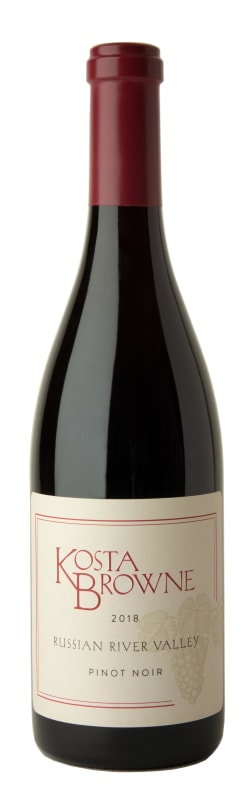


Winemaker Notes
The nose has notes of raspberry bramble, black cherry, and a subtle touch of vanilla. The palate is round, has spherical entry, and balanced with inspiring texture.
Professional Ratings
-
Wilfred Wong of Wine.com
COMMENTARY: The 2018 Kosta Browne Russian River Valley Pinot Noir is an outstanding effort. It starts authoritatively and finishes with a lasting touch. TASTING NOTES: This wine offers a heady aroma of blueberries and blackberries and a fulfilling palate of ripe fruit, earth, and oak. Pair it with grilled lamb kababs. (Tasted: June 13, 2020, San Francisco, CA)
-
Jeb Dunnuck
Starting off the Pinot Noirs, the 2018 Pinot Noir Russian River Valley was mostly destemmed and brought up in 31% new French oak. Its ruby/purple hue is followed by a wonderful bouquet of black cherries, darker raspberry, spice, and hints of earth and forest floor. It's a darker, spicy Russian River Valley effort that's medium to full-bodied and has terrific balance, ripe tannins, and a great finish. It shows the purity and class that now defines this estate. It's well worth seeking out and is going to keep for at least a decade.
-
Wine Spectator
Violet notes accent the juicy crushed red cherry and raspberry tart flavors, backed by vibrant acidity. Exhibits spicy focus midpalate, leading to a finish that lingers with flint and hot stone hints. Drink now through 2024.


While the Russian River Valley is a large appellation with multiple climate zones and soil types, it is best known for cool-climate varieties, with Pinot Noir as the most celebrated. The grapes benefit from a reliable late afternoon flow of Pacific Ocean fog through the Petaluma Gap and along the Russian River Valley that ensures slow and steady ripening and the preservation of grape acidity. Today many of California’s most highly regarded Pinot Noir vineyards are in the Russian River Valley, along with its sub-appellation, Green Valley.
Historically Russian River Valley Pinot Noirs had bright red fruit and delicate earthy, mineral notes. But changes in viticultural and winemaking practices have led to stylistic changes in some of the region’s wines. Adjustments to canopy management, among other techniques, have resulted in riper fruit and bolder wines as well. These show flavors of black cherry, blackberry, cola, spice and darker, loamy earth tones, accenting traditional Pinot Noir notes of strawberry, raspberry and light cherry.