

Winemaker Notes
Professional Ratings
-
Robert Parker's Wine Advocate
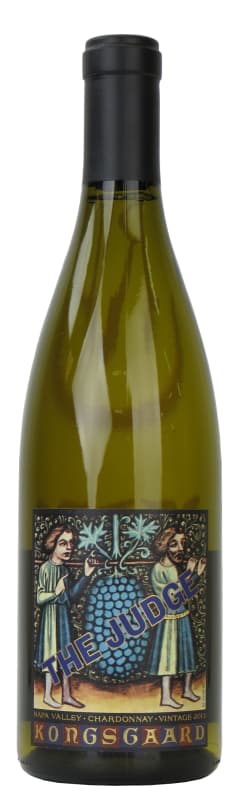
Of course, it’s hard to find any, but there are usually about eight to 15 barrels of his estate Chardonnay from Coombsville called “The Judge” in honor of his father. From old Wente clones originally planted in 1975, yields are rarely in excess of one ton of fruit per acre, which no doubt accounts for its extraordinary intensity and richness. The 2013 Chardonnay The Judge is perfect, and certainly one of the greatest Chardonnays I have ever tasted. Keeping in mind that Kongsgaard is no youngster at this game (2015 was his 41st vintage making wine), his 2013 The Judge, from the white volcanic soil in Coombsville called tufa, is an amazing wine of great intensity, power, glory, elegance, texture, density and richness. The wine offers up loads of tangerine oil, caramelized citrus, honeysuckle, white peach, apricots, and wet stones. It seems to be a smorgasbord of aromas and flavors that just keep opening as the wine sits in the mouth. This is an amazing effort and one of the greatest Chardonnays ever made in California.
-
Vinous
The 2013 Chardonnay The Judge is tremendous. Tasted from magnum, the 2013 dazzles with its blend of power, finesse and nuance. At 12 years of age, the 2013 is in the zone. Slate, crushed rocks and brisk acids cut through a core of citrus confit, hazelnut, dried flowers and spice stain the palate. There's a touch of reduction that works so well here.
-
Wine Spectator
Some would say there's enough new toasty oak here for two vintages, but if you enjoy the enhancement oak adds to Chardonnay this means double the pleasure. Rich apricot, fig, honeydew and citrus notes join in the chorus. Long and full.


One of the most popular and versatile white wine grapes, Chardonnay offers a wide range of flavors and styles depending on where it is grown and how it is made. While it tends to flourish in most environments, Chardonnay from its Burgundian homeland produces some of the most remarkable and longest lived examples. California produces both oaky, buttery styles and leaner, European-inspired wines. Somm Secret—The Burgundian subregion of Chablis, while typically using older oak barrels, produces a bright style similar to the unoaked style. Anyone who doesn't like oaky Chardonnay would likely enjoy Chablis.

One of the world's most highly regarded regions for wine production as well as tourism, the Napa Valley was responsible for bringing worldwide recognition to California winemaking. In the 1960s, a few key wine families settled the area and hedged their bets on the valley's world-class winemaking potential—and they were right.
The Napa wine industry really took off in the 1980s, when producers scooped up vineyard lands and planted vines throughout the county. A number of wineries emerged, and today Napa is home to hundreds of producers ranging from boutique to corporate. Cabernet Sauvignon is definitely the grape of choice here, with many winemakers also focusing on Bordeaux blends. White wines from Napa Valley are usually Chardonnay and Sauvignon Blanc.
Within the Napa Valley lie many smaller sub-AVAs that claim specific wine characteristics based on situation, slope and soil. Farthest south and coolest from the influence of the San Pablo Bay is Carneros, followed by Coombsville to its northeast and then Yountville, Oakville and Rutherford. Above those are the warm St. Helena and the valley's newest and hottest AVA, Calistoga. These areas follow the valley floor and are known generally for creating rich, dense, complex and smooth red wines with good aging potential. The mountain sub appellations, nestled on the slopes overlooking the valley AVAs, include Stags Leap District, Atlas Peak, Chiles Valley (farther east), Howell Mountain, Mt. Veeder, Spring Mountain District and Diamond Mountain District. Napa Valley wines from the mountain regions are often more structured and firm, benefiting from a lot of time in the bottle to evolve and soften.