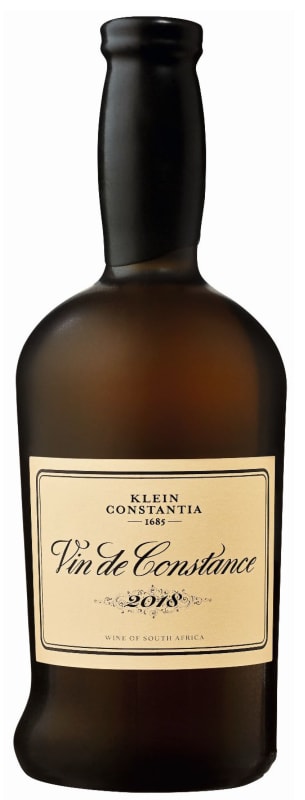


Winemaker Notes
Professional Ratings
-
James Suckling
Extraordinary aromas of white peaches, apricots, vanilla and flowers. Full-bodied and very sweet with so much sweet and dried fruit, such as apricots and tangerines, yet it maintains citrusy freshness and texture, with a long, very sweet finish. Always energetic and vivid. Great length to this. Goes on for minutes. It’s a sweet wine to drink when young, to marvel over the intensity and verve, yet also one to age for decades. Drink or hold.
-
Robert Parker's Wine Advocate
While similar in color to the 2017, the 2018 Vin de Constance Natural Sweet Wine possesses a richer, rounder frame than the previous vintage. Devastatingly gorgeous on the nose, the wine exudes ripeness, precision and focus, somersaulting out of the glass with gorgeous aromas of apricot purée, white nectarine and yellow peach with heady floral aromas. Compact, medium to full-bodied and unctuous on the palate, the wine explodes, showcasing the greatness of Muscat. The wine continues to unfold in the mouth, expressing additional layers and complexity it sits on the palate. It's wonderfully textured, and I find myself almost chewing the wine, as there is so much going on with it. Drawing in air over the palate, I continue to slurp the wine and it continues to offer up more of its secrets and complexity. No spitting today. The wine glides to a persistent and world-class finish that has me smitten with this vintage. Do not pass up the opportunity to try this wine.
-
Wine Spectator
There's a broad-shouldered feel to this white, which is lightly mouthcoating while also vibrant, with a tangy kick of candied orange and pink grapefruit peel acidity. Flavors of mango, baked yellow peach and crushed macadamia, plus notes of dried flowers and zesty spices, ring out on the creamy palate and through the finish. -- Non-blind Vin de Constance vertical (February 2024). Drink now through 2039.


Apart from the classics, we find many regional gems of different styles.
Late harvest wines are probably the easiest to understand. Grapes are picked so late that the sugars build up and residual sugar remains after the fermentation process. Ice wine, a style founded in Germany and there referred to as eiswein, is an extreme late harvest wine, produced from grapes frozen on the vine, and pressed while still frozen, resulting in a higher concentration of sugar. It is becoming a specialty of Canada as well, where it takes on the English name of ice wine.
Vin Santo, literally “holy wine,” is a Tuscan sweet wine made from drying the local white grapes Trebbiano Toscano and Malvasia in the winery and not pressing until somewhere between November and March.
Rutherglen is an historic wine region in northeast Victoria, Australia, famous for its fortified Topaque and Muscat with complex tawny characteristics.

With an important wine renaissance in full swing, impressive red and white bargains abound in South Africa. The country has a particularly long and rich history with winemaking, especially considering its status as part of the “New World.” In the mid-17th century, the lusciously sweet dessert wines of Constantia were highly prized by the European aristocracy. Since then, the South African wine industry has experienced some setbacks due to the phylloxera infestation of the late 1800s and political difficulties throughout the following century.
Today, however, South Africa is increasingly responsible for high-demand, high-quality wines—a blessing to put the country back on the international wine map. Wine production is mainly situated around Cape Town, where the climate is generally warm to hot. But the Benguela Current from Antarctica provides brisk ocean breezes necessary for steady ripening of grapes. Similarly, cooler, high-elevation vineyard sites throughout South Africa offer similar, favorable growing conditions.
South Africa’s wine zones are divided into region, then smaller districts and finally wards, but the country’s wine styles are differentiated more by grape variety than by region. Pinotage, a cross between Pinot Noir and Cinsault, is the country’s “signature” grape, responsible for red-fruit-driven, spicy, earthy reds. When Pinotage is blended with other red varieties, like Cabernet Sauvignon, Merlot, Syrah or Pinot Noir (all commonly vinified alone as well), it is often labeled as a “Cape Blend.” Chenin Blanc (locally known as “Steen”) dominates white wine production, with Chardonnay and Sauvignon Blanc following close behind.