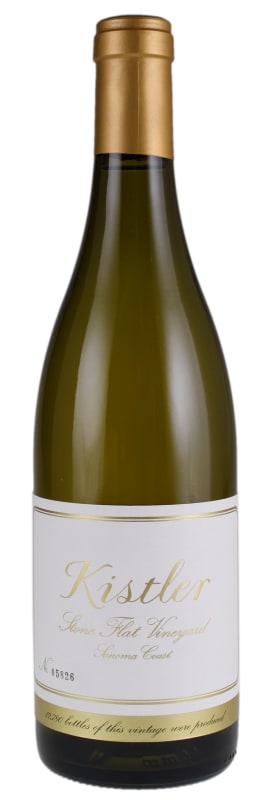


Winemaker Notes
The Stone Flat Vineyard Chardonnay strikes an impeccable balance between its minerality, its fruit reminiscent core and it’s silken, persistent finish.
Professional Ratings
-
Jeb Dunnuck
The 2017 Chardonnay Stone Flat Vineyard comes from the Durell Vineyard as well but is from a selection of only 420a rootstock, which results in a slightly lower pH as well as slightly better yields. It’s not far off the Durell Vineyard and offers impressive caramelized citrus, white flowers, brioche, and pineapple. It’s fresh, vibrant, and ethereal, and has a great finish.
-
Robert Parker's Wine Advocate
"The Stone Flat Chardonnay is planted on the same soil as Durell—they are separated by a few feet—and picked at the same time," says winemaker Jason Kesner. "They're fermented in the same room and with the same barrel program, so the only difference between these two wines is the rootstock." The 2017 Chardonnay Stone Flat Vineyard has an uber-inviting nose with scents of honeycomb, peach cobbler, toasted hazelnut, quince, guava and a classy framing of baking spice with underlying mineral notions. It's medium-bodied with intense, savory-laced ripe fruits knit by rocky notions and tangy acidity, finishing long and layered.
-
Wine Spectator
This sings with rich acidity, backing focused and well-spiced white fruit flavors. Voluptuous creaminess shows midpalate, leading to a long, buttery finish that features hints of dried tropical fruits. Drink now through 2024.
-
Connoisseurs' Guide
Though immediately adjacent to the Durell Vineyard, the Stone Flat site has yielded a slightly leaner, very lively Chardonnay of temperate richness that features vibrant green apple fruit atop a marked minerally base and is punctuated by subtle, citrusy notes of lemons and ruby red grapefruit. More compact than expansive, at least for the time being, but a continuous, neatly composed wine, it opts for sophistication rather than power and punch and boasts an exceptionally long finish.


One of the most popular and versatile white wine grapes, Chardonnay offers a wide range of flavors and styles depending on where it is grown and how it is made. While it tends to flourish in most environments, Chardonnay from its Burgundian homeland produces some of the most remarkable and longest lived examples. California produces both oaky, buttery styles and leaner, European-inspired wines. Somm Secret—The Burgundian subregion of Chablis, while typically using older oak barrels, produces a bright style similar to the unoaked style. Anyone who doesn't like oaky Chardonnay would likely enjoy Chablis.

A vast appellation covering Sonoma County’s Pacific coastline, the Sonoma Coast AVA runs all the way from the Mendocino County border, south to the San Pablo Bay. The region can actually be divided into two sections—the actual coastal vineyards, marked by marine soils, cool temperatures and saline ocean breezes—and the warmer, drier vineyards further inland, which are still heavily influenced by the Pacific but not quite with same intensity.
Contained within the appellation are the much smaller Fort Ross-Seaview and Petaluma Gap AVAs.
The Sonoma Coast is highly regarded for elegant Pinot Noir, Chardonnay, and, increasingly, cool-climate Syrah. The wines have high acidity, moderate alcohol, firm tannin, and balanced ripeness.