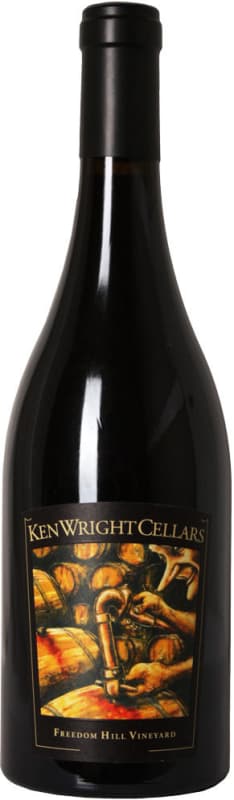


Winemaker Notes
Professional Ratings
-
Wine Enthusiast
Many vintners make wines from Freedom Hill, but no one does it better than Ken Wright. Focused, ripe marionberry fruit is backed with ample acidity, then given a patina of barrel toast. It pushes through a broad middle palate into a long, deep finish that promises excellent development over the next decade or more.
-
Wine Spectator
Harmonious and elegantly complex, with expressive raspberry, orange peel and black tea flavors that build richness toward polished tannins. Drink now through 2025.
-
James Suckling
A very deep integration of ripe, darker cherries and blueberries with spicy-oak notes here. The palate has good, fleshy depth and weight with smoothly layered tannins. Drink or hold. Synthetic cork.


Thin-skinned, finicky and temperamental, Pinot Noir is also one of the most rewarding grapes to grow and remains a labor of love for some of the greatest vignerons in Burgundy. Fairly adaptable but highly reflective of the environment in which it is grown, Pinot Noir prefers a cool climate and requires low yields to achieve high quality. Outside of France, outstanding examples come from in Oregon, California and throughout specific locations in wine-producing world. Somm Secret—André Tchelistcheff, California’s most influential post-Prohibition winemaker decidedly stayed away from the grape, claiming “God made Cabernet. The Devil made Pinot Noir.”

Running north to south, adjacent to the Willamette River, the Eola-Amity Hills AVA has shallow and well-drained soils created from ancient lava flows (called Jory), marine sediments, rocks and alluvial deposits. These soils force vine roots to dig deep, producing small grapes with great concentration.
Like in the McMinnville sub-AVA, cold Pacific air streams in via the Van Duzer Corridor and assists the maintenance of higher acidity in its grapes. This great concentration, combined with marked acidity, give the Eola-Amity Hills wines—namely Pinot noir—their distinct character. While the region covers 40,000 acres, no more than 1,400 acres are covered in vine.