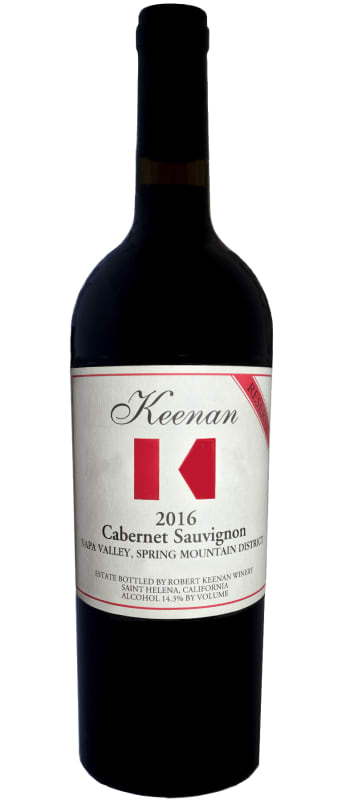


Winemaker Notes
2012 marks the 36th vintage for the Robert Keenan Winery and the 12th consecutive vintage of “Reserve” Cabernet Sauvignon. The five new cabernet clones that were replanted as bench grafts in the spring of ’98 are now showing their individual characteristics and the vineyard now in its fifteenth year has hit full maturity. 31% each of the three different Cabernet Sauvignon Clones, 15, 7 and 412 along with 7% Cabernet Franc were chosen for this 100% Estate Spring Mountain cuvee. Deep aromatics, piercing and precise, a full rich, saturated mouth feel, and a long-lasting multi-layered finish define this exemplary blend.
Professional Ratings
-
Robert Parker's Wine Advocate
The 2012 Cabernet Sauvignon Reserve from the estate in Spring Mountain Vineyards is the thirty-sixth vintage for the Robert Keenan Winery. This wine has 7% Cabernet Franc added into the blend and 700 cases were produced. A blockbuster wine for sure, with an inky/purple color, sweet crème de cassis, graphite, chocolate a hint of charcoal and burning embers – almost as if it wanted to behave like a Graves from Bordeaux. This is full-bodied, very rich, powerful and still moderately tannic. It’s a baby for sure, but what an impressive one. This wine needs a good 3-4 years of bottle age and should keep well for 25-30 years at the minimum.
-
Wine Enthusiast
Michael Keenan believes there are two sides of cabernet, one fruity, one savory and herbal. He works to balance the two in the grapes from his Spring Mountain vineyards, consistently growing one of the greatest Napa Valley cabernets in his Reserve. The 2012 contrasts herbal notes of sage and forest floor with bright fruit that energizes the wine. That plump fruit creates a compelling texture against the stone-hard tannins, matching their austerity with silken grace. In the end, the flavors have the blackness of a well, mossy, stony, cool and deep.
-
Wilfred Wong of Wine.com
The 2012 Keenan Reserve Spring Mountain Cabernet Sauvignon is everything one would want in a superfine Napa Valley Cab—bold black fruit in both the aroma and in the flavors, rich textures on the palate and a firm finish. The wine's power and ultra-fine delivery pairs it well with a well-marbled rib eye of beef. Drinks pretty well now. (Tasted: August 22, 2016, San Francisco, CA)



While the beauty and history of the land are appealing, it is the richness of the soils that makes the hillside perfect for an estate winery. These soils are, in great measure, responsible for the dramatic intensity of the fruit associated with the ultra-premium wines produced at Robert Keenan Winery.
Keenan completed a solar power system on their property that went on-line in 2007. The system supplies all of the estate’s energy needs, including the winery, administrative offices, visitor hospitality area, and the homes located on the property. The Napa Valley Vintners have recognized Keenan as a “green” winery, which they proudly announce on the back labels: Solar Powered and Sustainably Farmed.

One of the most prestigious wines of the world capable of great power and grace, Napa Valley Cabernet is a leading force in the world of fine, famous, collectible red wine. Today the Napa Valley and Cabernet Sauvignon are so intrinsically linked that it is difficult to discuss one without the other. But it wasn’t until the 1970s that this marriage came to light; sudden international recognition rained upon Napa with the victory of the Stag’s Leap Wine Cellars 1973 Cabernet Sauvignon in the 1976 Judgement of Paris.
Cabernet Sauvignon undoubtedly dominates Napa Valley today, covering half of the land under vine, commanding the highest prices per ton and earning the most critical acclaim. Cabernet Sauvignon’s structure, acidity, capacity to thrive in multiple environs and ability to express nuances of vintage make it perfect for Napa Valley where incredible soil and geographical diversity are found and the climate is perfect for grape growing. Within the Napa Valley lie many smaller sub-AVAs that express specific characteristics based on situation, slope and soil—as a perfect example, Rutherford’s famous dust or Stags Leap District's tart cherry flavors.