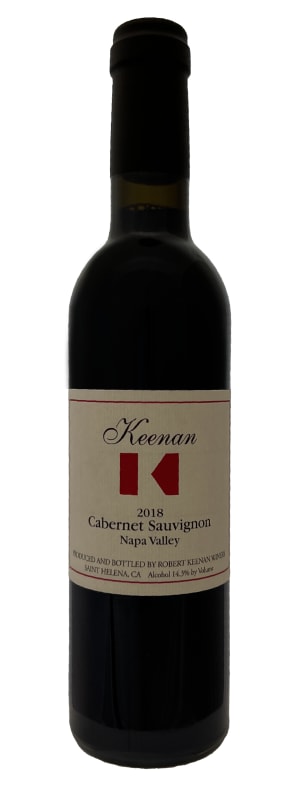


Winemaker Notes
The 2018 Cabernet Sauvignon is composed primarily of grapes grown on Keenan's Spring Mountain District Estate; the remainder of the fruit was harvested from Pope Valley, a grape-growing region located in the eastern portion of Napa. The blend was assembled just before bottling. The Estate grown Cabernet imparts amazing concentration and remarkable structure, while the portion of Cabernet harvested from Pope Valley adds complex aromas and a balanced mid-palate.
Professional Ratings
-
Vinous
Bold and juicy, Keenan's 2018 Cabernet Sauvignon is super-expressive today. Dark cherry, plum, grilled herbs, mocha, spice and licorice are all front and center. The 2018 is deep and fleshy yet retains a classic, mid-weight feel that works so well. Drink it over the next decade.
-
James Suckling
Rich, meaty cabernet with aromas of stewed plums, dark cherries, dried thyme, black olives, charred wood and smoked meat. Full-bodied with firm, chewy tannins. Dark and concentrated. Chewy finish. Try after 2023.
-
Wilfred Wong of Wine.com
COMMENTARY: The 2018 Keenan Napa Valley Cabernet Sauvignon Blanc is balanced and poised on the palate. TASTING NOTES: This wine offers aromas and flavors of black fruit, licorice, and savory spices. Enjoy it with an old-fashioned beef stew. (Tasted: May 30, 2022, San Francisco, CA)


One of the most prestigious wines of the world capable of great power and grace, Napa Valley Cabernet is a leading force in the world of fine, famous, collectible red wine. Today the Napa Valley and Cabernet Sauvignon are so intrinsically linked that it is difficult to discuss one without the other. But it wasn’t until the 1970s that this marriage came to light; sudden international recognition rained upon Napa with the victory of the Stag’s Leap Wine Cellars 1973 Cabernet Sauvignon in the 1976 Judgement of Paris.
Cabernet Sauvignon undoubtedly dominates Napa Valley today, covering half of the land under vine, commanding the highest prices per ton and earning the most critical acclaim. Cabernet Sauvignon’s structure, acidity, capacity to thrive in multiple environs and ability to express nuances of vintage make it perfect for Napa Valley where incredible soil and geographical diversity are found and the climate is perfect for grape growing. Within the Napa Valley lie many smaller sub-AVAs that express specific characteristics based on situation, slope and soil—as a perfect example, Rutherford’s famous dust or Stags Leap District's tart cherry flavors.