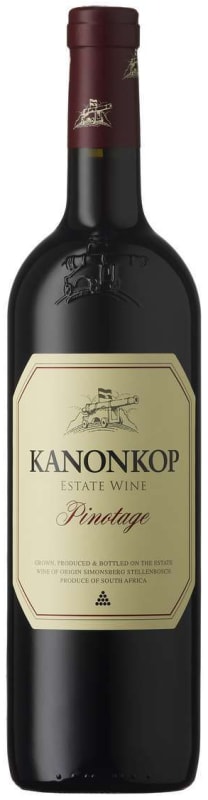


Winemaker Notes
Pair with red meat or spicy Asian style dishes when young. Better with lamb or mutton when matured.
Professional Ratings
-
Robert Parker's Wine Advocate
The nose of the 2016 Pinotage Stellenbosch has an open-knit expression with dark spicy fruits, floral tones and soft subtle oak aromas of cinnamon and vanilla. The full-bodied palate is clean and rich with a full expression of ripe blackberries and drinks like a robust Cabernet Sauvignon. The oak is evident on the palate but hasn't been overdone, integrating seamlessly into the expression. The rich blackberries and plum tones glide over the mid-palate and it finishes long and a touch spicy, with balance and precision. Rating: 90+
-
Wilfred Wong of Wine.com
COMMENTARY: I sometimes have to fight myself when I evaluate Pinotage. This grape variety—a hybrid between Pinot Noir and Cinsault, and a South African specialty grape variety—stands alone in its distinctive flavor profile. The 2016 Kanonkop Pinotage is an excellent example of what can be made with this grape. TASTING NOTES: This red wine is firmly built. Its aromas and flavors of black fruit, tar, and licorice should make an excellent pairing partner with grilled beef accented with red onions and sliced jalapeños without their seeds. (Tasted: November 12, 2018, San Francisco, CA)


South Africa’s signature grape, Pinotage is a distinctively earthy and rustic variety. In 1924 viticulturists crossed finicky Pinot Noir and productive, heat-tolerant Cinsault, and created a variety both darker and bolder than either of its parents! Today it is popular in South Africa both as a single varietal wine and in Cape blends. Somm Secret—The name “Pinotage” is a subtle portmanteau. The Pinot part is obvious, but the second half is a bit confusing. In the early 1900s, Cinsault was known in South Africa as “Hermitage”—hence Pinotage.

With an important wine renaissance in full swing, impressive red and white bargains abound in South Africa. The country has a particularly long and rich history with winemaking, especially considering its status as part of the “New World.” In the mid-17th century, the lusciously sweet dessert wines of Constantia were highly prized by the European aristocracy. Since then, the South African wine industry has experienced some setbacks due to the phylloxera infestation of the late 1800s and political difficulties throughout the following century.
Today, however, South Africa is increasingly responsible for high-demand, high-quality wines—a blessing to put the country back on the international wine map. Wine production is mainly situated around Cape Town, where the climate is generally warm to hot. But the Benguela Current from Antarctica provides brisk ocean breezes necessary for steady ripening of grapes. Similarly, cooler, high-elevation vineyard sites throughout South Africa offer similar, favorable growing conditions.
South Africa’s wine zones are divided into region, then smaller districts and finally wards, but the country’s wine styles are differentiated more by grape variety than by region. Pinotage, a cross between Pinot Noir and Cinsault, is the country’s “signature” grape, responsible for red-fruit-driven, spicy, earthy reds. When Pinotage is blended with other red varieties, like Cabernet Sauvignon, Merlot, Syrah or Pinot Noir (all commonly vinified alone as well), it is often labeled as a “Cape Blend.” Chenin Blanc (locally known as “Steen”) dominates white wine production, with Chardonnay and Sauvignon Blanc following close behind.