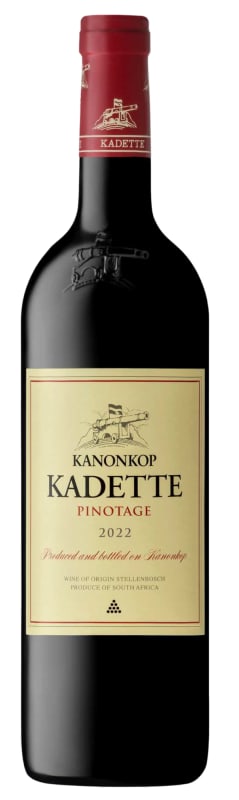


Winemaker Notes
Bright purple red in color. A bold, enticing nose of cherries, red and black plums, strawberry coulis, vanilla, cinnamon and allspice. The palate is packed with juicy raspberries, plums, cranberries, milk chocolate, cedar and layers of baking spices. Medium bodied with refreshing, balanced acidity, fine grained tannins and a long satisfying finish, and adds a sparkle of freshness to the red and black fruit flavors on the finish.
Blend: 100% Pinotage
Professional Ratings
-
James Suckling
A dark-fruited pinotage that has notes of cherry, black plum, dried rose and spice box on the nose. It’s medium- to full-bodied with chewy tannins and excellent freshness.
-
Wine Enthusiast
Soft and predominantly fruit forward, this gastronomic Pinotage has freshness and good structure that makes it versatile enough to pair with a wide array of dishes. Berries on the nose and the palate give it a friendly profile. It has fine tannins and a medium-long finish.
-
Robert Parker's Wine Advocate
From the estate's value line, the Kanonkop 2022 Stellenbosch Pinotage Kadette is matured in oak for 12 months and in bottle for nine months before its release. It has a raspberry character that is bright and perfumed but also shows the black olive that I got in the Cape Blend. This mid-weight red delivers a soft side thanks to its fruity bouquet, black cherry, lilac and charred rosemary.
-
Wine Spectator
A well-balanced, medium-bodied red, with crushed black raspberry and boysenberry fruit flavors enmeshed with lightly chewy tannins, plus notes of wet stone, iron, and dried flowers and herbs. Drink now. 40,000 cases made, 1,000 cases imported.


South Africa’s signature grape, Pinotage is a distinctively earthy and rustic variety. In 1924 viticulturists crossed finicky Pinot Noir and productive, heat-tolerant Cinsault, and created a variety both darker and bolder than either of its parents! Today it is popular in South Africa both as a single varietal wine and in Cape blends. Somm Secret—The name “Pinotage” is a subtle portmanteau. The Pinot part is obvious, but the second half is a bit confusing. In the early 1900s, Cinsault was known in South Africa as “Hermitage”—hence Pinotage.

South Africa’s most famous wine-producing district, Stellenbosch, surrounds the historic town with the same name; fine winemaking here dates back to the late 1600s. Its valleys of granite, sandstone and alluvial loam soils between the towering blue-grey mountains of Stellenbosch, Simonsberg and Helderberg have the capacity to produce beautiful wines from many varieties. The climate is warm Mediterranean, tempered by the cool Atlantic air of nearby False Bay.
Perhaps most well-known for its Pinotage and Bordeaux blends, Stellenbosch also produces noteworthy wines from Syrah, Chenin blanc, Chardonnay and Sauvignon blanc. The district’s wards—Banghoek, Bottelary, Devon Valley, Jonkershoek Valley, Papegaaiberg, Polkadraai Hills and Simonsberg-Stellenbosch—all produce distinctive wines from vines with relatively low yields.