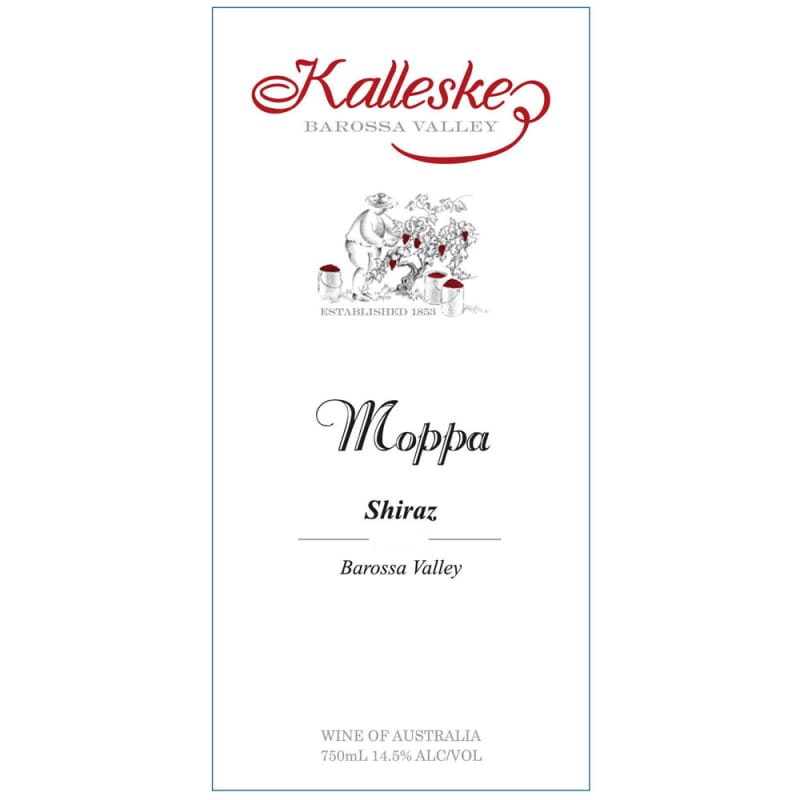

Winemaker Notes
Professional Ratings
-
James Suckling
A very nicely realized rendition of this northern Barossa shiraz that shows plenty of ripe blackberry fruit and some redder notes. Really pure and not at all burdened by oak and winemaking. Some meaty notes and dark spice in the mix, too. The palate's right at the threshold of ripeness with a solid dose of sheet-like tannins and a smoky, espresso-laced finish. Plenty of dark-plum and black-fruit flavors. Drink in 2019.
-
Wilfred Wong of Wine.com
The 2014 Kalleske Moppa Shiraz is a distinctive wine. Perhaps this is what happens when one adds an accent of Petit Verdot and Viognier into the blend? The wine exhibits enticing aromatic in the nose—violets, dried earth, red fruits—followed by surprising richness on the palate. Drinks quite well now. (Tasted: August 29, 2016, San Francisco, CA)
-
Robert Parker's Wine Advocate
Deep garnet-purple colored, the 2013 Moppa Shiraz offers baked blueberry and plum notes with hints of aniseed, mocha and black pepper. Medium to full-bodied, if packs plenty of ripe, expressive black and blueberry fruit into the mouth with a medium level of rounded tannins and good length of finish. Textbook Barossa Shiraz.


Marked by an unmistakable deep purple hue and savory aromatics, Syrah makes an intense, powerful and often age-worthy red. Native to the Northern Rhône, Syrah achieves its maximum potential in the steep village of Hermitage and plays an important component in the Red Rhône Blends of the south, adding color and structure to Grenache and Mourvèdre. Syrah is the most widely planted grape of Australia and is important in California and Washington. Sommelier Secret—Such a synergy these three create together, the Grenache, Syrah, Mourvedre trio often takes on the shorthand term, “GSM.”

Historically and presently the most important wine-producing region of Australia, the Barossa Valley is set in the Barossa zone of South Australia, where more than half of the country’s wine is made. Because the climate is very hot and dry, vineyard managers work diligently to ensure grapes reach the perfect levels of phenolic ripeness.
The intense heat is ideal for plush, bold reds, particularly Shiraz on its own or Rhône Blends. Often Shiraz and Cabernet partner up for plump and powerful reds.
While much less prevalent, light-skinned varieties such as Riesling, Viognier or Semillon produce vibrant Barossa Valley whites.
Most of Australia’s largest wine producers are based here and Shiraz plantings date back as far as the 1850s or before. Many of them are dry farmed and bush trained, still offering less than one ton per acre of inky, intense, purple juice.