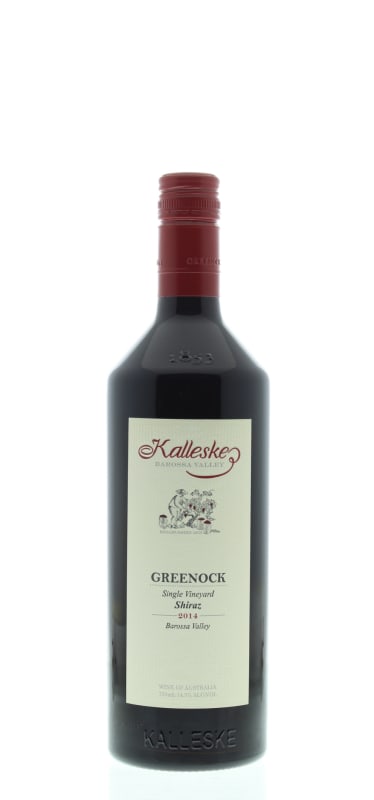


Winemaker Notes
Professional Ratings
-
Wilfred Wong of Wine.com
The 2014 Kalleske Greenock appears to be robust yet stylish showing tremendous richness from start to finish and never going beyond the range of its proper balance. This wine offering plenty of black fruits, sweet earth, and dark savory herbs present a case that Shirazes can be more than just powerful—they can be elegant. The concentrated flavors and long finish make it an exceptional candidate with aged parmesan or gouda. Drinks quite well now. (Tasted: August 29, 2016, San Francisco, CA)
-
Robert Parker's Wine Advocate
Deep garnet-purple colored, the 2014 Shiraz Greenock has a serious, rather broody nose with hints of black earth, chargrill and garrigue intermixed with blackberries, black cherries and mulberries plus a hint of Bovril. The full-bodied palate is taut and youthful still with a firm backbone of chewy tannins supporting the muscular, earthy fruit, finishing long with savory / mineral notes. It really needs another 3-4 years to open out and enjoy it over the next 10-12 years. Rating: 93(+) Points
-
Wine Spectator
Spicy and distinctive, with rich notes of sandalwood, cinnamon bark, dark chocolate, wild berry, black cherry and sarsaparilla. The tannins are supple and velvety, the finish expressive and generous. Drink now through 2030.
-
Wine & Spirits
The Kalleske family planted this vineyard with cuttings from the original vines planted in the late 1800s on Greenock Creek in northern Barossa. The vines grow in sandy loam over deep red clay and limestone, restraining the ripe Barossa power of this shiraz. It’s bullish and strong, but not overbearing, with gruff black fruit and notes of mace coming together in a wine with brash charm, a match for long-braised short ribs.


Marked by an unmistakable deep purple hue and savory aromatics, Syrah makes an intense, powerful and often age-worthy red. Native to the Northern Rhône, Syrah achieves its maximum potential in the steep village of Hermitage and plays an important component in the Red Rhône Blends of the south, adding color and structure to Grenache and Mourvèdre. Syrah is the most widely planted grape of Australia and is important in California and Washington. Sommelier Secret—Such a synergy these three create together, the Grenache, Syrah, Mourvedre trio often takes on the shorthand term, “GSM.”

Historically and presently the most important wine-producing region of Australia, the Barossa Valley is set in the Barossa zone of South Australia, where more than half of the country’s wine is made. Because the climate is very hot and dry, vineyard managers work diligently to ensure grapes reach the perfect levels of phenolic ripeness.
The intense heat is ideal for plush, bold reds, particularly Shiraz on its own or Rhône Blends. Often Shiraz and Cabernet partner up for plump and powerful reds.
While much less prevalent, light-skinned varieties such as Riesling, Viognier or Semillon produce vibrant Barossa Valley whites.
Most of Australia’s largest wine producers are based here and Shiraz plantings date back as far as the 1850s or before. Many of them are dry farmed and bush trained, still offering less than one ton per acre of inky, intense, purple juice.