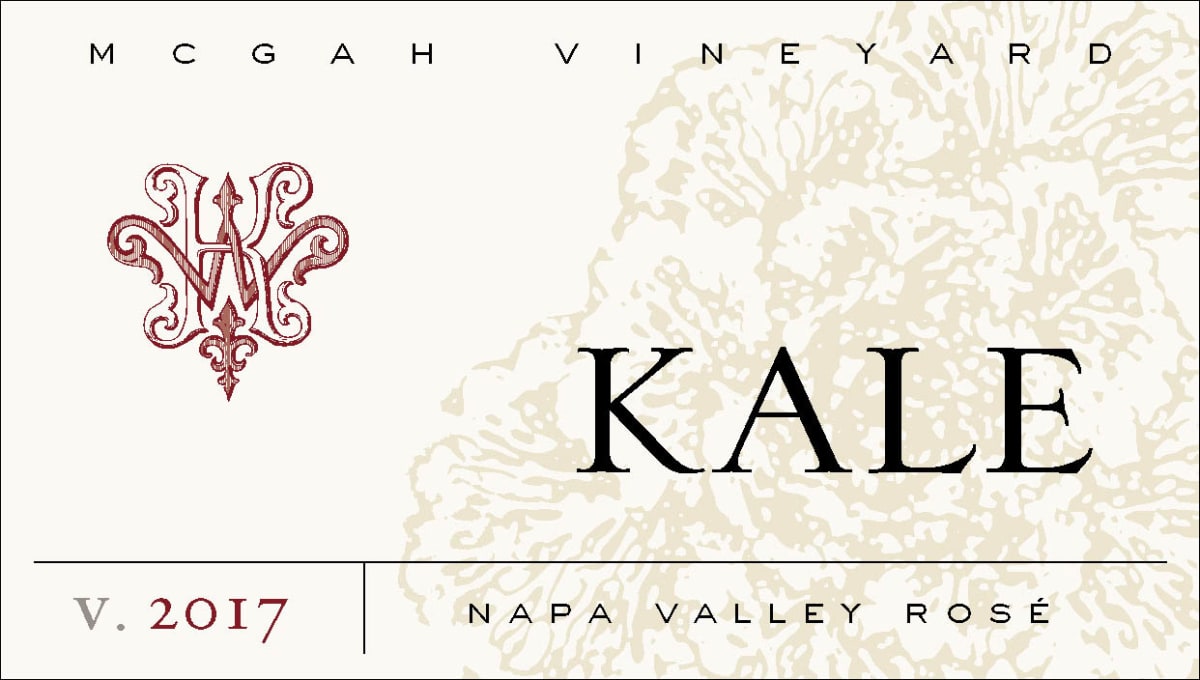

Winemaker Notes
Watermelon rind and Freesia are persistent in the whole cluster pressed Grenache. Completely dry, this component of the blend is all about floral freshness and acidity. The Mourvèdre brings weight, texture, color, and spice. The Sonoma Cast Stone concrete egg makes the wine round; the acidity is expressed more as minerality rather than tartness. This provides a structured balance through the finish and leaves the palate energized. Our Rose´ is made to be light, fresh and consumed immediately. Expect tartrates to form on the cork and bottle. Age at cellar temperature to avoid tartrates buildup. Serve chilled at 45 degrees Fahrenheit.
Blend: 84% Grenache, 16% Mourvédre
Professional Ratings
-
Wilfred Wong of Wine.com
COMMENTARY: Looking for a serious rosé that can pair with the main entrée has always proved to be an arduous task. The 2017 Kale Napa Valley Rosé is up to the task. TASTING NOTES: This is a richly flavored rosé that shows an excellent balance on the palate and crispness in the finish. Its aromas and flavors of ripe red fruits, bright green apples, and refreshing minerality should pair nicely with seared scallops over a bed of arugula. (Tasted: July 23, 2018, San Francisco, CA)

Whether it’s playful and fun or savory and serious, most rosé today is not your grandmother’s White Zinfandel, though that category remains strong. Pink wine has recently become quite trendy, and this time around it’s commonly quite dry. Since the pigment in red wines comes from keeping fermenting juice in contact with the grape skins for an extended period, it follows that a pink wine can be made using just a brief period of skin contact—usually just a couple of days. The resulting color depends on grape variety and winemaking style, ranging from pale salmon to deep magenta.

The Rutherford sub-region of Napa Valley centers on the town of Rutherford and covers some of Napa Valley’s finest vineyard real estate, spanning from the Mayacamas in the west, to the Vaca Mountains on the other side of the valley.
Inside of the Rutherford AVA, bordering the Mayacamas, is a stretch of uplands called the Rutherford Bench. (These bench lands technically run the length of Oakville as well). Mountain runoff creates deep, well-drained, alluvial soils on the bench, giving vine roots plenty of reason to permeate deep into the ground. The result is wine with great structure and complexity.
Rutherford Cabernet Sauvingons and Bordeaux Blends garner substantial attention for their enticing fragrances of dusty earth and dried herbs, broad and juicy mid-palates and lush and fine-grained tannins. The sub-appellation claims some of the valley’s most prized vineyards today, namely Caymus, Rubicon and Beckstoffer Georges III.
It is also home to Napa’s most influential and historic personalities. Thomas Rutherford, responsible for the appellation's name, made serious investments here in grape growing and wine production between the years of 1850 to 1880. Gustave Niebaum purchased a large swath of land and completed his winery in 1887, calling it “Inglenook.” Today this remains the oldest bonded winery in California. Georges Latour founded Beaulieu Vineyard in 1900, making it the oldest continuous winery in the state. Latour also hired the famous enologist, André Tchelistcheff, a man credited for single-handedly defining the modern Napa winemaking style.