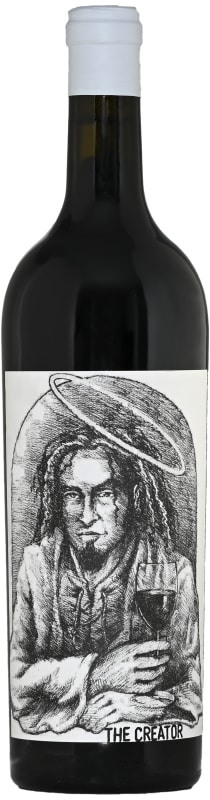


Winemaker Notes
Seductive. Thoughtful. Seamless. Triggers a yearning, multilayered. Dried cherry, old leather, pipe tobacco, and touches of orange peel. So much depth and so sensual. Black currant, roasted herbs, fresh wildflowers, and a whisper of dried rye and cedar box... It can be said: Creator.
Blend: 70% Cabernet Sauvignon, 30% Syrah
Professional Ratings
-
Robert Parker's Wine Advocate
The 2020 The Creator is a blend of 70% Cabernet Sauvignon and 30% Syrah. The nose is big, bold and smooth with a juicy, round and mineral-focused expression, offering gobs of dark red and black fruit tones. Full-bodied, the palate explodes with pleasure, showing soft herbal tones with sweet oak flavors that ride with blackberry and dark cherry flavors, compounding complexity while displaying layers of finesse and precision. The wine concludes with a food-friendly finish, emphasizing intense juicy flavors. The wine spent 22 months on the lees in 65% new French oak barriques. You'll want to set your calendars for this one when it's released in the fall later this year. Almost 25,000 bottles produced.
-
Jeb Dunnuck
Another stunning wine is the 2020 Cabernet Sauvignon-Syrah The Creator, which is 70% Cabernet Sauvignon and 30% Syrah, all from the Powerline Vineyard. Ripe black cherries, currants, sagebrush, and peppery herbs define the aromatics, and it hits the palate with medium to full-bodied richness, silky, polished tannins, and a great finish. The Syrah really brings a peppery, herbal, gamey style here, and this is a complex, incredibly satisfying 2020 to drink over the coming decade.
-
James Suckling
This shows depth and complexity, with blackcurrants, blue plums, white pepper, currant bush, grilled herbs, nut shells and raw mushrooms. Full-bodied, plush and broad-shouldered with a bed of velvety tannins and a generously dark-fruited center-palate. Lingering finish. 70% cabernet sauvignon and 30% syrah, co-fermented. Better from 2025.
-
Wine Spectator
Deeply structured and refined, with handsome cherry, black olive and stony mineral flavors that build richness toward fine-grained tannins. Cabernet Sauvignon and Syrah. Drink now through 2030. 2,067 cases made.



Located at the base of the Blue Mountains in Walla Walla Washington, K Vintners opened its doors to the public on December 3rd, 2001. The property at 820 Mill Creek Road where the winery sits was homesteaded in 1853 with the adjacent farmhouse built in 1872. The winery grounds with Titus Creek flowing through the lawn and the old pioneer planted trees, is a little slice of heartland Americana. The Winemaker: He loves to drink wine! Charles Smith, proprietor and winemaker, comes to Walla Walla after 11 years in Scandanavia. Originally from northern California, he has been involved with wine personally and professionally his whole life. And did we forget to mention... he loves to drink wine! The Vineyards: K Vintners is producing wines from 2 distinctive viticultural zones: Wahluke Slope and Walla Walla Valley. Each of these areas are unique and awesome for Syrah and the Field Blends produced. In April '02 two seperate blocks of vineyards were planted to Syrah adjacent to the winery in the rocky dry creek beds that run through K Vintners property.

With hundreds of red grape varieties to choose from, winemakers have the freedom to create a virtually endless assortment of blended red wines. In many European regions, strict laws are in place determining the set of varieties that may be used, but in the New World, experimentation is permitted and encouraged resulting in a wide variety of red wine styles. Blending can be utilized to enhance balance or create complexity, lending different layers of flavors and aromas. For example, a red wine blend variety that creates a fruity and full-bodied wine would do well combined with one that is naturally high in acidity and tannins. Sometimes small amounts of a particular variety are added to boost color or aromatics. Blending can take place before or after fermentation, with the latter, more popular option giving more control to the winemaker over the final qualities of the wine.
How to Serve Red Wine
A common piece of advice is to serve red wine at “room temperature,” but this suggestion is imprecise. After all, room temperature in January is likely to be quite different than in August, even considering the possible effect of central heating and air conditioning systems. The proper temperature to aim for is 55° F to 60° F for lighter-bodied reds and 60° F to 65° F for fuller-bodied wines.
How Long Does Red Wine Last?
Once opened and re-corked, a bottle stored in a cool, dark environment (like your fridge) will stay fresh and nicely drinkable for a day or two. There are products available that can extend that period by a couple of days. As for unopened bottles, optimal storage means keeping them on their sides in a moderately humid environment at about 57° F. Red wines stored in this manner will stay good – and possibly improve – for anywhere from one year to multiple decades. Assessing how long to hold on to a bottle is a complicated science. If you are planning long-term storage of your reds, seek the advice of a wine professional.

Responsible for some of Washington’s most highly acclaimed wines, the Walla Walla Valley has experienced a surge in popularity in recent years and is home to both historic wineries and younger, up-and-coming producers.
The Walla Walla Valley, a Native American name meaning “many waters,” is located in southeastern Washington; part of the appellation actually extends into Oregon. Soils here are well-drained, sandy loess over Missoula Flood deposits and fractured basalt.
It is a region perfectly suited to Rhône-inspired Syrahs, distinguished by savory notes of red berry, black olive, smoke and fresh earth. Cabernet Sauvignon and Merlot create a range of styles from smooth and supple to robust and well-structured. White varieties are rare but some producers blend Sauvignon Blanc with Sémillon, resulting in a rich and round style, and plantings of Viognier, while minimal, are often quite successful.
Of note within Walla Walla, is one new and very peculiar appellation, called the Rocks District of Milton-Freewater. This is the only AVA in the U.S. whose boundaries are totally defined by the soil type. Soils here look a bit like those in the acclaimed Rhône region of Chateauneuf-du-Pape, but are large, ancient, basalt cobblestones. These stones work in the same way as they do in Chateauneuf, absorbing and then radiating the sun's heat up to enhance the ripening of grape clusters. The Rocks District is within the part of Walla Walla that spills over into Oregon and naturally excels in the production of Rhône varieties like Syrah, as well as the Bordeaux varieties.