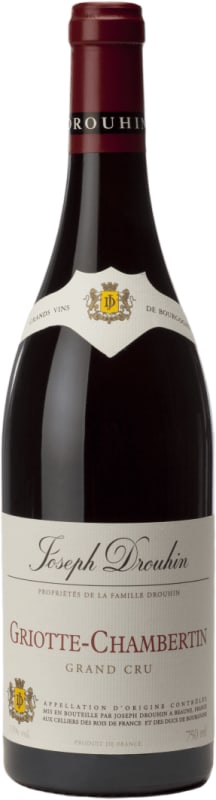


Winemaker Notes
Tasting Griotte-Chambertin is always cause for reflexion: the aromas are complex and subtle, with hints of cherry liqueur, preserved cherry, fine leather, nutmeg. When the wine matures, there are hints of truffle and venison. The flavors are also arresting in their own way and the tannins, although present, are never aggressive or coarse. Long and persistent on the palate, with a glorious aftertaste.
Professional Ratings
-
Vinous
One of my favorites from Drouhin this year is the 2021 Griotte-Chambertin Grand Cru. Splendid and vivacious red and black fruit vie for attention on the nose, the mineralité underneath almost too easy to overlook. The palate is beautifully-structured with crisp tannins, slightly chalky in texture with a very persistent, finely sculpted finish. Impressive.
Barrel Sample: 94-96 -
Jasper Morris
The Griotte-Chambertin has been vinified in barrels with stems in what is being called Vinification Intégrale. A fuller purple than most with a spicy, peppery nose. This has significant class, really an exciting wine and the additional freshness which the whole bunch gives, even while reducing acidity, is lovely. A light salty touch at the very end to season the little red berries. Drink from 2027-2035.
Barrel Sample: 93-95 -
Decanter
Drouhin counts themselves among the happy few who produce a wine from this tiny grand cru. They own just over a half-hectare out of 2.73 total, and their rendition is consistently among their top wines. The character is different from most of Gevrey in that the emphasis is less on the structure and tannin and more on the lush, silky fruit. Here aromas of ripe cherry and plum are complemented by floral notes and a suggestion of earth. This is a wine of superb finesse.
Barrel Sample: 93


Thin-skinned, finicky and temperamental, Pinot Noir is also one of the most rewarding grapes to grow and remains a labor of love for some of the greatest vignerons in Burgundy. Fairly adaptable but highly reflective of the environment in which it is grown, Pinot Noir prefers a cool climate and requires low yields to achieve high quality. Outside of France, outstanding examples come from in Oregon, California and throughout specific locations in wine-producing world. Somm Secret—André Tchelistcheff, California’s most influential post-Prohibition winemaker decidedly stayed away from the grape, claiming “God made Cabernet. The Devil made Pinot Noir.”

This small village is home to the Grands Crus in the farthest northerly stretches of Côte de Nuits and is famous for some of the deepest and firmest Burgundian Pinot Noir.
Gevrey boasts nine Grands Crus, the best of which are arguably Le Chambertin and Chambertin-Clos de Bèze. As with all of the fragmented vineyards of Burgundy, it isn’t easy to differentiate between the two, which are situated adjacent with Clos de Bèze slightly further up the hill than Le Chambertin. Clos de Bèze has a shallower soil and if you’re really counting, may produce wines less intense but more likely to charm. Some compare Le Chambertin in both power and plentitude only to the prized Romanée-Conti Grand Cru farther south in Vosne-Romanée.
Two other Grands Crus vineyards, Mazis-Chambertin (also written Mazy-) and Latricières-Chambertin command almost as much regard as Le Chambertin and Chambertin-Clos de Bèze. The upper part of Mazy, called Les Mazis Haut is the best and Latricières-Chambertin offers an abundance of juicy fruit and a silky texture in the warmer vintages.
Other Grands Crus are Ruchottes-Chambertin, Charmes-Chambertin, Mazoyères-Chambertin, Griotte-Chambertin and Chapelle-Chambertin.
The most respected Pinot Noir wines from Gevrey-Chambertin are robust and powerful but at the same time, velvety and expressive: black fruit, black liquorice and chocolate come into play. After some time in the bottle, the wines are harmonious with bright and sometimes candied fruit, and aromas of musk, truffle and forest floor. These have staying power.