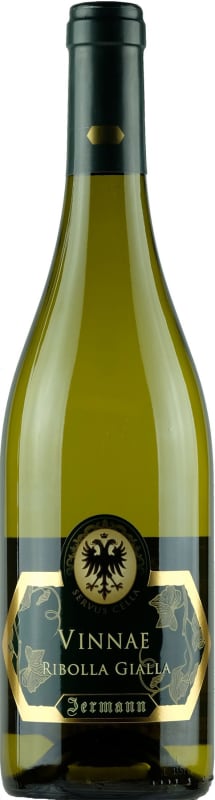


Winemaker Notes
Professional Ratings
-
Robert Parker's Wine Advocate
This is a fabulous wine and one I enjoyed drinking down to the last delicious drop. The 2015 Ribolla Gialla Vinnae Servus Cella is particularly likable in this warm and rich vintage. The Ribolla Gialla grape offers a good amount of textural richness even in a naked state. But this interpretation from Jermann further plays up that sensual softness and silkiness. To my palate, this wine has really blossomed in this vintage. The bouquet is redolent of quince, honey and poached pear.
-
James Suckling
A bright and fruity white with sliced pears and apples plus hints of almonds. Medium-to full-bodied, clean and fruity. Always a winner. Screw cap.
-
Wine Enthusiast
Delicately scented, this offers yellow stone-fruit and citrus aromas. The bright, savory palate mirrors the nose, offering ripe yellow-peach, nectarine and golden apple flavors, while tangy acidity provides balance and freshness.


With hundreds of white grape varieties to choose from, winemakers have the freedom to create a virtually endless assortment of blended white wines. In many European regions, strict laws are in place determining the set of varieties that may be used in white wine blends, but in the New World, experimentation is permitted and encouraged. Blending can be utilized to enhance balance or create complexity, lending different layers of flavors and aromas. For example, a variety that creates a soft and full-bodied white wine blend, like Chardonnay, would do well combined with one that is more fragrant and naturally high in acidity. Sometimes small amounts of a particular variety are added to boost color or aromatics. Blending can take place before or after fermentation, with the latter, more popular option giving more control to the winemaker over the final qualities of the wine.

The source of some of Italy’s best and most distinctive white wines, Friuli-Venezia Giulia is where Italian, Germanic and Slavic cultures converge. The styles of wines produced in this region of Italy's far north-east reflect this merging of cultures. Often shortened to just “Friuli,” the area is divided into many distinct subzones, including Friuli Grave, Colli Orientali del Friuli, Collio Goriziano and Carso. The flat valley of Friuli Grave is responsible for a large proportion of the region’s wine production, particularly the approachable Pinot grigio and the popular Prosecco. The best vineyard locations are often on hillsides, as in Colli Orientali del Friuli or Collio. In general, Friuli boasts an ideal climate for viticulture, with warm sunny days and chilly nights, which allow grapes to ripen slowly and evenly.
In Colli Orientali, the specialty is crisp, flavorful white wine made from indigenous varieities like Friulano (formerly known as Tocai Friulano), Ribolla gialla and Malvasia Istriana.
Red wines, though far less common here, can be quite good, especially when made from the deeply colored, rustic Refosco variety. In Collio Goriziano, which abutts Slovenia, many of the same varieties are planted. International varieties like Merlot, Cabernet Sauvignon, and Cabernet Franc are also common, but they tend to be Loire-like in style with herbaceous character and mellow tannins. Carso’s star grape is the red Teranno, notable for being rich in iron content and historically consumed for health purposes. It has an earthy, meaty profile and is often confused with the distinct variety Refosco.