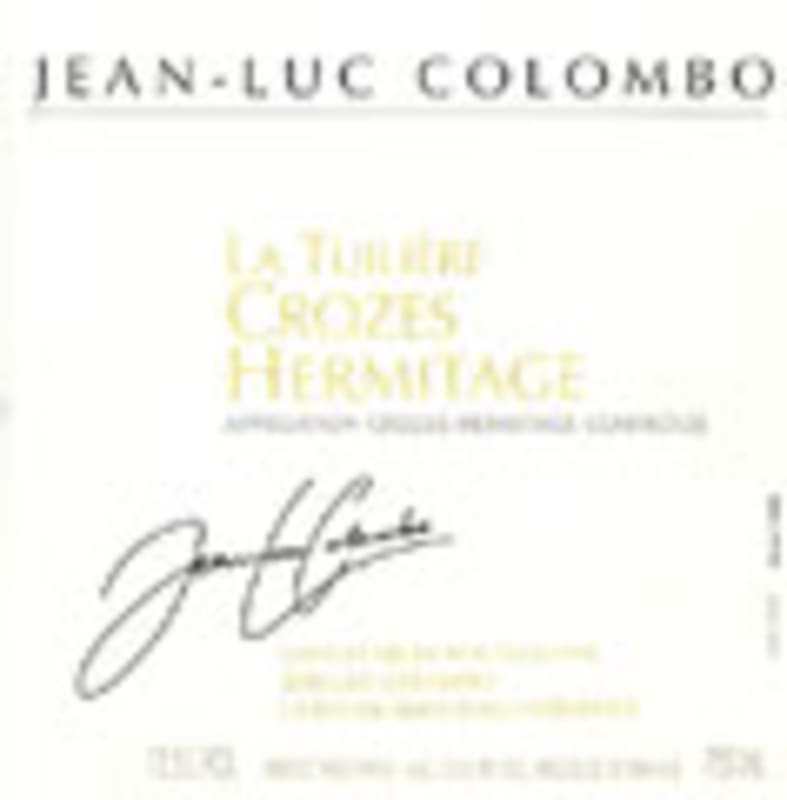

Winemaker Notes



Jean-Luc Colombo: Give the best from each of the most beautiful terroirs
Jean-Luc Colombo's childhood dream of becoming a winemaker and viticulturist came to fruition in the early 1980s with the acquisition of his first vineyard, a small plot of old Syrah vines perched on a granite hill overlooking the village of Cornas. From there was born the first vintage of Cornas "Les Ruchets." Early success led to the quick acquisition of more vineyards in the Northern Rhône and Provence. Throughout his journey Jean-Luc has remained true to his passion for winemaking and committed to his guiding principle: respecting nature and the unique qualities of each terroir.
Cornas is the heart and soul of Jean-Luc Colombo. A small appellation spanning 120 hectares of craggy terraces overlooking the Rhone river. It is where Syrah has found its most profound and pure expression of character, and it remains the sole grape variety cultivated throughout the appellation. A unique terroir, well-preserved in the midst of a forest of green oaks and junipers, lends depth and minerality to the wines. Not forgetting his origins Jean-Luc returned to his home region of Provence in the early 2000s. Near the Gulf of Marseille, in the limestone hills facing the Mediterranean Sea in an area locally known as Cote Bleue (Blue Coast), he purchased parcels of land from various proprietors which allowed him to create a new vineyard.
Living amidst their vineyards in Cornas, Jean-Luc and Anne have always been committed to preserving their environment by working in harmony with nature's abundance. Maintaining an ecosystem where insects, animals and vines coexist and thrive is paramount to them. As such, organic methods have been employed in their vineyards for many years. Additionally, Jean-Luc is a firm believer of dry farming. Irrigation is strictly prohibited in the vineyards, encouraging deep rooting of the vines, allowing for the full and pure expression of the terroir in accordance with the unique characteristics of each vintage.

Marked by an unmistakable deep purple hue and savory aromatics, Syrah makes an intense, powerful and often age-worthy red. Native to the Northern Rhône, Syrah achieves its maximum potential in the steep village of Hermitage and plays an important component in the Red Rhône Blends of the south, adding color and structure to Grenache and Mourvèdre. Syrah is the most widely planted grape of Australia and is important in California and Washington. Sommelier Secret—Such a synergy these three create together, the Grenache, Syrah, Mourvedre trio often takes on the shorthand term, “GSM.”

One of the smallest and most important Syrah regions of northern Rhone, Hermitage is practically one single south-facing slope of crushed granite, thinly covered with varied, yet well-charted soil types. Many climats (well identified parcels) exist within Hermitage and while some smaller producers make single climat Syrahs, some larger ones blend to make one balanced expression of the appellation.
Though the AC regulations allow the addition of up to 15% white grapes to a red Hermitage, in practice it is usually made from Syrah alone. Winemaking is pretty traditional—or you might say historic—with hot fermentations and aging in older barrels of various sizes. The best wines, characterized by deep, dense and sexy flavors of black fruit, cocoa, licorice and tobacco, have massive textures and a solid 10-20 years aging potential.
The region of Hermitage is totally enclosed; the only place it could go really is to literally fall down its own hill into the city of Tain or the Rhone River. Soil erosion is a problem and terraces exist alongside the hill in order to keep the earth in place. Crozes-Hermitage encloses the region entirely to its north and south.
While Hermitage seems synonymous with some of the best Syrah on the planet, actually about one third of the wine produced here comes from white grapes. The full, lush and robust Marsanne or the less common, but almost more charming, Roussanne create wonderful whites in which the best have great potential for aging, like the reds.