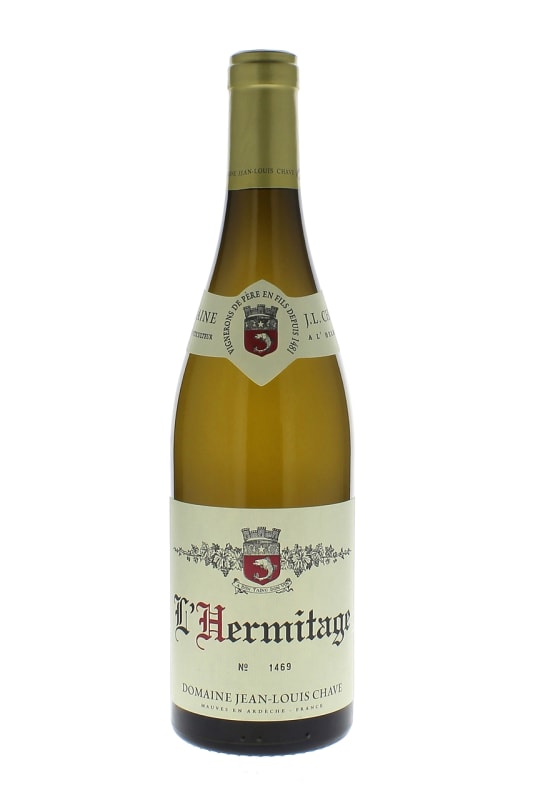


Winemaker Notes
The 2017 vintage is redolent with white flowers and honeysuckle. Increased acidity for the vintage results in a taut structure and incredible length. Notes of orange blossom and lemon curd.
Professional Ratings
-
Jeb Dunnuck
Cut from the same cloth, the 2017 Hermitage Blanc is stunning stuff, and Chave lovers should unquestionably have bottles of this in the cellar. Bottled in August of this year, its medium gold hue is followed by a mammoth bouquet of quince, flower oil, buttered almonds, and brioche. Every bit as good on the palate, it’s full-bodied, has a stacked mid-palate, flawless balance, and incredible minerality as well as length on the finish. It’s insanely good today, and while this cuvée can shut down, I wonder if this ever will. My money is on this drinking fabulously well for 25+ years. Life is too short not to drink as much Chave Hermitage Blanc as possible!
-
James Suckling
Aromas of graphite, tar, dark chocolate and black cherries abound, as well as ripe dark plums. This is a very convincing and complex edition of this wine. The palate is so concentrated and has a super deep, plush and fleshy stream of fresh plums and blackberries, as well as a swathe of fine tannins. Profoundly rich and velvety with a strong backbone. This will age for more than two decades after release.
Rating: 97-98
-
Robert Parker's Wine Advocate
In the end, I'm unable to definitely say that the 2017 Hermitage Blanc is better than the stupendous 2016. Of course, I sampled it just three days after it was bottled, so I've appended the + to my rating, as there's a possibility the wine may have been affected by that process. It's gently toasty but dominated at this stage by forward melon and pineapple fruit. Full-bodied and incredibly rich yet balanced, it unfolds in waves of flavor and texture, lingering for what seems like minutes on the finish. Hit it soon to enjoy its youthful opulence, or put it aside for 10-12 years.
Rating: 98(+)
-
Decanter
Jean-Louis' 2017 white Hermitage is a rich, almost buttered style with considerable fat and an opulent texture, but remains fresh. A tasting of four component parts - Péléat, Rocoules clay, Rocoules limestone and L'Ermite - shows an unusually rich and lush style. The Ermite component does however have a straight, lean, rising floral style to counterbalance the riper, rounder Péléat. Luxurious and cosy rather than focussed and dynamic.
-
Wine Spectator
Bright and very inviting, with a mix of pineapple, quince, mango and white peach flavors giving this a slightly exotic feel, while racy honeysuckle and orange blossom notes harness the finish, which is long and seductive in feel. A gorgeous display of range and vitality. This should cruise for two decades. Best from 2023 through 2040.


Full-bodied and flavorful, white Rhône blends originate from France’s Rhône Valley. Today these blends are also becoming popular in other regions. Typically some combination of Grenache Blanc, Marsanne, Roussanne and Viognier form the basis of a white Rhône blend with varying degrees of flexibility depending on the exact appellation. Somm Secret—In the Northern Rhône, blends of Marsanne and Roussanne are common but the south retains more variety. Marsanne, Roussanne as well as Bourboulenc, Clairette, Picpoul and Ugni Blanc are typical.

One of the smallest and most important Syrah regions of northern Rhone, Hermitage is practically one single south-facing slope of crushed granite, thinly covered with varied, yet well-charted soil types. Many climats (well identified parcels) exist within Hermitage and while some smaller producers make single climat Syrahs, some larger ones blend to make one balanced expression of the appellation.
Though the AC regulations allow the addition of up to 15% white grapes to a red Hermitage, in practice it is usually made from Syrah alone. Winemaking is pretty traditional—or you might say historic—with hot fermentations and aging in older barrels of various sizes. The best wines, characterized by deep, dense and sexy flavors of black fruit, cocoa, licorice and tobacco, have massive textures and a solid 10-20 years aging potential.
The region of Hermitage is totally enclosed; the only place it could go really is to literally fall down its own hill into the city of Tain or the Rhone River. Soil erosion is a problem and terraces exist alongside the hill in order to keep the earth in place. Crozes-Hermitage encloses the region entirely to its north and south.
While Hermitage seems synonymous with some of the best Syrah on the planet, actually about one third of the wine produced here comes from white grapes. The full, lush and robust Marsanne or the less common, but almost more charming, Roussanne create wonderful whites in which the best have great potential for aging, like the reds.