

Winemaker Notes
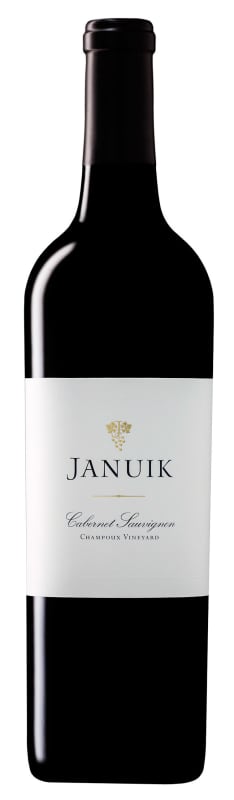
Blend: 93% Cabernet Sauvignon, 4% Merlot, 3% Malbec
Professional Ratings
-
James Suckling
This shows a solid core of ripe fruit with hints of walnuts and dried flowers. Full-bodied, tight and reserved. Tannic at the end. Needs time to soften. 93% cabernet sauvignon, 4% merlot and 3% malbec. Try after 2022.
-
Robert Parker's Wine Advocate
Made with the addition of 4% Merlot and 3% Malbec and aged for 21 months in French oak barrels, the 2017 Cabernet Sauvignon Champoux Vineyard opens to a gorgeous nose of chocolate-covered cherries, dusty plum, vanilla and baking spices with a green herbaceous hint under the fruit. Medium to full-bodied, flavors of dusty red cherry skin, currant and cassis linger with elements of roasted red bell pepper. Displaying a balanced structure and lifting tannins, the wine is full of life, food-friendly and precise. Ending with a lingering finish, this Cabernet is sure to deliver pleasure over the next 10 years.
-
Wine Enthusiast
Aromas of cocoa, bittersweet chocolate and scorched earth are followed by soft, plush feeling cherry and chocolate flavors that are in vivid focus. It lingers on the finish. Editors' Choice.


A noble variety bestowed with both power and concentration, Cabernet Sauvignon enjoys success all over the globe, its best examples showing potential to age beautifully for decades. Cabernet Sauvignon flourishes in Bordeaux's Medoc where it is often blended with Merlot and smaller amounts of some combination of Cabernet Franc, Malbecand Petit Verdot. In the Napa Valley, ‘Cab’ is responsible for some of the world’s most prestigious, age-worthy and sought-after “cult” wines. Somm Secret—DNA profiling in 1997 revealed that Cabernet Sauvignon was born from a spontaneous crossing of Cabernet Franc and Sauvignon Blanc in 17th century southwest France.

"Surely this is Horse Heaven!”
Its wide prairies and rolling expanses led an early pioneer to proclaim that the region looked like “horse heaven,” and as a result, the area was appropriately named. Horse Heaven Hills is in south central Washington state, geographically bound on its northern border by the Yakima River and in the south, by the larger Columbia River.
Its proximity to the Columbia River contributes to a variety of climactic factors that dramatically affect its grapes. In particular, an increase in wind from changes in pressure along the river, which flows from the cool and wet Pacific Ocean, inland to Washington’s hot and arid plains, creates 30% more wind than there would be otherwise. These winds moderate temperatures, protect against mold and rot, reduce the risk of early and late season frosts, diminish canopy size and toughen grape skins.
The vineyards bordering the river are on steep, south-facing, well-exposed slopes, with well-drained, sandy-loam soils. But the soils of the appellation are diverse throughout, ranging from wind-blown sand and loess, Missoula Flood sediment, and rocky basalt. Horse Heaven Hills has an arid continental climate with elevations ranging from 200 to 1,800 feet.
The first vines of the appellation were planted in 1972 in an optimal spot now referred to as the Champoux Vineyard. Today it remains the source of some of Washington’s most desirable and expensive Cabernet Sauvignons. In fact, the appellation as a whole boasts many of Washington’s top scoring wines. Its primary grape varieties are Cabernet Sauvignon, Merlot, Syrah, Chardonnay and Riesling.