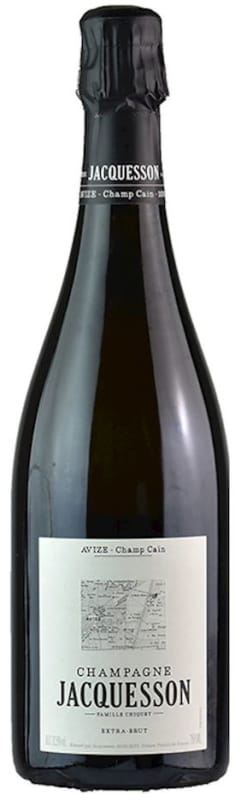


Winemaker Notes
Professional Ratings
-
Wine Enthusiast
One of a series of single-vineyard wines, this 100% Chardonnay comes from the Côte des Blancs. The strong minerality of the Champagne is richly balanced by the concentrated citrus and toast flavors. Acidity has been softened and beautifully integrated by the wine's maturity. Drink now.
-
Decanter
This has a sumptuous bouquet of mint and anise, pear and peach, flowers and mineral tones. With a bit of air, the bouquet possesses some orchard fruits and almond notes. The palate is elegantly fleshy, perfectly balanced with white fruit aromas, lots of minerality and a seemingly weightless finish. 100% Chardonnay. Dosage: 1.5g/l. Disgorged April 2019.
-
Wine & Spirits
The Chiquet brothers began making experimental lots of single-parcel wines at Jacquesson in the 1990s, helping to track the changes in their farming. With the 2000 vintage, they decided to release one of the parcel wines—Corne Bautray—commercially, then followed with two more from 2002. This year, they released three 2009s, and all three are remarkable, well worth seeking out, though they are made in very small quantities. Champ Caïn, from a 3.2-acre parcel of chardonnay planted in 1962, is among the most aristocratic chardonnays we’ve tasted in some time, flaunting its wealth of fresh fruit while still holding it discreetly tight. Notes of floral chamomile and savory almond pastry combine with mineral richness in a lasting flavor that keeps bringing you back for more.
-
Wine Spectator
Disgorged in May 2019 with 1.5 grams per liter dosage, the 2009 Extra-Brut Grand Cru Avize - Champ Caïn is showing beautifully, wafting from the glass with aromas of pear, blanched almonds, freshly baked bread and mandarin. Medium to full-bodied, pillowy and precise, it's elegant and refined, with a pinpoint mousse, discreet depth at the core and a long, chalky finish. Beautifully balanced with minimal dosage, it shows the results the Jacquesson brothers' viticulture were already delivering over a decade ago.


Representing the topmost expression of a Champagne house, a vintage Champagne is one made from the produce of a single, superior harvest year. Vintage Champagnes account for a mere 5% of total Champagne production and are produced about three times in a decade. Champagne is typically made as a blend of multiple years in order to preserve the house style; these will have non-vintage, or simply, NV on the label. The term, "vintage," as it applies to all wine, simply means a single harvest year.

Associated with luxury, celebration, and romance, the region, Champagne, is home to the world’s most prized sparkling wine. In order to bear the label, ‘Champagne’, a sparkling wine must originate from this northeastern region of France—called Champagne—and adhere to strict quality standards. Made up of the three towns Reims, Épernay, and Aÿ, it was here that the traditional method of sparkling wine production was both invented and perfected, birthing a winemaking technique as well as a flavor profile that is now emulated worldwide.
Well-drained, limestone and chalky soil defines much of the region, which lend a mineral component to its wines. Champagne’s cold, continental climate promotes ample acidity in its grapes but weather differences from year to year can create significant variation between vintages. While vintage Champagnes are produced in exceptional years, non-vintage cuvées are produced annually from a blend of several years in order to produce Champagnes that maintain a consistent house style.
With nearly negligible exceptions, . These can be blended together or bottled as individual varietal Champagnes, depending on the final style of wine desired. Chardonnay, the only white variety, contributes freshness, elegance, lively acidity and notes of citrus, orchard fruit and white flowers. Pinot Noir and its relative Pinot Meunier, provide the backbone to many blends, adding structure, body and supple red fruit flavors. Wines with a large proportion of Pinot Meunier will be ready to drink earlier, while Pinot Noir contributes to longevity. Whether it is white or rosé, most Champagne is made from a blend of red and white grapes—and uniquely, rosé is often produce by blending together red and white wine. A Champagne made exclusively from Chardonnay will be labeled as ‘blanc de blancs,’ while ones comprised of only red grapes are called ‘blanc de noirs.’