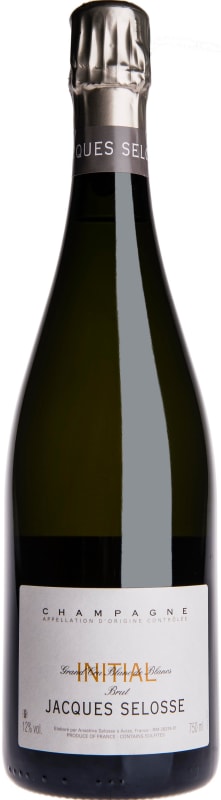


Winemaker Notes
Professional Ratings
-
Robert Parker's Wine Advocate
One of the pinnacles of the tasting with Selosse, unsurprisingly, is the NV Blanc de Blancs Grand Cru Substance, a wine with the most complex making, going through four stages of maturation: from barrels to the bottle. As always, it derives from a solera created in 1986. Originally, the wine was sourced from two parcels in Avize, but today the base wine (which eventually contributes only about 4.8% to the final blend in the bottle) is produced from a selection of plots in the village. Guillaume opted to include parcels that best fit the desired balance—sometimes these will be south-facing, other times east or even north-facing sites.
-
Jeb Dunnuck
The NV Champagne Grand Cru Blanc De Blancs Substance takes from Anselme’s solera, which began in 1996, and this release includes all vintages through 2014. It’s sourced from equal parts of two lieu-dits within Avize: Le Mont de Cramant, with a full south-facing exposition to its slope, and Les Chantereines, an east-facing parcel from the bottom of the hill. A golden straw hue, the wine is savory and herbaceous on opening, with a light smoky incense, and builds in the glass to reveal undulating notes of apricot, preserved citrus, honeycomb, and hazelnut. Moving to the palate, it offers a core of rich sapidity, concentrated with notes of citrus oils and chalky earth, although it simultaneously feels racy and linear along the sides of the palate, with a saline finish and an ultra-fine mousse. Long with umami richness and fantastic complexity, this genuinely singular wine is contemplative and noble.
-
Wine Spectator
Distinctive and savory at first, with hints of wood smoke, roasted almond, oyster shell and grilled herbs, this opens on the palate to reveal flavors of glazed apple, crystallized honey, singed orange peel, lime blossoms and ground coffee. Shows a streak of salinity that works in conjunction with fine-cut acidity to keep this focused through the long, mouthwatering finish. Fascinating.


A term typically reserved for Champagne and Sparkling Wines, non-vintage or simply “NV” on a label indicates a blend of finished wines from different vintages (years of harvest). To make non-vintage Champagne, typically the current year’s harvest (in other words, the current vintage) forms the base of the blend. Finished wines from previous years, called “vins de reserve” are blended in at approximately 10-50% of the total volume in order to achieve the flavor, complexity, body and acidity for the desired house style. A tiny proportion of Champagnes are made from a single vintage.
There are also some very large production still wines that may not claim one particular vintage. This would be at the discretion of the winemaker’s goals for character of the final wine.

Associated with luxury, celebration, and romance, the region, Champagne, is home to the world’s most prized sparkling wine. In order to bear the label, ‘Champagne’, a sparkling wine must originate from this northeastern region of France—called Champagne—and adhere to strict quality standards. Made up of the three towns Reims, Épernay, and Aÿ, it was here that the traditional method of sparkling wine production was both invented and perfected, birthing a winemaking technique as well as a flavor profile that is now emulated worldwide.
Well-drained, limestone and chalky soil defines much of the region, which lend a mineral component to its wines. Champagne’s cold, continental climate promotes ample acidity in its grapes but weather differences from year to year can create significant variation between vintages. While vintage Champagnes are produced in exceptional years, non-vintage cuvées are produced annually from a blend of several years in order to produce Champagnes that maintain a consistent house style.
With nearly negligible exceptions, . These can be blended together or bottled as individual varietal Champagnes, depending on the final style of wine desired. Chardonnay, the only white variety, contributes freshness, elegance, lively acidity and notes of citrus, orchard fruit and white flowers. Pinot Noir and its relative Pinot Meunier, provide the backbone to many blends, adding structure, body and supple red fruit flavors. Wines with a large proportion of Pinot Meunier will be ready to drink earlier, while Pinot Noir contributes to longevity. Whether it is white or rosé, most Champagne is made from a blend of red and white grapes—and uniquely, rosé is often produce by blending together red and white wine. A Champagne made exclusively from Chardonnay will be labeled as ‘blanc de blancs,’ while ones comprised of only red grapes are called ‘blanc de noirs.’