

Winemaker Notes
Professional Ratings
-
Wine Spectator
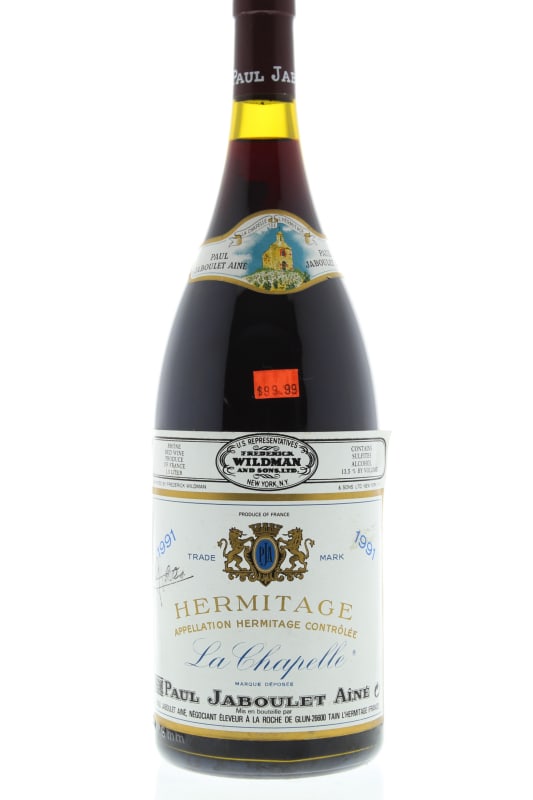
After a hot summer followed by rain at harvest, this 'miracle' vintage produced many gorgeous Northern Rhône Syrahs. Balanced, racy, elegant, fresh and sweet-tasting, with smooth tannins. Medium-bodied, with aromasof leather, roasted nuts, plum and wood smoke bringing a complexity that seduces.
-
Jeb Dunnuck
The 1991 Hermitage La Chapelle is now fully mature and a classy, elegant La Chapelle with lots to love, although it's not getting any better and has been in its peak drinking window for over 10-15 years now. Revealing a healthy dark plum hue with solid bricking at the rim, it has a great nose of ripe black fruits, cured meats, baking spices, subtle soy, game, and hints of chocolate. Just classic La Chapelle aromatically, it hits the palate with medium to full-bodied richness, sweet tannin, a plush, soft texture, and outstanding length. From a year that saw a great growing season that was capped by bad weather at harvest, this justifiably lives in the shadow of the 1990 but is nevertheless a gorgeous wine. this beauty will continue drinking nicely for another 8-10 years, although as I said, there's no need to delay gratification and if you have them, find something to celebrate and enjoy. Best After 2022
-
Robert Parker's Wine Advocate
Jacques Jaboulet stated that in 1991, the weather was fine until harvest, when it turned damp and gloomy. The saturated dark ruby/purple-colored 1991 La Chapelle is just beginning to reveal secondary nuances, and is far less evolved than the 1994. Aromas of Asian spices, soy, grilled steak, pepper, and blackberries are beginning to emerge. Ripe and dense, with tart acidity (a cool vintage characteristic), it is a medium t full-bodied, concentrated, impressively. It looks to be slightly better than I originally suggested.


Marked by an unmistakable deep purple hue and savory aromatics, Syrah makes an intense, powerful and often age-worthy red. Native to the Northern Rhône, Syrah achieves its maximum potential in the steep village of Hermitage and plays an important component in the Red Rhône Blends of the south, adding color and structure to Grenache and Mourvèdre. Syrah is the most widely planted grape of Australia and is important in California and Washington. Sommelier Secret—Such a synergy these three create together, the Grenache, Syrah, Mourvedre trio often takes on the shorthand term, “GSM.”

One of the smallest and most important Syrah regions of northern Rhone, Hermitage is practically one single south-facing slope of crushed granite, thinly covered with varied, yet well-charted soil types. Many climats (well identified parcels) exist within Hermitage and while some smaller producers make single climat Syrahs, some larger ones blend to make one balanced expression of the appellation.
Though the AC regulations allow the addition of up to 15% white grapes to a red Hermitage, in practice it is usually made from Syrah alone. Winemaking is pretty traditional—or you might say historic—with hot fermentations and aging in older barrels of various sizes. The best wines, characterized by deep, dense and sexy flavors of black fruit, cocoa, licorice and tobacco, have massive textures and a solid 10-20 years aging potential.
The region of Hermitage is totally enclosed; the only place it could go really is to literally fall down its own hill into the city of Tain or the Rhone River. Soil erosion is a problem and terraces exist alongside the hill in order to keep the earth in place. Crozes-Hermitage encloses the region entirely to its north and south.
While Hermitage seems synonymous with some of the best Syrah on the planet, actually about one third of the wine produced here comes from white grapes. The full, lush and robust Marsanne or the less common, but almost more charming, Roussanne create wonderful whites in which the best have great potential for aging, like the reds.