

Winemaker Notes
Professional Ratings
-
Robert Parker's Wine Advocate
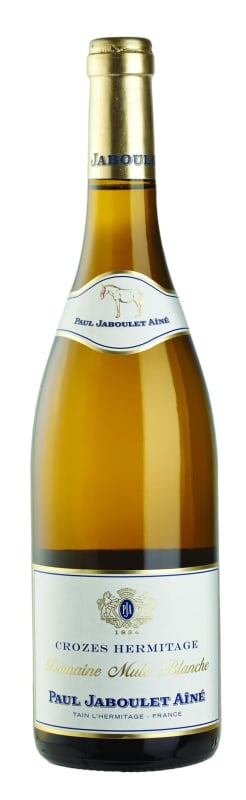
A softer, more forward, opulent and medium-bodied effort, the 2015 Crozes Hermitage Domaine Mule Blanche offers notes of orange blossom, salty minerality and tropical notes in plump, fruit-driven style. This comes from the same terroir as the Thalabert and should be enjoyed over the coming 3-4 years.


Full-bodied and flavorful, white Rhône blends originate from France’s Rhône Valley. Today these blends are also becoming popular in other regions. Typically some combination of Grenache Blanc, Marsanne, Roussanne and Viognier form the basis of a white Rhône blend with varying degrees of flexibility depending on the exact appellation. Somm Secret—In the Northern Rhône, blends of Marsanne and Roussanne are common but the south retains more variety. Marsanne, Roussanne as well as Bourboulenc, Clairette, Picpoul and Ugni Blanc are typical.

Crozes-Hermitage is Northern Rhone’s largest appellation, surrounding the steep granite faces of Hermitage to its north and south. Here the rolling vineyards are less extreme and its soils, rich in clay-limestone and alluvial matter, produce Syrahs that range from fruity and charming to lush and seductive. The Syrahs of Crozes-Hermitage have more mass than those from St. Joseph but are less intense than those from Hermitage. While many are intended for early consumption, some of the best Syrahs from Crozes-Hermitage will age beautifully for 5-10 years.
Up to 15% of white grapes may theoretically be added to red Crozes at the time of fermentation but whether this is done or not depends on the decision of the winemaker. The best Crozes-Hermitage Syrahs will be fleshy with black fruit (currant, blackberry and black cherry) and bay leaf qualities, notes of tar and stone, and a well-concentrated finish of smooth tannins.
About a tenth of the wine produced in Crozes-Hermitage is white, primarily composed of Marsanne supplemented by smaller amounts of Roussanne.