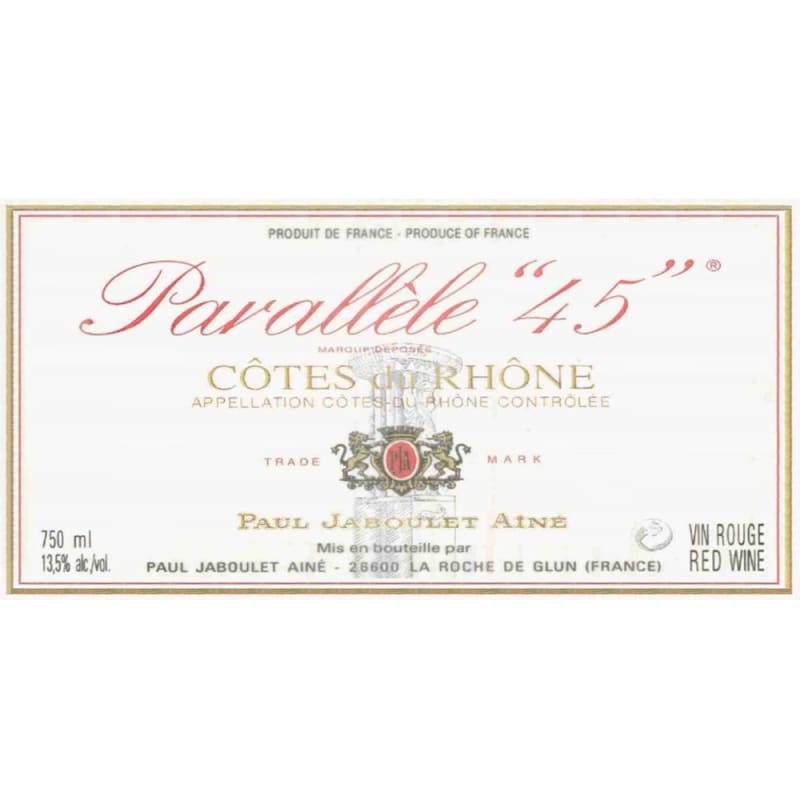

Winemaker Notes
The wine is made utilizing a blend of Grenache and Syrah grapes from 25 year-old vines in hillside terraced and sloped vineyards. The soils are clay, stones, pebbles and argillaceous limestone, which lends depth and complexity to the wine. Made with traditional vinification methods, the wine undergoes long vatting and temperature-controlled fermentation in stainless steel tanks. Yields are kept to 45 hl/ha and the wine will keep for 1 to 5 years.
Food Match: turkey, roasts, red meat, pork, pizza, pasta in meat sauce, lamb, grilled vegetables, grilled meats, game, fowl, beef.


With bold fruit flavors and accents of sweet spice, Grenache, Syrah and Mourvèdre form the base of the classic Rhône Red Blend, while Carignan, Cinsault and Counoise often come in to play. Though they originated from France’s southern Rhône Valley, with some creative interpretation, Rhône blends have also become popular in other countries. Somm Secret—Putting their own local spin on the Rhône Red Blend, those from Priorat often include Merlot and Cabernet Sauvignon. In California, it is not uncommon to see Petite Sirah make an appearance.

Typically thought of as a baby Chateâuneuf-du-Pape, the term Côtes du Rhône actually doesn’t merely apply to the flatter outskirts of the major southern Rhône appellations, it also includes the fringes of well-respected northern Rhône appellations. White wines can be produced under the appellation name, but very little is actually made.
The region offers some of the best values in France and even some first-rate and age-worthy reds. Red wine varieties include most of the Chateâuneuf-du-Pape varieties like Grenache, Syrah, Mourvedre, Cinsault, and Counoise, as well as Carignan. White grapes grown include Grenache blanc, Roussanne and Viognier, among others.