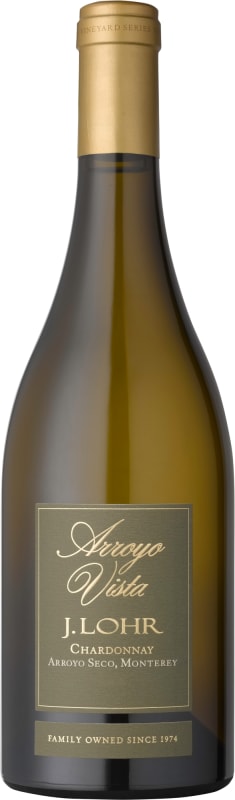


Winemaker Notes
The 2018 growing season in the Arroyo Seco was quite cool from March into July. The mild weather during the summer provided a slow and even ripening of the grapes, while the afternoon winds helped keep the fruit healthy until harvest. The warmth from early September on was just enough to fully ripen the grapes, while three extra weeks on the vine contributed to the rich texture. Sugars, acids, and flavors for our Block 9, clone 76 Chardonnay the backbone of the Arroyo Vista blend were in optimal balance on the October 23 harvest date. FOOD PAIRINGS Triple crème brie cheese, lemon-herb roasted chicken, or grilled halibut in lemon beurre blanc sauce.
Professional Ratings
-
The Somm Journal
Following scents of honeyed lemon and pound cake, chamomile and pear blossom add an unctuous quality to the mouthfeel before a finish with a zing of salinity
-
Wine Enthusiast
Light aromas of baked lemon, clotted cream and honeysuckle show on the nose of this bottling. There's bright acidity, with fresh flavors of melon and lemon on the palate, which lead into marzipan and sea salt toward the lush finish.



For more than fifty years and through two generations, the Lohr family and their team have been leaders in the California wine industry. Founder Jerry Lohr and his three children Steve, Cynthia, and Lawrence oversee one of the country's most successful and trusted fine wine labels. With first plantings in Monterey in 1972 and then in Paso Robles in 1986, the team helped write the book on sustainable winegrowing on the Central Coast.
Today, J. Lohr farms more than 4,000 acres of estate vineyards in Monterey's Arroyo Seco and Santa Lucia Highlands appellations, Paso Robles, and St. Helena in the Napa Valley. They produce eight tiers of award-winning releases: J. Lohr Signature Cabernet Sauvignon, J. Lohr Cuvée Series, J. Lohr Vineyard Series, J. Lohr Gesture, J. Lohr Pure Paso Proprietary Red Wine, J. Lohr Estates, J. Lohr Monterey Roots, and ARIEL Vineyards.
J. Lohr is a Certified California Sustainable Vineyard and Winery and was honored with the 2020 Green Medal Leader Award in recognition of the company's decades-long commitment to sustainability.

One of the most popular and versatile white wine grapes, Chardonnay offers a wide range of flavors and styles depending on where it is grown and how it is made. While it tends to flourish in most environments, Chardonnay from its Burgundian homeland produces some of the most remarkable and longest lived examples. California produces both oaky, buttery styles and leaner, European-inspired wines. Somm Secret—The Burgundian subregion of Chablis, while typically using older oak barrels, produces a bright style similar to the unoaked style. Anyone who doesn't like oaky Chardonnay would likely enjoy Chablis.

Named after the dramatic, seasonal river of rain and snowmelt that cuts through the upper elevations of the Santa Lucia Mountains, the Arroyo Seco AVA extends east from the resultant mountain gorge, and into the rural and warm Salinas Valley. During the growing season, cool and damp Pacific Ocean air penetrates the gorge and flows into the valley, creating a cool evening respite for vineyards after a hot summer day. This natural water-release has also created a subterranean aquifer, which helps set the foundation of the AVA's boundaries and supplies the vineyards with water.
Arroyo Seco was actually home to the first commercial vineyard in California, called Mission Ranch, which was owned and propogated by the Mirassou family in the 1960s.
Chardonnay is most widely grown here. But as one of Monterey’s warmer regions, Arroyo Seco enjoys the highest praise for its reds, namely Bordeaux blends.
Arroyo Seco is one of the oldest AVAs in California, its status granted in the early 1980s, and also remains one of its smallest.