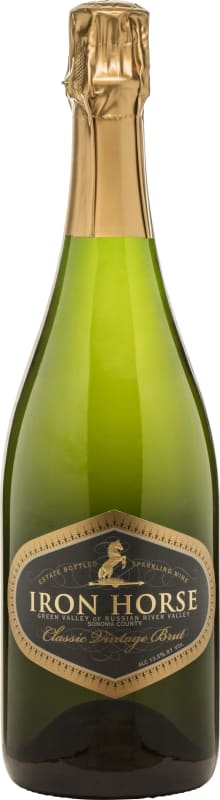


Winemaker Notes
The 2017 Classic Vintage Brut is considered the “flagship” of the Iron Horse bubblies as it shows everything the family strives to accomplish, striking memory bells that say “champagne” in quality and finesse, but with flavors that are unmistakably Sonoma County, Russian River, Green Valley and most distinctly Iron Horse.
Professional Ratings
-
Wine Enthusiast
Made from 70% Pinot Noir and 30% Chardonnay, this stunning sparkler offers layers of stone fruit, hazelnut liqueur and marzipan. Mineral-driven and sharp in acidity, it stays fresh and focused in citrus and oyster shell flavors.
-
Wine Spectator
Refined and lushly layered, with expressive strawberry and apple flavors that take on yeast roll and hazelnut accents on the long, invigorating finish. Drink now.
-
Wine & Spirits
This clean sparkler would enliven oysters or clams on the half shell with its herbal notes of lemon verbena and sweet William. There’s a touch of apple butter richness before the wine turns a cor-ner to dry, pleasantly vegetal notes that leave the mouth refreshed. An appetite-inducing aperitif.


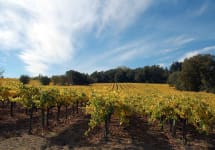
Iron Horse is best known for its Sparkling Wines, which have been served at the White House since 1985, beginning with the historic U.S.-Russian Summit Meetings ending the Cold War, at the White House Millennium celebrations ushering in the new century, and at the White House dinner honoring the Pope.
Their Chardonnay is considered a signature wine for the cool, foggy Green Valley region. Pinot Noir is the winery's rising star wine.
Iron Horse has been named an American icon in a reference book published by Random House called "Icons of the American Market Place". Listed in alphabetical order, Iron Horse takes its place between iPod and Jack Daniel’s, validating Iron Horse’s reputation as a brand backed by pride, passion and quality.
The Iron Horse name came from a train that cut across the property in the 1890s. The logo, the rampant horse on a weather vane, came from a 19th century weathervane found while clearing away the rubble to build the winery.

Representing the topmost expression of a Champagne house, a vintage Champagne is one made from the produce of a single, superior harvest year. Vintage Champagnes account for a mere 5% of total Champagne production and are produced about three times in a decade. Champagne is typically made as a blend of multiple years in order to preserve the house style; these will have non-vintage, or simply, NV on the label. The term, "vintage," as it applies to all wine, simply means a single harvest year.

Situated on the foggier and colder western edge of the Russian River Valley, almost abutting the Sonoma Coast appellation, Green Valley is one of California’s most reputable Chardonnay and Pinot noir producing regions. It is also a wonderful source of sparkling wines made from these varieties.
Goldridge soils abound throughout the Green Valley appellation. This fine, dark, sandy loam and fractured sandstone is derived from the remains of ancient inland seabeds dating back three to five million years. It is valuable for high quality grape growing because of its excellent drainage and low fertility.