
Winemaker Notes

Perfect for celebrating the Millennium, or as a gift, this very unique wine has been crafted by using Icewine as a cuvée. Inniskillin Icewine is made from grapes naturally frozen on the vine and hand picked when the temperature drops below -10°C. The removal of ice crystals, separated from frozen grapes during pressing, concentrates the juice into a delicate nectar that is expertly guided through fermentation to achieve the rich and alluring specialty known as Icewine. Produced by Karl Kaiser, Inniskillins Co-founder and Winemaker, the new Sparkling Icewine was made exclusively from 100% Icewine which went through a primary alcoholic fermentation in a sealed vessel, in accordance with the VQA "Méthode Cuve Close." This process of making the "cuvée" took seven months, and the wine was also aged on the lees for the same length of time. Following this, it was filtered under pressure to preserve the fine, naturally evolved bubbles (CO2) that were produced during fermentation. Nectarines and apricots dominate the nose with a hint of lychee nut in the background. On the palate this wine shows a very delicate but lively effervescence which is balanced beautifully by the generous natural acidity. Inniskillins Sparkling Icewine is best served chilled or after a meal.
Inniskillin

Inniskillin

View all products
Inniskillin, undefined
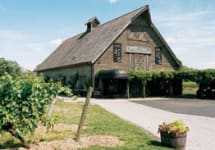
Inniskillin Winery Image
Austrian-born and monastically educated, Karl J. Kaiser, and native Canadian Donald J.P. Ziraldo, a decendant of a family of winegrowers in Northern Italy, founded Innisklillin Wines on July 31, 1975, obtaining the first winery license granted in the province of Ontario since 1929. Located in Niagara-on-the-Lake at the historic Brae Burn Estate, Inniskillin was founded upon and is dedicated to the principle of producing outstanding wines from vinifera wine grapes grown in the Niagara Peninsula. Karl and Donald tirelessly tested the new ground of Niagara, grafting old-world wisdom in the new-world terroir. Inniskillin rocketed to international notoriety when its pioneering 1989 Vidal Icewine was awarded the Grand Prix d'Honneur at Vinexpo 1991, and drew worldwide attention to Canada's burgeoning wine industry.

What is Icewine?
VQA Icewine is a highly concentrated dessert wine made by harvesting grapes naturally frozen on the vine at -10 C in December-January. Inniskillin VQA Icewine is internationally awarded and recognized and is exported throughout the world.

Image for Other Dessert content section
View all products

Apart from the classics, we find many regional gems of different styles.

Late harvest wines are probably the easiest to understand. Grapes are picked so late that the sugars build up and residual sugar remains after the fermentation process. Ice wine, a style founded in Germany and there referred to as eiswein, is an extreme late harvest wine, produced from grapes frozen on the vine, and pressed while still frozen, resulting in a higher concentration of sugar. It is becoming a specialty of Canada as well, where it takes on the English name of ice wine.

Vin Santo, literally “holy wine,” is a Tuscan sweet wine made from drying the local white grapes Trebbiano Toscano and Malvasia in the winery and not pressing until somewhere between November and March.

Rutherglen is an historic wine region in northeast Victoria, Australia, famous for its fortified Topaque and Muscat with complex tawny characteristics.

Image for Canada content section
View all products

With a cool climate suitable for more than just icewine production, Canada is also home to excellent dry, still and sparkling Canadian wines. Most viticulture is based in Ontario on the east coast and British Columbia on the west coast. Because of the high risk of winter freeze and spring frost, plantings are typically centered on large bodies of water to take advantage of their temperature moderating effects.

In Ontario, particularly on the Niagara Peninsula, aromatic white varieties like Riesling and Gewürztraminer are most successful. Many Canadian wineries produce both dry and semi-dry versions. Chardonnay, Pinot Noir, Gamay, and Cabernet Franc perform nicely here as well. For icewine, French-American hybrid variety, Vidal, is popular. In British Columbia, many of the same grapes are grown, but there is also a significant emphasis on Bordeaux varieties—especially Merlot.

YNG125542_1998 Item# 24489