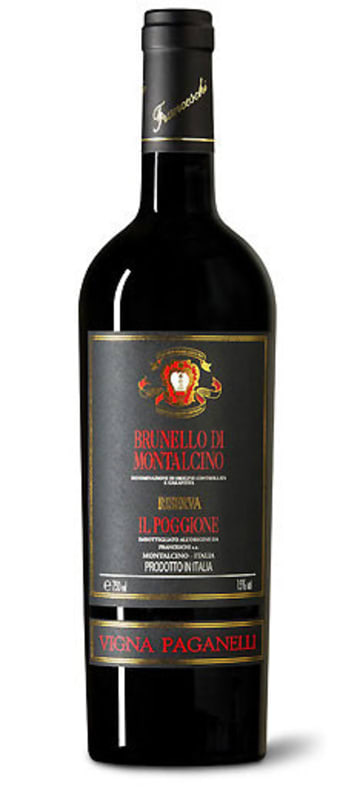


Winemaker Notes
Brunello di Montalcino Riserva Vigna Paganelli is produced only in the best vintages and in limited quantity. This wine comes exclusively from "I Paganelli" vineyard, the oldest one in the estate, planted in 1964. Its vines, used as a clonal reference when planting new vineyards, produce high quality grapes which are picked by the individual selection of the best and ripest bunches.
After the manual harvest, the must ferments for about 20 days in contact with the skins. Subsequently the wine spends 48 months in large French oak casks and it is then aged in the bottle.
Professional Ratings
-
James Suckling
Rather sweet due to the super ripe vintage. But there's also great subtlety, enormous depth and a ton of tannin behind the opulence. The super long finish is incredibly focused. Try to wait until at least 2020. This stunning Brunello has decades of life ahead of it.
-
Decanter
Only produced in the best vintages, Vigna Paganelli is a 12ha single vineyard planted in 1964. It represents the estate's oldest vines, which serve as a source for clonal material for new plantings. The nose seduces with exotic spice, rosemary, pepper and tobacco. Though all the elements are deftly balanced, the palate is still somewhat austere, locked in a firm, tannic grip. Lingering leather and dark cherry notes promise more to come, and this demands ageing.
-
Robert Parker's Wine Advocate
Here's a beautifully rich and succulent Brunello that drinks very nicely straight out of the gate. The 2012 Brunello di Montalcino Riserva Vigna Paganelli delivers a warm, inviting and velvety presentation. This bold wine is redolent of black cherry and dried blackberry with sweet almond, toasted spice and balsam herb on the long finish. What stands out most, however, is the wine's rich texture that floods the mouth from front to back. That richness is fueled by the warmth of the vintage but also by the magnificent oak integration. This Riserva is aged in botti grandi for four long years.
-
Wine Spectator
Rich and evocative of cherry, currant, mineral, spice and tobacco flavors, this tightly knit red is harmonious and solidly built. Remains vibrant and persists on the mineral-inflected aftertaste. Fine length. Best from 2023 through 2038.


Among Italy's elite red grape varieties, Sangiovese has the perfect intersection of bright red fruit and savory earthiness and is responsible for the best red wines of Tuscany. While it is best known as the chief component of Chianti, it is also the main grape in Vino Nobile di Montepulciano and reaches the height of its power and intensity in the complex, long-lived Brunello di Montalcino. Somm Secret—Sangiovese doubles under the alias, Nielluccio, on the French island of Corsica where it produces distinctly floral and refreshing reds and rosés.

Famous for its bold, layered and long-lived red, Brunello di Montalcino, the town of Montalcino is about 70 miles south of Florence, and has a warmer and drier climate than that of its neighbor, Chianti. The Sangiovese grape is king here, as it is in Chianti, but Montalcino has its own clone called Brunello.
The Brunello vineyards of Montalcino blanket the rolling hills surrounding the village and fan out at various elevations, creating the potential for Brunello wines expressing different styles. From the valleys, where deeper deposits of clay are found, come wines typically bolder, more concentrated and rich in opulent black fruit. The hillside vineyards produce wines more concentrated in red fruits and floral aromas; these sites reach up to over 1,600 feet and have shallow soils of rocks and shale.
Brunello di Montalcino by law must be aged a minimum of four years, including two years in barrel before realease and once released, typically needs more time in bottle for its drinking potential to be fully reached. The good news is that Montalcino makes a “baby brother” version. The wines called Rosso di Montalcino are often made from younger vines, aged for about a year before release, offer extraordinary values and are ready to drink young.