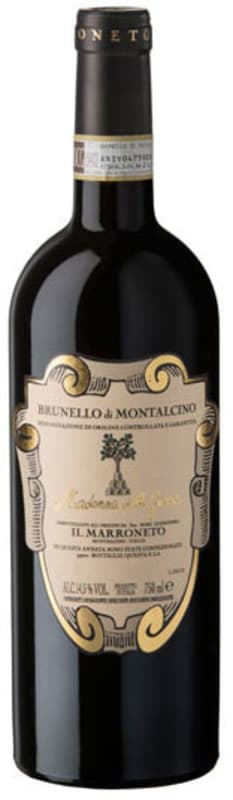


Winemaker Notes
Sangiovese’s high natural acidity and complex tannic structure make it an admirable ally to a range of hearty meat or game dishes. Go the traditional route with braised short ribs or Osso Bucco, but don’t be hesitant. Brunello benefits from a straightforward pairing, no artifice – as the Tuscans prefer. Bean and kale soup, papparedelle, or an aged pecorino, are resoundingly local choices.
Professional Ratings
-
Robert Parker's Wine Advocate
The stunning 2013 Brunello di Montalcino Riserva Madonna Delle Grazie is a protagonist of the vintage. This growing season has produced a collection of iconic wines, and to my palate none is more impressive than this. This is the first time Alessandro Mori has produced a riserva. He did so because he "fell in love with a single barrel" as he puts it. That botte was left to age for an additional year (for a total of 41 months) and once bottled, it produced 1,700 magnums and 66 750-milliliter bottles. I had preview tasted this wine from botte last year, and this review is based on a tasting of one of those 750-milliliter samples. This unique riserva opens to a beautifully saturated and dark ruby hue. The wine presents an even sequence of aromas that segues from dark forest fruit to balsam herb and crushed rock. The careful balance of aromas is impeccable. The wine is robust and firmly textured, with a bright culmination of Sangiovese acidity that adds overall radiance and brilliance. It has all the criteria necessary for a long and successful aging trajectory. I struggled to score this wine and the only reason it fell short of a perfect score is because I have the memory of the stunning 2010 vintage so clear in my mind.
-
Decanter
Alessandro Mori has 42 harvests under his belt yet this is the very first vintage in which he has released a Riserva. Sourced from his 1.6ha north-facing Madonna delle Grazie vineyard, it's a separate bottling of a single botte, which Mori compares to a schoolchild who demonstrates a special gift at a young age. In a single, informal taste, this wine demonstrates its breed, beauty and potential, with dark nuances of forest earth, violet, stone and blue fruit. It's deep and concentrated but not rich. Racy acidity meets long, fine, powdery tannins with a commanding grip and a finish that just doesn't quit.
-
Wine Enthusiast
Earthy aromas of underbrush, truffle, game and new leather meld with ripe berry and a whiff of blue flower. Reflecting the nose, the savory palate is loaded with personality, delivering crushed raspberry, black cherry, clove, aromatic herb and a distinct but intriguing gamy note alongside a backbone of assertive, fine-grained tannins. Vibrant acidity lends balance. Open this way in advance to give it time to breathe. Drink 2023–2038.
-
Wine & Spirits
Giuseppe Mori founded this estate on Montalcino’s northern slope in 1974, and produced his first Brunello in 1980 with his son, Alessandro, who now runs the business. This wine, named for a 13th-century church on the estate, is made from a special selection of fruit and ages in large oak casks for 41 months. The 2013 is high toned and floral scented, with a freshness characteristic of the vintage and the high elevation of the slopes where the vines grow. Notes of mint and eucalyptus brighten the berry flavors, all woven together by fine, chalky tannins and brisk acidity. The flavors gain momentum and concentration over several days, indicating the long aging potential of this wine.
-
Wine Spectator
A ripe style, displaying macerated cherry, plum and rose hip tea flavors. This is supported by a firm backbone yet feels balanced and stays long on the finish. Leather, earth and tobacco notes round this out. Best from 2021 through 2035.


Among Italy's elite red grape varieties, Sangiovese has the perfect intersection of bright red fruit and savory earthiness and is responsible for the best red wines of Tuscany. While it is best known as the chief component of Chianti, it is also the main grape in Vino Nobile di Montepulciano and reaches the height of its power and intensity in the complex, long-lived Brunello di Montalcino. Somm Secret—Sangiovese doubles under the alias, Nielluccio, on the French island of Corsica where it produces distinctly floral and refreshing reds and rosés.

Famous for its bold, layered and long-lived red, Brunello di Montalcino, the town of Montalcino is about 70 miles south of Florence, and has a warmer and drier climate than that of its neighbor, Chianti. The Sangiovese grape is king here, as it is in Chianti, but Montalcino has its own clone called Brunello.
The Brunello vineyards of Montalcino blanket the rolling hills surrounding the village and fan out at various elevations, creating the potential for Brunello wines expressing different styles. From the valleys, where deeper deposits of clay are found, come wines typically bolder, more concentrated and rich in opulent black fruit. The hillside vineyards produce wines more concentrated in red fruits and floral aromas; these sites reach up to over 1,600 feet and have shallow soils of rocks and shale.
Brunello di Montalcino by law must be aged a minimum of four years, including two years in barrel before realease and once released, typically needs more time in bottle for its drinking potential to be fully reached. The good news is that Montalcino makes a “baby brother” version. The wines called Rosso di Montalcino are often made from younger vines, aged for about a year before release, offer extraordinary values and are ready to drink young.