


Winemaker Notes
#91 Wine Spectator Top 100 of 2025
At the Western end of Black Sheep Block is a pocket of Shiraz that lands a mighty punch of meaty-spiciness that couples perfectly with the exotic Saperavi. Contrasting, but complimentary and complex, this has fast become the backbone of the Black Ops Blend. Dense dried spice and violets are followed with an entire Black Forest of heady fruit. Plums and blackberries. Iodine and beets. Rose and coal smoke, Black tea and raspberry. All opulence in the mouth. A steady wave of fruit and firm grip ploughs down the palate. Bombast but with both charm and class. Bold, brooding, and intense.
Professional Ratings
-
Australian Wine Companion
I find this maker's obsession with saperavi curious, yet this proves to be a fantastic blend, far more interesting than most straight shiraz from the region. A deep crimson sashays to a dense palate that is pulpy and ferrous and grapey, without being anodyne or sweet. A staining intensity of licorice strap and blue fruits. Hints of llicorella, forceful of mineral pungency, gritty and energetic, drags the melee long. Very good drinking.
-
James Suckling
I find this maker's obsession with saperavi curious, yet this proves to be a fantastic blend, far more interesting than most expressions of straight shiraz from the region. A deep crimson hue with a dense palate that is pulpy, ferrous and grapey, without being anodyne or sweet. A staining intensity of licorice strap and blue fruits. Hints of llicorella with mineral pungency, gritty and energetic, drags the finish long. Very good drinking. Drink or hold.
-
Wine Spectator
Dense and complex, with rich notes of black walnut liqueur, salted black licorice and blackberry preserves, plus a hint of choco- late mint. The ripe huckleberry and spiced plum fla- vors show a lovely juicy quality, but it’s the grace notes, including chicory and loamy earth, that linger on the velvety frame. Shiraz and Saperavi.
-
Wine Enthusiast
The little sibling to “Pure Black”, this is almost equally as powerful as its big sis. A deep garnet hue, it's unabashedly rich and concentrated, with powerful svelte tannins and intense dark fruit, beet root, dark chocolate and Indian spice box. Whip out the decanter and the protein—this will need both—or cellar for probably as long as you walk this earth.


With hundreds of red grape varieties to choose from, winemakers have the freedom to create a virtually endless assortment of blended red wines. In many European regions, strict laws are in place determining the set of varieties that may be used, but in the New World, experimentation is permitted and encouraged resulting in a wide variety of red wine styles. Blending can be utilized to enhance balance or create complexity, lending different layers of flavors and aromas. For example, a red wine blend variety that creates a fruity and full-bodied wine would do well combined with one that is naturally high in acidity and tannins. Sometimes small amounts of a particular variety are added to boost color or aromatics. Blending can take place before or after fermentation, with the latter, more popular option giving more control to the winemaker over the final qualities of the wine.
How to Serve Red Wine
A common piece of advice is to serve red wine at “room temperature,” but this suggestion is imprecise. After all, room temperature in January is likely to be quite different than in August, even considering the possible effect of central heating and air conditioning systems. The proper temperature to aim for is 55° F to 60° F for lighter-bodied reds and 60° F to 65° F for fuller-bodied wines.
How Long Does Red Wine Last?
Once opened and re-corked, a bottle stored in a cool, dark environment (like your fridge) will stay fresh and nicely drinkable for a day or two. There are products available that can extend that period by a couple of days. As for unopened bottles, optimal storage means keeping them on their sides in a moderately humid environment at about 57° F. Red wines stored in this manner will stay good – and possibly improve – for anywhere from one year to multiple decades. Assessing how long to hold on to a bottle is a complicated science. If you are planning long-term storage of your reds, seek the advice of a wine professional.
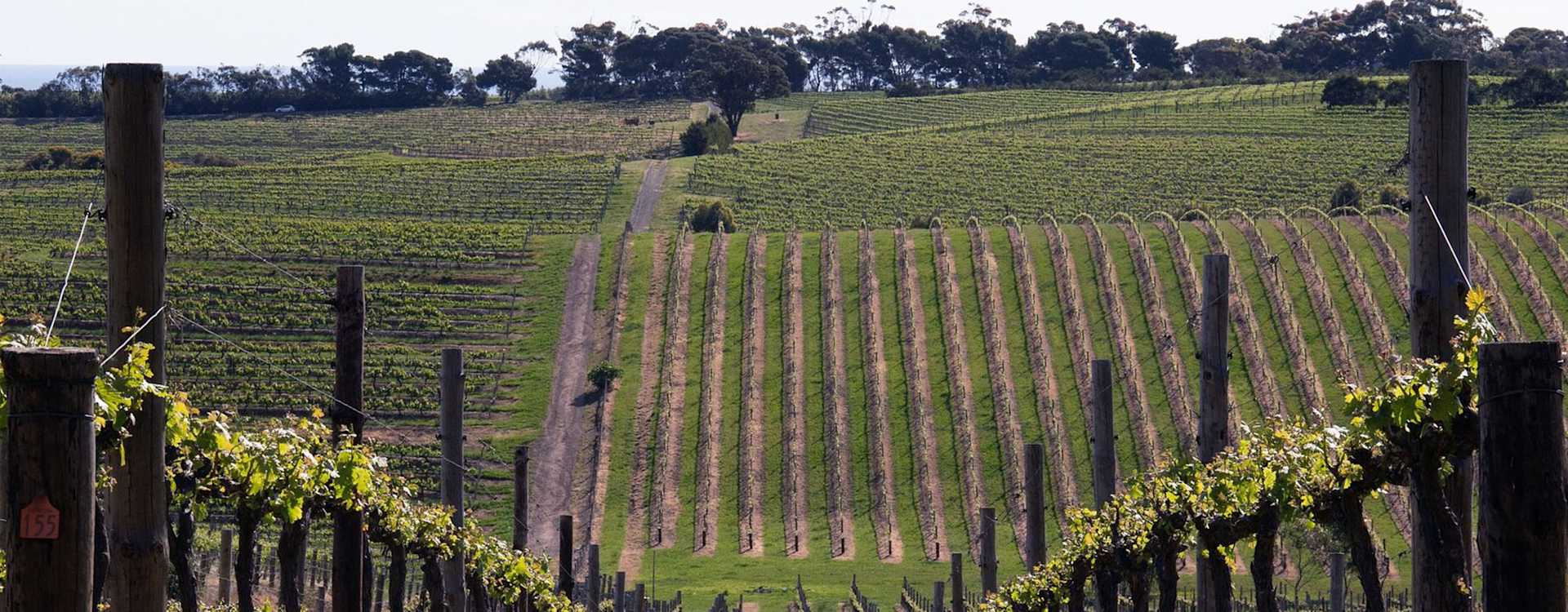
Known for opulent red wines with intense power and concentration, McLaren Vale is home to perhaps the most “classic” style of Australian Shiraz. Vinified on its own or in Rhône Blends, these hot-climate wines are deeply colored and high in extract with signature hints of dark chocolate and licorice. Cabernet Sauvignon is also produced in a similar style.
Whites, often made from Chardonnay or Sauvignon Blanc tend to be opulent and full of tropical, stone and citrus fruit.