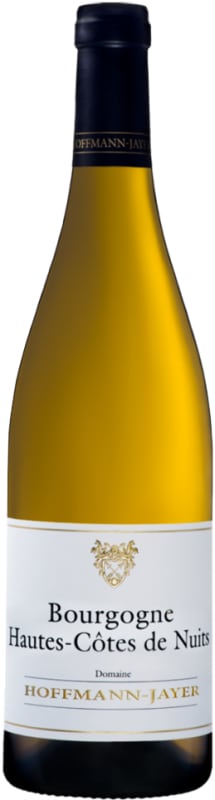


Winemaker Notes
Hoffmann-Jayer’s Hautes-Côtes de Nuits Blanc blends parcels from three vineyards: Le Perchy in Magny-lès-Villers, and Sous le Mont and La Flie in Villers-la-Faye. The holdings encompass 1.2 hectares and are planted 70% to Chardonnay and 30% to Pinot Blanc, from vines between 55 and 75 years of age. As with the Hautes-Côtes de Beaune Blanc, Alexandre ages this in a blend of two-thirds new 350-liter barrels and one-third terracotta jar before assembling it for six months prior to bottling. Richer and riper than the Hautes-Côtes de Beaune Blanc above, this shows even greater tension on the palate, with cleanly articulated minerality and an attractive undertone of well-measured oak.
Professional Ratings
-
James Suckling
Very nutty with plenty of candied lemon peel, this is a strong wine for this humble appellation in a challenging vintage. Excellent interplay of citrus character, restrained lees creaminess and delicate, toasty character. Delicious now, but probably has some years ahead of it. Long, lemony finish. 70% chardonnay and 30% pinot blanc from 55-year-old vines grown at 355 meters above sea level. Drink or hold.


One of the most popular and versatile white wine grapes, Chardonnay offers a wide range of flavors and styles depending on where it is grown and how it is made. While it tends to flourish in most environments, Chardonnay from its Burgundian homeland produces some of the most remarkable and longest lived examples. California produces both oaky, buttery styles and leaner, European-inspired wines. Somm Secret—The Burgundian subregion of Chablis, while typically using older oak barrels, produces a bright style similar to the unoaked style. Anyone who doesn't like oaky Chardonnay would likely enjoy Chablis.

The origin of perhaps the world’s very finest Pinot Noir, Côte de Nuits is the northern half of the Côte d'Or and includes the famous wine villages of Gevrey-Chambertin, Morey-St-Denis, Chambolle-Musigny, Vougeot, Vosne-Romanée, Flagey-Echezeaux and Nuits-St-Georges.
Fine whites from Chardonnay are certainly found in the Côte de Nuits, but with much less frequency than top-performing reds made of Pinot noir. The little village of Nuits-St-Georges in its southern end gave the region its name: Côte de Nuits. The city of Dijon marks its northern border.