

Winemaker Notes
Professional Ratings
-
Wine & Spirits
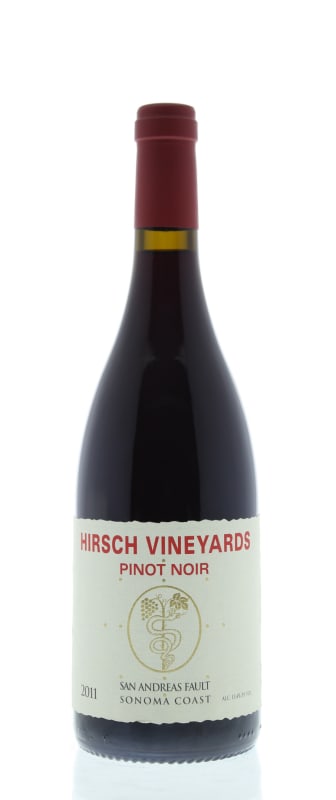
This is delicious and utterly transparent coastal juice, electric in its tones of red plum and blood orange. A cedar bark tang gives it gravitas—as if recalling the eons of redwood mulch that built the soil on the uplifted marine sedimentary ridges of the Sonoma Coast. San Andreas—referencing the fault responsible for that uplift—draws on both older vines planted in the early 1990s and newer blocks planted in 2002, painting a picture of the entire Hirsch estate in a given vintage. While some Sonoma vineyards were challenged by rain prior to the 2011 harvest, winemaker Ross Cobb saw Hirsch’s sunny ridges ripen pinot noir before the October storms arrived. This feels beautifully formed; its taut delicacy would be irresistible with grilled sea bass.
-
Wine Enthusiast
This is a blend of blocks from the large estate vineyard, yielding a very complete wine. It’s brisk in acidity, dry and silky, with low alcohol and firm tannins framing raspberry and cherry skin, cola and pomegranate flavors.


The Sonoma Coast AVA is large in area but, not counting overlapping regions like Russian River Valley, only has a few thousand acres of grapevines—and it’s no wonder. Much of the region is rugged and not easily accessible. Its proximity to the Pacific Ocean’s fog and cool breezes limits the varieties that can be cultivated, but it proves to be an ideal environment for high quality Pinot Noir.
Since fog is a frequent fact of life here, as are heavy marine layers that sometimes bring rain, the best vineyards are wisely planted above the fog line, on picturesque ridges that capture enough sun to provide even ripening. That, with the overnight drop in temperature that reliably preserves acidity, results in fine expressions of Pinot Noir that often receive tremendous critic and consumer praise alike, and are often in high demand.