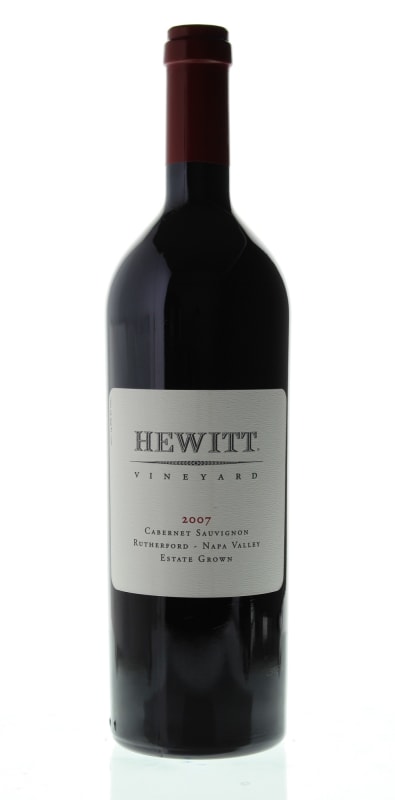


Winemaker Notes
Professional Ratings
-
Robert Parker's Wine Advocate
The 2007 Cabernet Sauvignon is a slightly softer, more forward wine, but it should last just as long. It is more typically Californian in its opulent black currant fruit intermixed with notes of chocolate, crushed rocks, vanilla, and black fruits. The tannins are sweeter than in the 2006, and the wine is full-bodied with a layered texture, admirable purity and depth, and a blockbuster finish with no shortage of tannin. Approachable now, it will be better in 2-3 years, and should last for 20-25 years.
-
Wine Spectator
Offers ripe, supple plum and currant flavors, with notes of smoky oak, crushed rock, graphite and loamy earth and touches of tobacco and cedar. Full-bodied, with a layered finish. Drink now through 2020.
-
Connoisseurs' Guide
Hewitt's penchant for big, maximally ripened, highly extracted Cabernets has been toned down just a bit here, for while this wine wants for nothing in the way of stuffing, ripeness and very sweet oak, it steers away from the brink of excess and tempers its richness with a real sense of refinement. It already shows a bit of layered complexity that augers well for the future, and its balance of tannin, acid and keen Cabernet fruit guarantees a good many years of improvement.
-
Wine Enthusiast
Made from 100% Cabernet, this wine is very extracted and jammy, in the modern style of extreme ripeness and fruit-forwardness. Sweet oak, 70% of it new, adds layers of cream, vanilla and buttered toast. Appeals now for its juicy, New World style.


One of the most prestigious wines of the world capable of great power and grace, Napa Valley Cabernet is a leading force in the world of fine, famous, collectible red wine. Today the Napa Valley and Cabernet Sauvignon are so intrinsically linked that it is difficult to discuss one without the other. But it wasn’t until the 1970s that this marriage came to light; sudden international recognition rained upon Napa with the victory of the Stag’s Leap Wine Cellars 1973 Cabernet Sauvignon in the 1976 Judgement of Paris.
Cabernet Sauvignon undoubtedly dominates Napa Valley today, covering half of the land under vine, commanding the highest prices per ton and earning the most critical acclaim. Cabernet Sauvignon’s structure, acidity, capacity to thrive in multiple environs and ability to express nuances of vintage make it perfect for Napa Valley where incredible soil and geographical diversity are found and the climate is perfect for grape growing. Within the Napa Valley lie many smaller sub-AVAs that express specific characteristics based on situation, slope and soil—as a perfect example, Rutherford’s famous dust or Stags Leap District's tart cherry flavors.