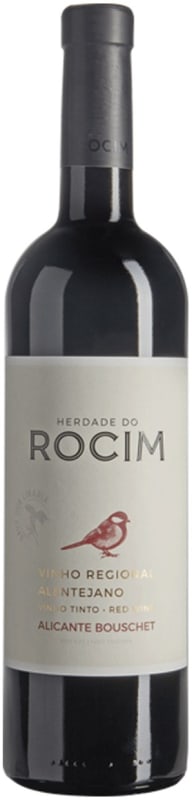


Winemaker Notes
Deep concentrated ruby color. Enticing aroma of black fruits and a well balanced minerality with the spicy notes from aging in barrel. Well structured tannins and balanced acidity, allowing a good bottle aging.
Professional Ratings
-
Wine Enthusiast
Foot trodden in stone lagars, this wine expresses the power and richness of Alicante Bouschet. It shows dense tannins and concentrated black fruits contrasted by bright acidity that rises up on the finish. Drink from 2023. Shiverick Imports.
-
Wine & Spirits
This grows at a block of 40-year-old vines on the sandy schist and granite soils of Vidigueira. The grapes are foot-trodden in lagares, with fermentation allowed to start spontaneously. Then its black-cherry flavors pick up some caramelization from a year in oak barrels (40 percent new). It’s heady and relatively soft for the variety, the ripe tannins unlocking red cherry and blueberry flavors as the wine opens with air. Pour it with something hearty but lean, like a pork tenderloin.
-
Robert Parker's Wine Advocate
The 2019 Alicante Bouschet was aged for one year in 40% new French oak. It comes in at 15.1% alcohol. Big and dense, this has fairly ripe tannins, notwithstanding some grip on the finish, but also very ripe fruit. The beefy nuances around the edges give this some complexity. In a similar style to the monovarietal Touriga reviewed this report, this seems like the better wine. This Alicante has better structure and more concentration. Of course, it also has all that Alicante personality and it is another $8. So reasonable minds might differ on what choice to make. This should age decently for several years, but the tannins are ripe enough so you can approach this now without a problem. It's worth leaning up for the moment, but this does have to demonstrate it can age a bit to justify my current enthusiasm.
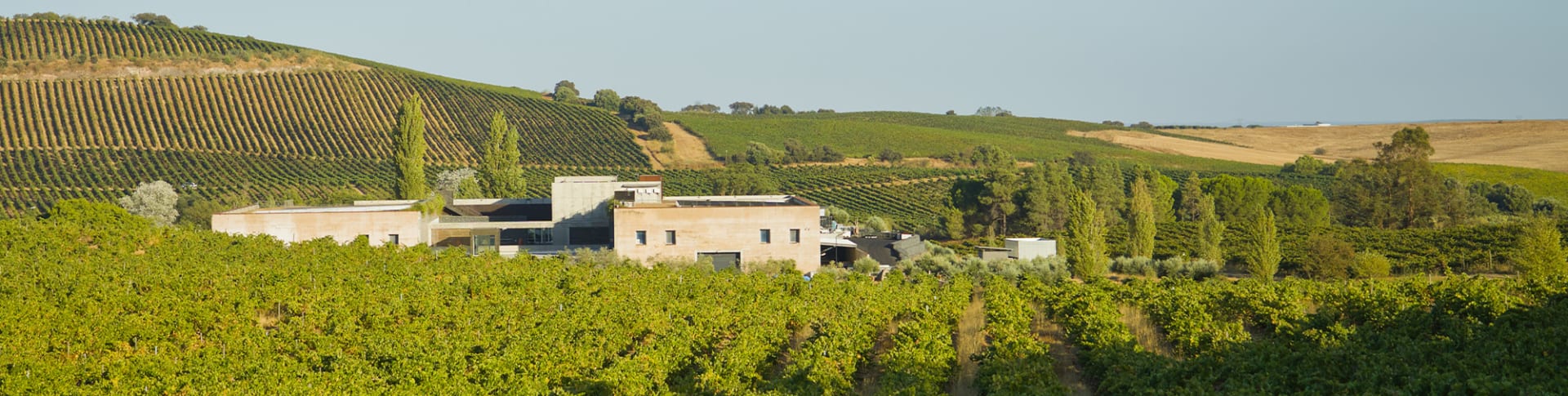



Located in the Lower Alentejo region in the southern half of Portugal, between Vidigueira and Cuba, lies the estate of Herdade do Rocim on 100 hectares, 60 of which are under vine. Alentejo is sparsely populated and, in contrast to the rest of Portugal, has many large estates. The climate is continental, with hot summers and cold winters. Having fairly reliable weather combined with the large plots of available land equates to quality at an affordable price. Wheat is the most important crop grown here, but olive trees, cork trees and vineyards are all important agriculture here as well. Wines from Alentejo are becoming popular as consumers realize the great opportunities available here, and quality is improving exponentially. It is thought to be the new world inside the old world, with highly professional wineries using a scientific approach while respecting the terroir.
The Rocim estate was purchased in 2000 by Movicortes group, which is a Portuguese company that specializes in agricultural machinery, but has its roots in farming and vineyards. Catarina Vieira, daughter of the late Jose Ribeiro Vieira, the founder of the Movicortes group, has been coordinating the development of the estate. Catarina believes that Alentejo has the unique conditions required to produce world-class wines. With respect for the terrior and the natural resources there, they produce a freshness and minerality in the whites and an elegance and complexity in the reds.
In school, Catarina studied Agronomy in Italy and Oenology in Portugal. Her love for nature was instilled in her from a young age. Her grandfather on her mother’s side was a wine producer and merchant at Cortes, and her grandfather on her father’s side was in agriculture and also owned several vineyards in Alentejo. Since purchasing, they have invested greatly in the land by completely regenerating the vineyards and building a new state of the art winery. With a complete overhaul of the vineyards, they were able to plant higher-quality varietals, including international grapes such as Syrah and Cabernet, as well as the indigenous and local varietals.
After the Viera family took over the winery, they made a conscious decision to not only invest in the land and produce higher quality wine, but to also invest and make sustainable contributions to the development of the region. The winery was built with the future in mind, and they have continued to make improvements. Catarina and her team strive to create wines that are elegant, complex and strong. Inspired by her love and respect for her grandparents, her father and her family, her connection with nature, and a true and unwavering passion for wine, Catarina continues to push the limits in what was believed to be possible in Alentejo. She believes that Rocim has great potential in producing high quality wines with worldwide recognition, and has hopes of expanding the brand under the umbrella of quality for the region. She has created a project that gives value not only to Alentejo, but to Portugal as a whole.

The most famous of the rare, red-fleshed grape varieties, Alicante Bouschet is known as a Teinturier grape. While most red grapes have red skin but clear flesh or pulp, the French, Alicante Bouschet and the Georgian (country) variety called, Saperavi, both have red. These make intensely hued, full-bodied red wines that take to oak well and can stand some time in the cellar. Somm Secret—While originally the product of a French crossing (Petit Bouschet and Grenache) of the late 1800s, today Alicante Bouchet grows widely in Spain and is gaining notoriety in Portugal.

Responsible for a majority of Portugal’s fine wine production—and over half of the world’s cork production—Alentejo represents a major force in Portugal’s wine industry. This southern Portugese region is characterized by stretches of rolling plains and vineyards dotted with majestic cork oaks. Access to land enables the farmers of Alentejo to produce wines in great economies of scale, without compromising quality, compared to those regions to the north. The region of Alentejo indeed covers a third of the country.
Its classified (DOP) wines must come from one of eight subregions, where elevations are a bit higher, air cooler and less fertile soils are perfect for vines. The optimal regions are Portalegre, Borba, Redondo, Reguengos de Monsaraz, Granja-Amareleja, Vidigueira, Evora and Moura. Alentejo is not without the conveniences of modern winemaking as well. Irrigation supplements low rainfall and temperature control in the winery assures high quality wines.
The potential of the area has attracted many producers and its wine production continues to grow. Alentejo’s charming, fruit-forward wines have naturally led to local and global popularity.
White wines tend to be blends of Antão Vaz, Roupeiro and Arinto. However, in growing proportions, the white grapes Verdelho, Alvarinho and Viognier have been enjoying success. But red varieties actually exceed whites in Alentejo. Aragonez, Trincadeira, Alicante Bouschet and Castelão grapes blend well together and are responsible for most of the Alentejo reds.