


Winemaker Notes
Deep ruby with fragrant aromas of blackcurrant, violets, crushed flowering herbs and plum, with hints of blood orange, tomato leaf and cedar. An intense and lively palate, with cassis, blueberry and licorice into spicy clove and cardamom balanced by lifted acidity and textured, grainy tannins on the long and savory finish.
Professional Ratings
-
Wine Enthusiast
From red clay and limestone, this single-vineyard Barossa Cab is big but characterful, with ripe cherry and red-currant- jam, white-pepper and licorice aromas framed by toasty, chocolatey oak. The palate is still tightly wound, but with freshness and fine, powerful chalky tannins. Give this plenty of time in a decanter and sip with protein if drinking now,.
-
Wine Spectator
Firm and well-structured, with toasted cumin, black pepper and crushed pine needle notes, plus a streak of fresh loam that mingles with spiced plum, huckleberry and blackberry flavors. Shows firm but plush tannins, which add a lovely backdrop, leaning into herbal notes on the long finish. Drink now through 2034. 500 cases made, 30 cases imported.


A noble variety bestowed with both power and concentration, Cabernet Sauvignon enjoys success all over the globe, its best examples showing potential to age beautifully for decades. Cabernet Sauvignon flourishes in Bordeaux's Medoc where it is often blended with Merlot and smaller amounts of some combination of Cabernet Franc, Malbecand Petit Verdot. In the Napa Valley, ‘Cab’ is responsible for some of the world’s most prestigious, age-worthy and sought-after “cult” wines. Somm Secret—DNA profiling in 1997 revealed that Cabernet Sauvignon was born from a spontaneous crossing of Cabernet Franc and Sauvignon Blanc in 17th century southwest France.
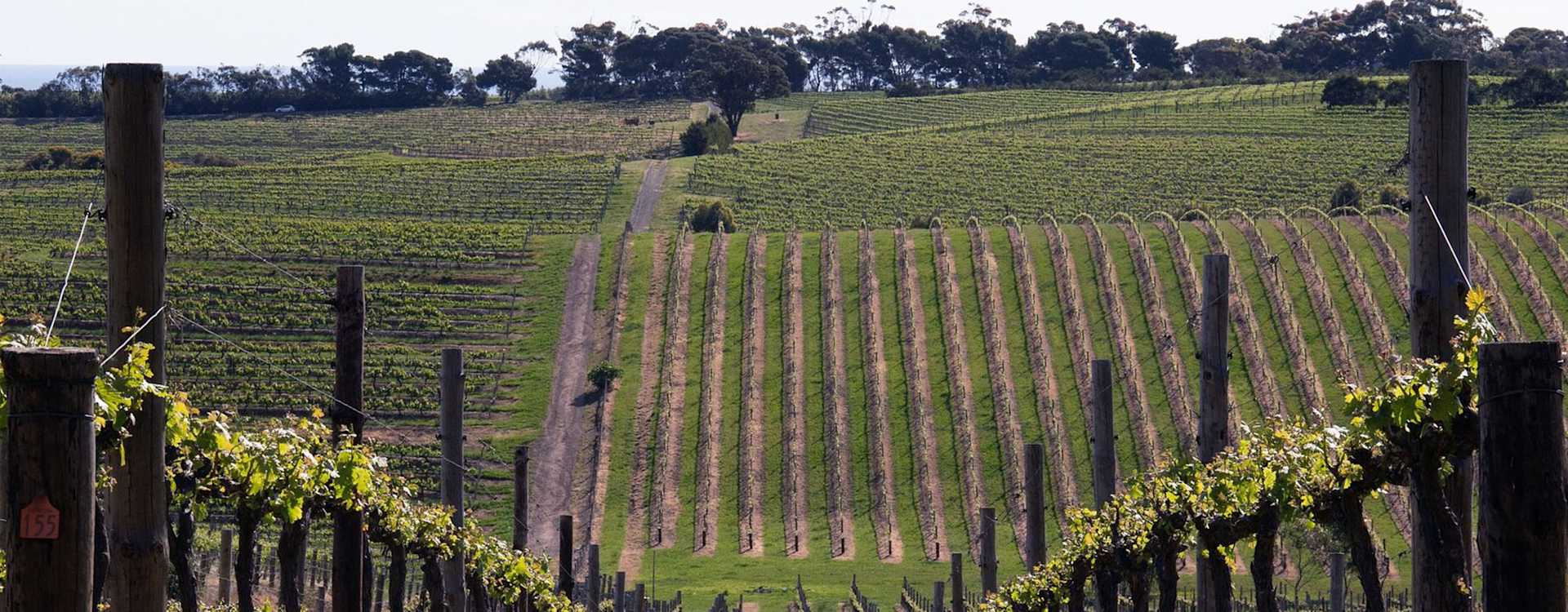
Higher in elevation and topographically more dramatic than the Barossa Valley floor, Eden Valley abuts it to its south and east. While it is a bit of an extension of Barossa, Eden Valley is topographically different than the pastoral Barossa Valley, and is composed of rocky hills and eucalyptus groves.
Recognizing Eden Valley’s potential with Riesling in the 1960s and 70s, producers started to move their Riesling production from Barossa to these better sites where schist soils on hilltops would produce more steely, tart and age-worthy examples. A most famous site, planted by Colin Gramp, called Steingarten, today produces one of the most outstanding Australian Rieslings. Youthful Eden Valley Rieslings express floral, grapefruit and mineral, while with time in the bottle, they become increasingly toasty and complex.
Riesling isn’t the only grape the region can grow; undeniably at lower altitudes Shiraz does very well. Mount Edelstone is a notable vineyard as well as the Hill of Grace, which boasts healthy Shiraz vines well over 100 years old. This is the only Australian region where Merlot has a made a name for itself and Chardonnay can be spectacular, particularly from the High Eden subregion in the southern valley.