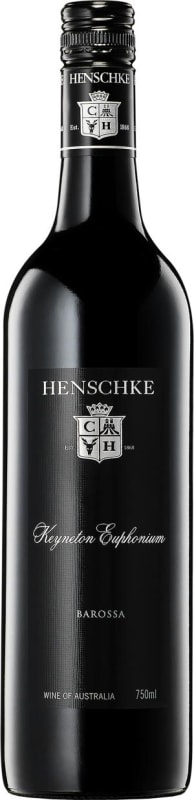


Winemaker Notes
Deep crimson with garnet hues. Enticing aromas of blackcurrant, blackberry and cassis are enveloped by herbal notes of sage and bay leaf that lead to subtle nuances of red fruits, black pepper, vanilla and cedar. A generous palate offers rich flavors of red and blackcurrant, dried herbs and black pepper, with great purity, balance and texture forming a delicious mouthfeel, while velvety tannins provide great length and complexity.
Blend: 63% Shiraz, 29 % Cabernet Sauvignon, 5% Cabernet Franc, 3% Merlot
Vegan-Friendly
Professional Ratings
-
Decanter
Luscious dark cherry and plum fruit, along with complexing notes of baking spice, liquorice and woody herbs. Dense and chewy at first, then a burst of acidity and a note of blood orange lift the finish and help it endure for a surprisingly long time. Harvested 1 March-22 April and matured in 11% new and 89% seasoned hogsheads (82% French, 18% American) for 18 months.
-
James Suckling
Spice- and earth-driven aromas of dark cherries, blood plums, blackcurrants, dried herbs and cured meat. The palate is full-bodied with a creamy mouthfeel and finely integrated tannins, giving notes of licorice, mulberries, pepper, mocha and ferric earth. A seamlessly integrated blend of mostly shiraz with cabernet sauvignon, cabernet franc and merlot. Drink or hold. Screw cap.
-
Wine Enthusiast
Despite 63% of the blend being Shiraz, Keyneton's Bordeaux brethren add plenty of personality to the mix. It's on the quiet and broody side, but with aeration quickly opens to reveal layers of complex aromas: pencil lead, beet root, sage, plums and a brambly red berry note with a dusting of cocoa powder. There's power to the palate in the form of chalky, well-sculpted tannins, but it never feels chunky or overtly heavy thanks to a wonderful line of acidity and tons of flavor. Best to hold this back another few years then drink anytime between 2027-2041.
Cellar Selection -
Wine Spectator
A dense red, with succulence to its spiced plum preserves, salted black licorice, black pepper and bittersweet chocolate, plus accents of malty Assam black tea and dried cherry. Plenty of spice, tobacco and cedar grace notes linger. Shiraz, Cabernet Sauvignon, Cabernet Franc and Merlot. Drink now through 2038.
-
Robert Parker's Wine Advocate
The 2021 Keyneton Euphonium hails from a cool year at Henschke—in fact, the coolest since 2002, 19 vintages prior. On the nose, the wine offers us cassis, licorice, raspberry seed and cold black tea. The wine is supple, spicy, black-inflected and mineral, with graphite tannins and raw cocoa through the finish. It is ever so slightly earthy and meaty, with hung deli meat and pastrami as whispers against the black fruit. It's a compositional blend of Shiraz, Cabernet Sauvignon, Cabernet Franc and Merlot. 14.5% alcohol, sealed under screw cap.
-
Vinous
The 2021 Keyneton Euphonium, a seamless blend of Shiraz, Cabernet Sauvignon and Merlot, displays beautiful approachability with vibrant blackberry cassis, slate, violets and Szechuan pepper aromas. The cooler vintage shows more open-knit tannins than usual, but the exceptional balance will still provide good staying power.


With hundreds of red grape varieties to choose from, winemakers have the freedom to create a virtually endless assortment of blended red wines. In many European regions, strict laws are in place determining the set of varieties that may be used, but in the New World, experimentation is permitted and encouraged resulting in a wide variety of red wine styles. Blending can be utilized to enhance balance or create complexity, lending different layers of flavors and aromas. For example, a red wine blend variety that creates a fruity and full-bodied wine would do well combined with one that is naturally high in acidity and tannins. Sometimes small amounts of a particular variety are added to boost color or aromatics. Blending can take place before or after fermentation, with the latter, more popular option giving more control to the winemaker over the final qualities of the wine.
How to Serve Red Wine
A common piece of advice is to serve red wine at “room temperature,” but this suggestion is imprecise. After all, room temperature in January is likely to be quite different than in August, even considering the possible effect of central heating and air conditioning systems. The proper temperature to aim for is 55° F to 60° F for lighter-bodied reds and 60° F to 65° F for fuller-bodied wines.
How Long Does Red Wine Last?
Once opened and re-corked, a bottle stored in a cool, dark environment (like your fridge) will stay fresh and nicely drinkable for a day or two. There are products available that can extend that period by a couple of days. As for unopened bottles, optimal storage means keeping them on their sides in a moderately humid environment at about 57° F. Red wines stored in this manner will stay good – and possibly improve – for anywhere from one year to multiple decades. Assessing how long to hold on to a bottle is a complicated science. If you are planning long-term storage of your reds, seek the advice of a wine professional.

The Barossa Zone encompasses the Barossa Valley and Eden Valley. Some of the oldest vines in Australia can be found here.
Barossa Valley of course is the most important and famous wine growing region in all of Australia where 140+ year-old, dry-farmed Shiraz vines still produce inky, purple and dense juice for some of Australia's best wines.
In the cooler, wetter Eden Valley sub-region, the Hill of Grace vineyard is home to famous Shiraz vines from the 1800s but the region produces also some of Australia’s very best and age-worthy Rieslings.