


Winemaker Notes
Very deep crimson, with violet hues. Captivating briary blackberry and mulberry aromatics lead to alluring exotic five spice, star anise and black peppercorns, with herbaceous notes of thyme and dried basil and slight gamey hints. The palate has incredible length and purity, with a focused core of blackberry and plum fruit, wrapped by beautifully integrated layers of silky tannins and lingers endlessly with flavors of sage leaf and blackcurrant skin.
Professional Ratings
-
James Suckling
One of the great iterations of this regal single site wine. Very spicy, dried ground baking spices on the nose as well as dried sage leaves and other roasting herbs and a kind of wet chalky element too. Not the saturation and swagger of 2010 or 2009, a very tightly cut palate that's contained and reserved. Plenty of fine layers here and the sustained length is a real thing of marvel. The nose has all the blackberry and dark cherry fruits on offer with a wealth of fresh-roasted coffee, plums and blackberry. Tight and contained, real elegance with power and a long, fresh and even-handed finish. Best give this some time to fill out. Will be complete around 2025 and historic tastings would suggest it will really peak around 2035.
-
Wine Enthusiast
From the relatively cooler climes of Eden Valley, Henschke's most famous wine focuses on expressing the unique terroir of its 10 acres of 150 plus year old vineyards rather than on power, oak and extraction. This translates to savory and earthy secondary characters at the fore, highlighting herbal notes with licorice, currants and cocoa powder. The palate is silky and savory, and while the toasty oak notes are apparent, they're kept in check with wonderfully balanced acidity. Approachable now, it will morph into a thing of stunning beauty with time. Drink now–2037.
Cellar Selection -
Wine & Spirits
The original vines were 100 years old when Cyril Henschke made the first vintage of Hill of Grace, named for the Gnadenberg Church that watches over the vineyard. His family had sustained those vines while propagating new blocks from the “Grandfathers,” a program his nephew Stephen Henschke has sustained, in part, by marrying well—his wife, Prue, is one of Australia’s leading viticulturists and has dedicated no small part of her career to studying what sets the Hill of Grace vineyard apart and developing selections from its ancient vines. While rarity and demand have sent the price into the stratosphere of the world’s top wines, this 55th vintage stands in that company with the kind of clarity and numinous elegance few parcels of vines in the world can give. It has the weightless concentration of flavor that transforms meaty black cherry, licorice and olive notes into a lasting impression of freshness. It’s also there in the texture, which feels ample, rich and as transparent as fine silk. A great vintage of Hill of Grace, the 2012 will likely be at its best between ten and 20 years from the vintage, and will live well for decades.
-
Robert Parker's Wine Advocate
The 2012 Shiraz Hill of Grace is more subtle and reserved, the product of a mild season. Aromas are pretty and aromatic with dark cherry, violets and dried herbs, all beautifully composed and understated but very appealing. The palate is also reserved and mid-weight but with an attractive tension between long tannins and vibrant fruit that sustains a lengthy finish. A sleeper that may surprise in time.
Rating: 93+


Marked by an unmistakable deep purple hue and savory aromatics, Syrah makes an intense, powerful and often age-worthy red. Native to the Northern Rhône, Syrah achieves its maximum potential in the steep village of Hermitage and plays an important component in the Red Rhône Blends of the south, adding color and structure to Grenache and Mourvèdre. Syrah is the most widely planted grape of Australia and is important in California and Washington. Sommelier Secret—Such a synergy these three create together, the Grenache, Syrah, Mourvedre trio often takes on the shorthand term, “GSM.”
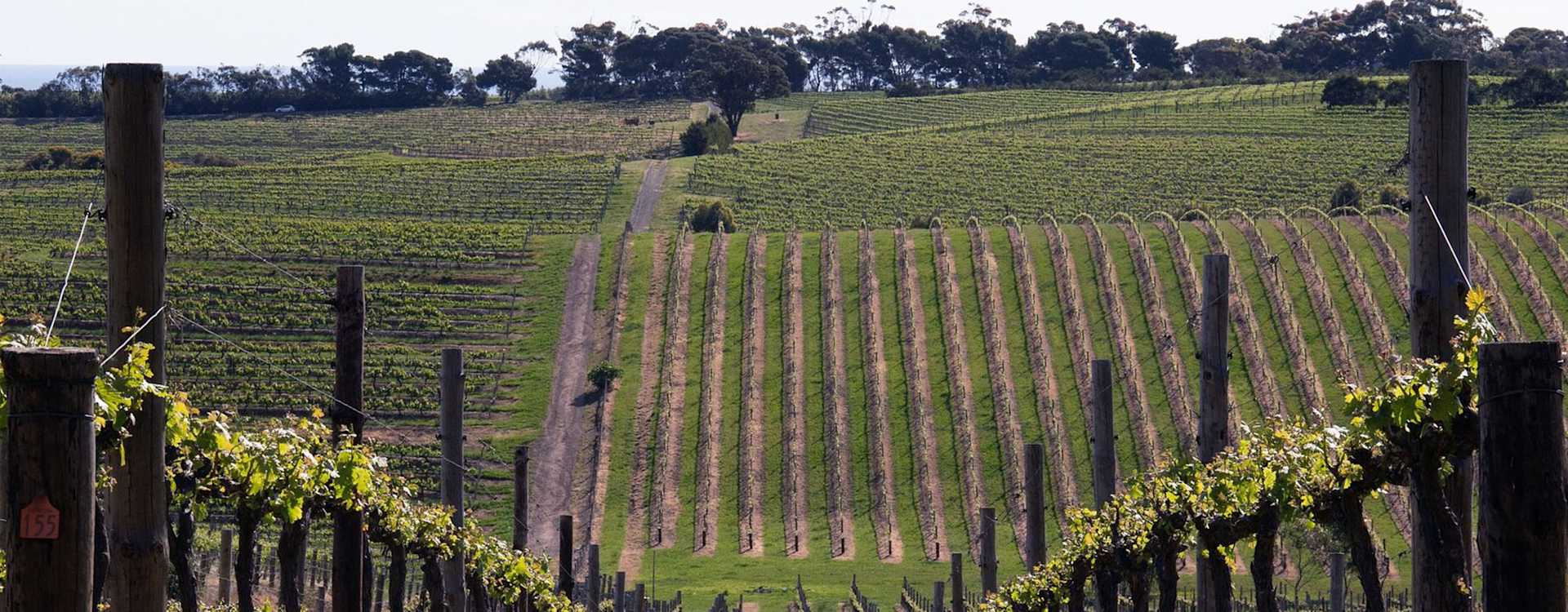
Higher in elevation and topographically more dramatic than the Barossa Valley floor, Eden Valley abuts it to its south and east. While it is a bit of an extension of Barossa, Eden Valley is topographically different than the pastoral Barossa Valley, and is composed of rocky hills and eucalyptus groves.
Recognizing Eden Valley’s potential with Riesling in the 1960s and 70s, producers started to move their Riesling production from Barossa to these better sites where schist soils on hilltops would produce more steely, tart and age-worthy examples. A most famous site, planted by Colin Gramp, called Steingarten, today produces one of the most outstanding Australian Rieslings. Youthful Eden Valley Rieslings express floral, grapefruit and mineral, while with time in the bottle, they become increasingly toasty and complex.
Riesling isn’t the only grape the region can grow; undeniably at lower altitudes Shiraz does very well. Mount Edelstone is a notable vineyard as well as the Hill of Grace, which boasts healthy Shiraz vines well over 100 years old. This is the only Australian region where Merlot has a made a name for itself and Chardonnay can be spectacular, particularly from the High Eden subregion in the southern valley.