
Winemaker Notes
Intense deep crimson in color. The nose is attractive and enticing with aromas of sweet blackberry, blueberry, Satsuma plum and rhubarb, with characteristic nuances of oriental spices, black tea leaves, anise, tar and cedar. The palate is rich and concentrated with spicy plum, crushed herbs and Dutch licorice flavors. An amazing balance of acid, fruit intensity, weight and length create a powerful palate that finishes with long, fine tannins.
Professional Ratings
-
Wine Enthusiast
Because the 2019 vintage was so small, Henschke has offered up a few museum releases of vintages that were similar climactically to ‘19. This is a rare opportunity to taste the evolution of Australia’s most famous single-vineyard wine— and what a sexy one it is. With shades of brick starting at its edges, the heady aromatics of a wine in its second decade of transformation are immediately apparent: spiced macerated cherries and blackberries, mocha, the cracked spines of old books, raw beef and hoisin-glazed mushrooms. It’s silky in the mouth, the tannins still firm and powdery, but softening, curving into the folds of the wine, a spiced meat nuance lingering on the long finish.
-
James Suckling
A museum release from a bipolar vintage, defined by a mild and dry summer that shifted suddenly to a heat wave, striking mid-March. While there is ample power and a chord of heat, this full-bodied wine delivers a coating of detailed grape tannins melded to oak notes. Sweet fruit demands cellar temperature to facilitate a sense of freshness. Blueberries, dried sage, black olives and violets. with hints of licorice across the relentless finish.
-
Robert Parker's Wine Advocate
The 2008 Hill of Grace Shiraz is just looking so svelte and fine. The wine is elegant and spicy and super fine, and it leads with fresh leather and star anise, bay leaf, tobacco, curry leaf, cocoa and peppercorns that all twist and swirl through the bouquet. In the mouth, the tannins have evolved to a state of pure repose—seamless and fine, they flow and carry the Satsuma plum fruit along with it. This 2008 makes a very strong case for cellaring your wine for some time prior to drinking it. If you have the means, I would recommend buying some of this vintage (maybe solo, maybe with friends) and drinking a bottle. Experience the evolution of tannin and fruit. It's a wonder. It's a lovely wine, re-released into the wild. Lucky us. This has decades to go. 14.5% alcohol, sealed under Vinolok.
-
Decanter
Well-upholstered, with plush baked plum, fruit ‘leather', black olive and tapenade, plus praline and chocolate oak (100% new). Long leash tannins let the fruit spool out, revealing notes of black tea, iodine, baking spices, cardamom and tamarind paste. Then the finish reels in, with crushed stone-like dry extract.
-
Vinous
From a heatwave vintage comes this decadent but shapely 2008 Shiraz Hill of Grace. It immediately delivers blackberry, chocolate and new leather notes with tar and cassis touches. The palate follows suit, bold and dry, with flavors of licorice, dried spices and roasted meats before a long and muscular finish. The 2008 is an outlier, but the quality is undeniable.


Marked by an unmistakable deep purple hue and savory aromatics, Syrah makes an intense, powerful and often age-worthy red. Native to the Northern Rhône, Syrah achieves its maximum potential in the steep village of Hermitage and plays an important component in the Red Rhône Blends of the south, adding color and structure to Grenache and Mourvèdre. Syrah is the most widely planted grape of Australia and is important in California and Washington. Sommelier Secret—Such a synergy these three create together, the Grenache, Syrah, Mourvedre trio often takes on the shorthand term, “GSM.”
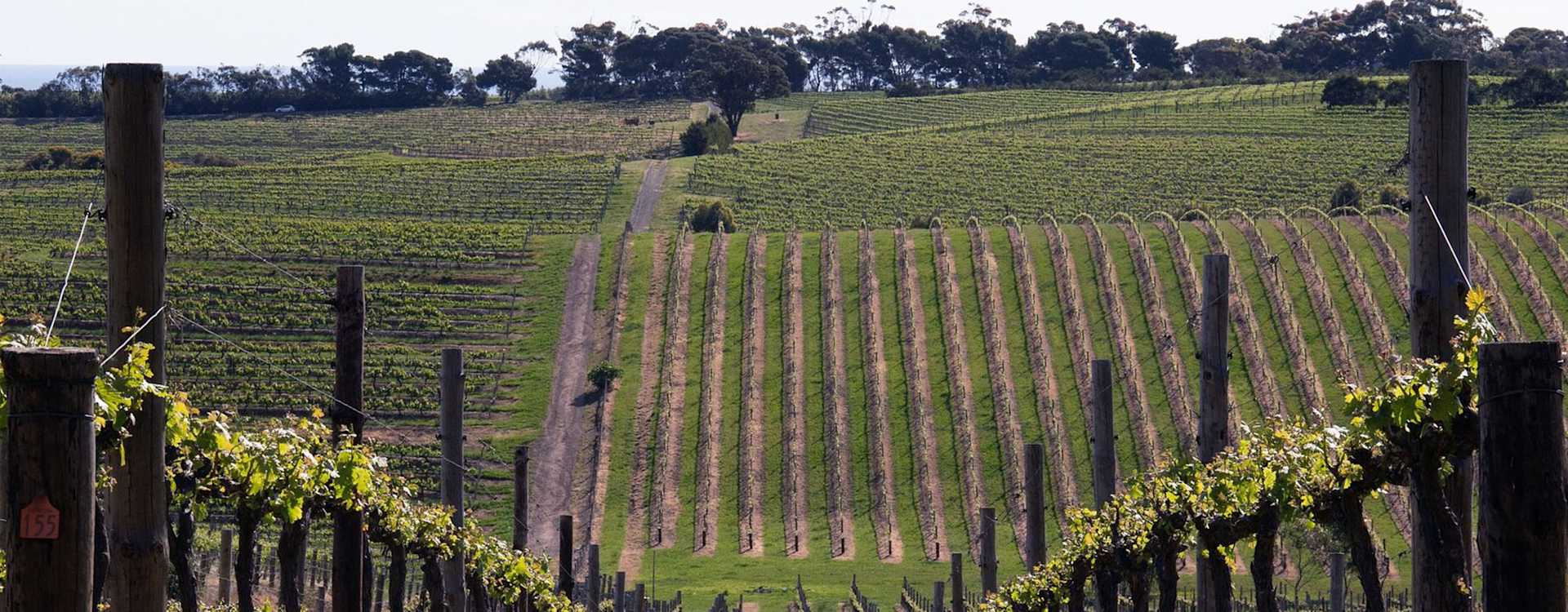
Higher in elevation and topographically more dramatic than the Barossa Valley floor, Eden Valley abuts it to its south and east. While it is a bit of an extension of Barossa, Eden Valley is topographically different than the pastoral Barossa Valley, and is composed of rocky hills and eucalyptus groves.
Recognizing Eden Valley’s potential with Riesling in the 1960s and 70s, producers started to move their Riesling production from Barossa to these better sites where schist soils on hilltops would produce more steely, tart and age-worthy examples. A most famous site, planted by Colin Gramp, called Steingarten, today produces one of the most outstanding Australian Rieslings. Youthful Eden Valley Rieslings express floral, grapefruit and mineral, while with time in the bottle, they become increasingly toasty and complex.
Riesling isn’t the only grape the region can grow; undeniably at lower altitudes Shiraz does very well. Mount Edelstone is a notable vineyard as well as the Hill of Grace, which boasts healthy Shiraz vines well over 100 years old. This is the only Australian region where Merlot has a made a name for itself and Chardonnay can be spectacular, particularly from the High Eden subregion in the southern valley.