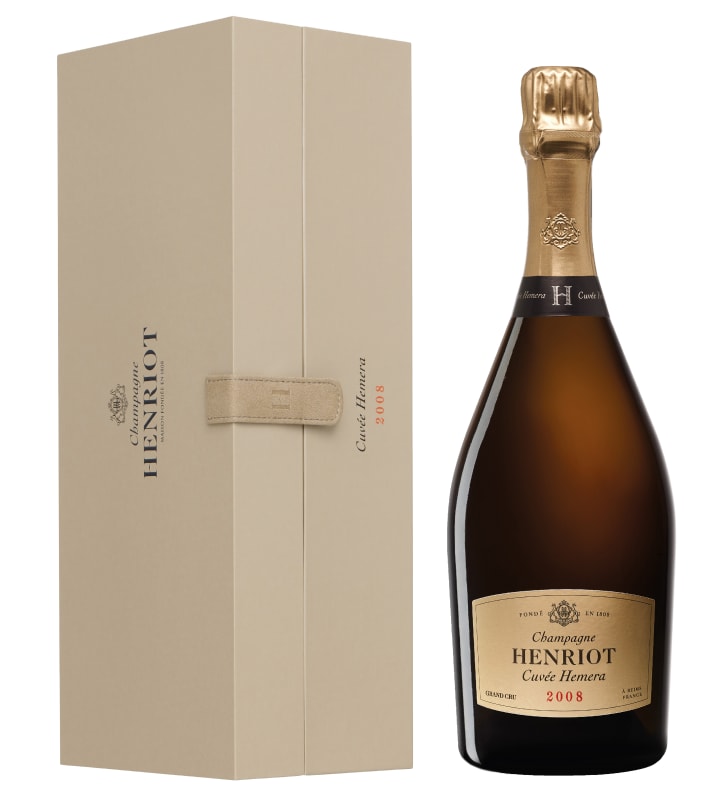


Winemaker Notes
Professional Ratings
-
Decanter
Complexity is the watchword of 2008, reflected by the fact that Alice Tétienne is unable to pick a single ‘leading’ cru to define its characteristics; in fact the wine boasts both the purity and luminosity of the Chardonnay village of Le Mesnil-Sur-Oger, and at the same time the generosity and latent power of the Pinot Noir which comes from the grand cru of Verzenay. Only disgorged four months previously, the wine is reticent, but only up to a point. One can already discern the seductive marriage of power and elegance which looks set to inform its future. Rapier acidity already sits comfortably with well-upholstered fruit and the combination lends intimations of a long and happy evolution. Disgorged: November 2022. Dosage: 5g/L.
-
James Suckling
Dried flowers, dusty chalk, hazelnuts, hints of licorice, white pepper, dried apples and dried pineapples on the nose, with underlying Meyer lemon character. Sleek and elegant, with very fine bubbles and a zesty and vibrant finish. 50% each chardonnay and pinot noir from the six founding crus. 5g/L dosage. Disgorged November 2022. Drink or hold.
-
Wine Spectator
This elegant Champagne is all about finesse, from the creamy, pointillism-like bead to the fine china frame of acidity to the delicate mesh of roasted hazelnut, quince paste and dried apricot flavors and accents of verbena, white truffle and saline. Don't rush this one -- sit and sip. Chardonnay and Pinot Noir. Drink now through 2035.
-
Wine Enthusiast
Beautifully mature, this Champagne is from grand cru vineyards, giving richness and layers of white fruits. It is textured with spice and softened white fruits celebrating that the wine is just right now.


Representing the topmost expression of a Champagne house, a vintage Champagne is one made from the produce of a single, superior harvest year. Vintage Champagnes account for a mere 5% of total Champagne production and are produced about three times in a decade. Champagne is typically made as a blend of multiple years in order to preserve the house style; these will have non-vintage, or simply, NV on the label. The term, "vintage," as it applies to all wine, simply means a single harvest year.

Associated with luxury, celebration, and romance, the region, Champagne, is home to the world’s most prized sparkling wine. In order to bear the label, ‘Champagne’, a sparkling wine must originate from this northeastern region of France—called Champagne—and adhere to strict quality standards. Made up of the three towns Reims, Épernay, and Aÿ, it was here that the traditional method of sparkling wine production was both invented and perfected, birthing a winemaking technique as well as a flavor profile that is now emulated worldwide.
Well-drained, limestone and chalky soil defines much of the region, which lend a mineral component to its wines. Champagne’s cold, continental climate promotes ample acidity in its grapes but weather differences from year to year can create significant variation between vintages. While vintage Champagnes are produced in exceptional years, non-vintage cuvées are produced annually from a blend of several years in order to produce Champagnes that maintain a consistent house style.
With nearly negligible exceptions, . These can be blended together or bottled as individual varietal Champagnes, depending on the final style of wine desired. Chardonnay, the only white variety, contributes freshness, elegance, lively acidity and notes of citrus, orchard fruit and white flowers. Pinot Noir and its relative Pinot Meunier, provide the backbone to many blends, adding structure, body and supple red fruit flavors. Wines with a large proportion of Pinot Meunier will be ready to drink earlier, while Pinot Noir contributes to longevity. Whether it is white or rosé, most Champagne is made from a blend of red and white grapes—and uniquely, rosé is often produce by blending together red and white wine. A Champagne made exclusively from Chardonnay will be labeled as ‘blanc de blancs,’ while ones comprised of only red grapes are called ‘blanc de noirs.’