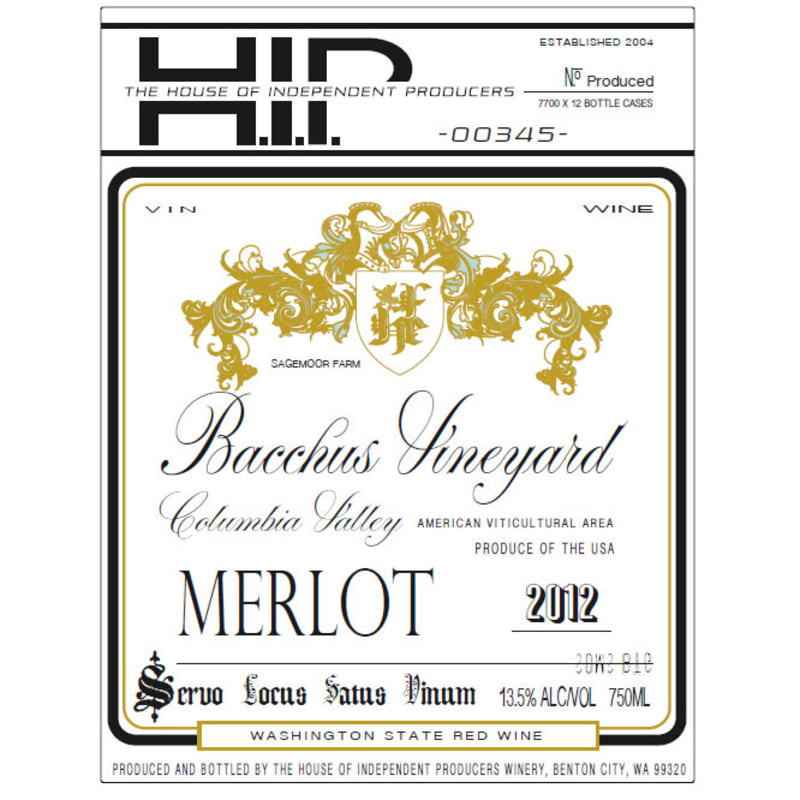

Winemaker Notes
The House of Independent Producers (HIP) Merlot refocuses the attention of the drinker to a varietal that gives reason to its dominance in the world. With minimal winemaking intervention, Merlots ability to display grace, some say better than that of Pinot Noir, is unmatched. The world's greatest merlots come from the Northern Hemisphere. Site specific, this wine derives from the Bacchus vineyard, known for wines of approachability and acidity, and the serious appeal of its condition is wonderfully expressed. HIP is a project directed by Christophe Hedges, bringing to the table some of the more compelling Columbia Valley AVA vineyard sites.


With generous fruit and supple tannins, Merlot is made in a range of styles from everyday-drinking to world-renowned and age-worthy. Merlot is the dominant variety in the wines from Bordeaux’s Right Bank regions of St. Emilion and Pomerol, where it is often blended with Cabernet Franc to spectacular result. Merlot also frequently shines on its own, particularly in California’s Napa Valley. Somm Secret—As much as Miles derided the variety in the 2004 film, Sideways, his prized 1961 Château Cheval Blanc is actually a blend of Merlot and Cabernet Franc.

A large and geographically diverse AVA capable of producing a wide variety of wine styles, the Columbia Valley AVA is home to 99% of Washington state’s total vineyard area. A small section of the AVA even extends into northern Oregon!
Because of its size, it is necessarily divided into several distinctive sub-AVAs, including Walla Walla Valley and Yakima Valley—which are both further split into smaller, noteworthy appellations. A region this size will of course have varied microclimates, but on the whole it experiences extreme winters and long, hot, dry summers. Frost is a common risk during winter and spring. The towering Cascade mountain range creates a rain shadow, keeping the valley relatively rain-free throughout the entire year, necessitating irrigation from the Columbia River. The lack of humidity combined with sandy soils allows for vines to be grown on their own rootstock, as phylloxera is not a serious concern.
Red wines make up the majority of production in the Columbia Valley. Cabernet Sauvignon is the dominant variety here, where it produces wines with a pleasant balance of dark fruit and herbs. Wines made from Merlot are typically supple, with sweet red fruit and sometimes a hint of chocolate or mint. Syrah tends to be savory and Old-World-leaning, with a wide range of possible fruit flavors and plenty of spice. The most planted white varieties are Chardonnay and Riesling. These range in style from citrus and green apple dominant in cooler sites, to riper, fleshier wines with stone fruit flavors coming from the warmer vineyards.