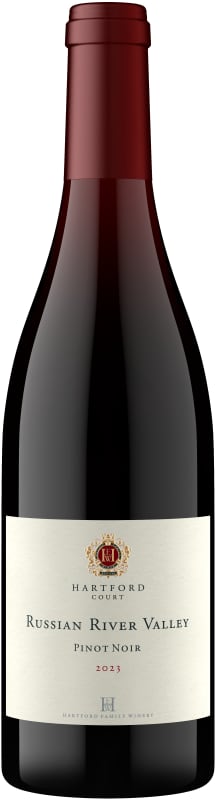


Winemaker Notes
Aromas of cherry, raspberry, violet, allspice and earthy loam are followed by flavors of red cherry and raspberries. The dense entry is followed by a sweet and juicy mouth feel, supported by lively acidity, silky tannins and a bright mineral driven finish.
Professional Ratings
-
Jeb Dunnuck
The 2023 Pinot Noir Russian River Valley is also from the Russian River Valley. It’s a bright ruby color and boasts a seductive perfume with notes of fresh leather, ripe cherries, sweet spices, and forest earth. The palate is medium-framed and has a focused and bright feel, with refreshing, mouthwatering acidity, ripe tannins, and a gently tapering, spiced finish. Drink 2026-2040.
-
James Suckling
A lush and pleasurable wine with aromas of red roses and baking spices and flavors of juicy red fruit. A full-bodied pinot with silky tannins, a rich and satisfying finish and pleasant bitter orange rind at the end.
-
Robert Parker's Wine Advocate
The 2023 Pinot Noir Russian River Valley is composed of fruit from Hartford Court's estate vineyards plus purchased fruit. Matured for nine months in 28% new French oak, it has layered aromas of cranberry, pomegranate, graham cracker, tobacco, tea leaves and forest floor. The full-bodied palate features concentrated, spicy flavors framed by grainy tannins and juicy acidity, and it has a long, flavorful finish.


While the Russian River Valley is a large appellation with multiple climate zones and soil types, it is best known for cool-climate varieties, with Pinot Noir as the most celebrated. The grapes benefit from a reliable late afternoon flow of Pacific Ocean fog through the Petaluma Gap and along the Russian River Valley that ensures slow and steady ripening and the preservation of grape acidity. Today many of California’s most highly regarded Pinot Noir vineyards are in the Russian River Valley, along with its sub-appellation, Green Valley.
Historically Russian River Valley Pinot Noirs had bright red fruit and delicate earthy, mineral notes. But changes in viticultural and winemaking practices have led to stylistic changes in some of the region’s wines. Adjustments to canopy management, among other techniques, have resulted in riper fruit and bolder wines as well. These show flavors of black cherry, blackberry, cola, spice and darker, loamy earth tones, accenting traditional Pinot Noir notes of strawberry, raspberry and light cherry.