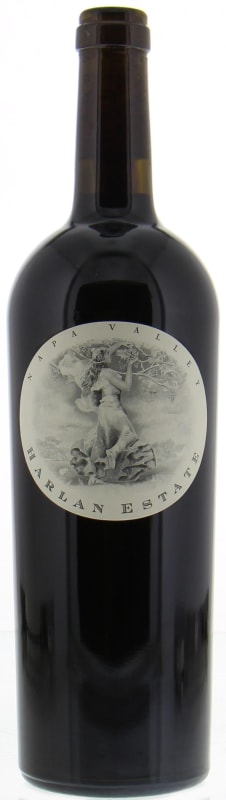


Winemaker Notes
Professional Ratings
-
James Suckling
Fascinating aromas of rock and dark fruits such as blueberries and blackberries. Transparency is fascinating. Full body, with wonderfully formed tannins that give tension and form to a perfect wine of incredible layers and depth. Reminds me of something like 1961 Latour - not that I tasted it young, but there's a classicism to it. Unmitigated purity to this wine. This will be so much better in 2020. Get the chance to try it.
-
Robert Parker's Wine Advocate
I wouldn’t be surprised to see the 2010 Harlan Estate inch closer to perfection over the next decade. Surprisingly supple for this vintage, while this cuvee is not usually that flamboyant or exuberant in its youth, the 2010 is sensual and performing remarkably well. Its deep purple color is accompanied by notions of charcoal, graphite, camphor, creme de cassis, barbecue smoke and blackberries. As usual, this complex effort reminds me of a hypothetical blend of a great Pauillac and Graves (such as La Mission Haut-Brion). Rich, full-bodied and softer than I would have expected in this vintage, it is a prodigious, multidimensional, compelling wine. It requires 3-5 years of bottle age and should drink well over the following 30+ years.
Rating: 98+ -
Wine Spectator
A serious wine that commands attention, from its initial rustic earth, crushed rock and dense berry flavors to its push of concentrated dark berry, dried herb, dried licorice, road tar and dried flowers. Never loses purpose or direction. Patience required. Best from 2015 through 2030.


Undoubtedly proving its merit over and over, Napa Valley is a now a leading force in the world of prestigious red wine regions. Though Cabernet Sauvignon dominates Napa Valley, other red varieties certainly thrive here. Important but often overlooked include Merlot and other Bordeaux varieties well-regarded on their own as well as for their blending capacities. Very old vine Zinfandel represents an important historical stronghold for the region and Pinot noir is produced in the cooler southern parts, close to the San Pablo Bay.
Perfectly situated running north to south, the valley acts as a corridor, pulling cool, moist air up from the San Pablo Bay in the evenings during the hot days of the growing season, which leads to even and slow grape ripening. Furthermore the valley claims over 100 soil variations including layers of volcanic, gravel, sand and silt—a combination excellent for world-class red wine production.