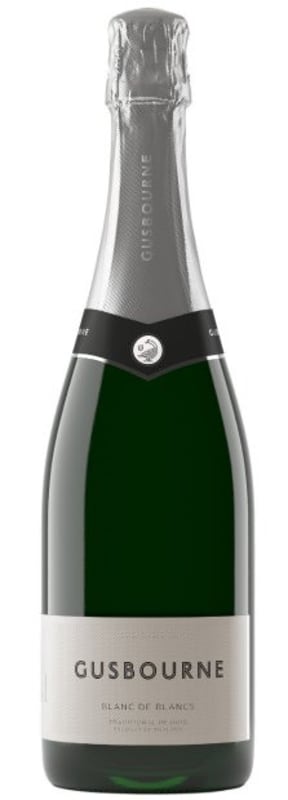


Winemaker Notes
This Blanc de Blancs typifies the linear purity of this classic style. They select their finest lots of Chardonnay that exhibit natural minerality, ensuring that the wine has both finesse and elegance as well as the requisite qualities for extended ageing.
Professional Ratings
-
Decanter
Taut and elegant with a fine mousse. Hawthorn and elderflower give way to crisp green apple and quince characters. The palate explodes with buttered brown toast and thickly spread lemon curd. Super crisp and long.
-
Wine Enthusiast
Blanc de blancs is a style at which England excels, and Gusbourne’s vintage bottling is a wonderfully elegant example. Delicate aromas of citrus blossom and green apple are underpinned by richer notes of raw nuts and cream, with a whisper of ginger spice. The palate is clean and crunchy, with a vivid, piercing line of acidity straight down the middle of the tongue. It’s broadened by a chalky texture. The fizz is fine and persistent, and there’s a long, lemon and-ginger finish. Editors’ Choice.
-
Robert Parker's Wine Advocate
The 2016 Brut Blanc de Blancs opens in the glass with aromas of crisp orchard fruit, white flowers and citrus zest framed by hints of pastry cream and fresh bread that's less overtly autolytic in profile than its 2015 counterpart. Medium to full-bodied, pure and precise, with racy acids and a delicate core of fruit, it's beautifully balanced and I suspect it will age very well indeed. I look forward to revisiting it in the future.


Representing the topmost expression of a Champagne house, a vintage Champagne is one made from the produce of a single, superior harvest year. Vintage Champagnes account for a mere 5% of total Champagne production and are produced about three times in a decade. Champagne is typically made as a blend of multiple years in order to preserve the house style; these will have non-vintage, or simply, NV on the label. The term, "vintage," as it applies to all wine, simply means a single harvest year.

The limestone soils of England’s southern end have proven ideal for the production of British sparkling wine. While it might seem too damp and cold for grape growing in England, recent warm summers and the onset of global warming signify great future growth for the British wine industry.