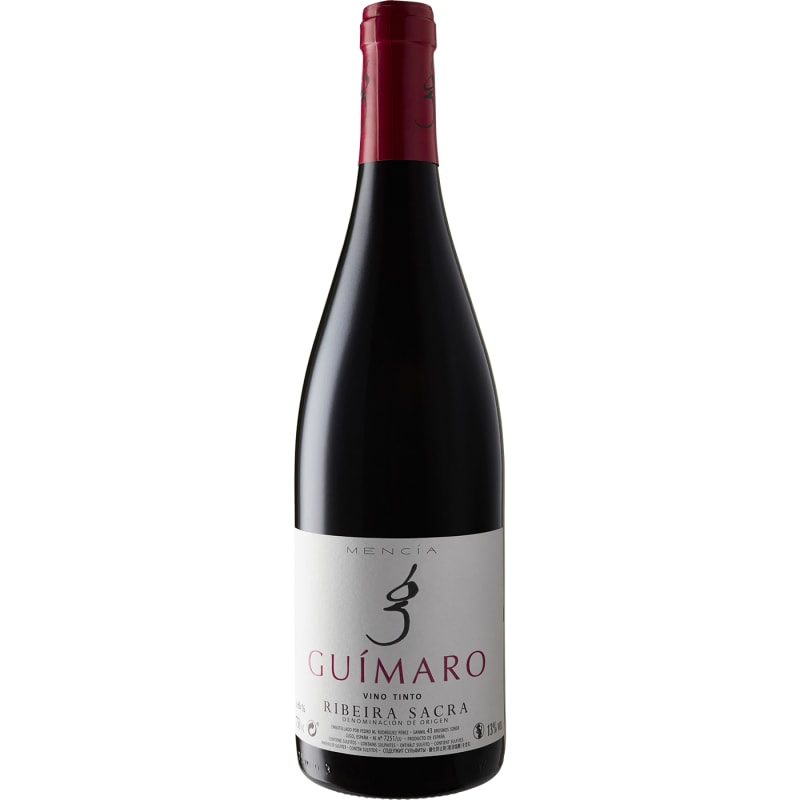


Winemaker Notes
Very versatile with food, pair with fatty seafood like tuna and swordfish, charcuterie, pork chops and spicy Asian foods.
Professional Ratings
-
Robert Parker's Wine Advocate
The young red 2021 Vino Tinto is one of the first 2021 reds from Galicia that I taste from bottle. 2021 is supposed to be a return to the conditions of the vintages from yesteryear—cooler and with less ripeness, lower alcohol and more acidity but also viticultural challenges. This is always a sure value, and it is mostly Mencía with some 15% other local reds (Brancellao, Merenzao, Garnacha Tintorera, Mouratón, Negreda, Sousón, Caíño...) sourced from old vineyards. It is young and fermented in stainless steel and was kept in contact with the lees for four to eight months before being bottled unoaked. This has a pale and bright color, denoting youth. The nose is very expressive and showy. It's low in alcohol (12.5%) and is a little lighter, fresh, fruit-driven and easy to drink. It was bottled a couple of weeks before I tasted it, in late January.


Primarily found in the Bierzo, Ribeira Sacra and Valdeorras regions of Spain and in the Dão of Portugal (where it is called Jaen), Mencia is an early ripening, low acid grape that can produce wines of great concentration, complexity and ageability. And yet Mencia once suffered from a poor reputation and deemed capable of producing simple and light red wines. Post-phylloxera growers would grow this variety on low, fertile plains, which produced high yields and uncomplicated finished wines. Somm Secret—The recent rediscovery of the ancient, abandoned vines planted on rugged hillsides of deep schist has unveiled the potential of Mencia and added discredit to its old reputation.

Located in the center of the Galician region in northern Spain, the Ribeira Sacra is one of Spain's most beautiful vineyard areas with stunningly breathtaking views. Vines are planted in the steep valleys and precipitous gorges of the Rivers Miño and Sil that wind through Galicia's lush green countryside. The Ribeira Sacra region has similar dramatic landscapes as the Mosel or Douro Valleys, but a more sparse population and a tranquility unmatched. The region gained official DO status in 1996.
Both white wine and red wine production are dominated by blends of local Galician grapes, with varietal wines being the exception. Today, while the region has seen some consolidation and modern stainless-steel equipment is widespread, winemaking remains artisanal. This reflects the tiny landholdings and farmhouse wineries, along with a traditional and predominantly organic approach to viticulture. With such low yields and often minuscule production levels, these wines are highly sought-after and can be difficult to find on the export market.
Ribeira Sacra DO’s principal white grape varieties tend to be highly fragrant and include Albariño, Doña Blanca, Godello, Loureira, Torrontés and Treixadura. Principal red grape varieties here include Mencía, Brancellao, Merenzao, Caiño, Sousón and Tempranillo.