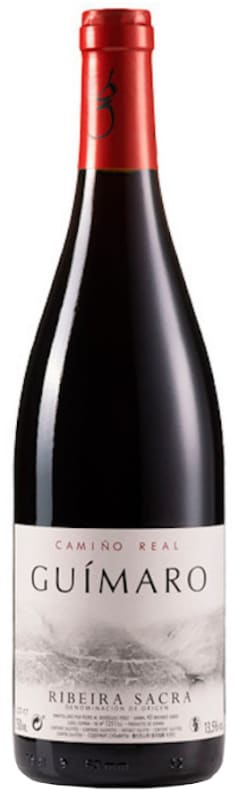


Winemaker Notes
From six hectares in Amandi planted primarily to 40 to 60 years old vine Mencía, along with other native Galician varieties. All of the grapes were hand-harvested together and spontaneously fermented with 100% whole clusters in open-top oak vats with a 40 day maceration. Half of the wine was raised in foudre and the other half in used 225 and 500L French barrels for around one year. The finished wine was bottled without fining or filtration.
Professional Ratings
-
James Suckling
This has subtle aromas of dried roses with a pleasant green note. Medium- to full-bodied with lovely tension and nerve, vivid fruit and a clean, well-constructed, fruit-forward finish. Great now, but better in a year or so.
-
Vinous
The 2022 Guímaro Camiño Real blends 80% Mencía with 20% other varieties from 50-year-old parcels in Amandi, Doade and Chanteiro. The 2022 fermented in tronco-conical wooden vats with 40% whole clusters and aged two-thirds in vats and one-third in barrels. It opens with aromas of roses, bramble, pomegranate and raspberry. Dry, smooth and fresh, it offers red fruit on the finish with a tea-like quality. The 2022 is a fruit-forward red that will evolve beautifully in the bottle.
Rating: 93-95 -
Robert Parker's Wine Advocate
There is a note of violets and a touch of smoked meat in the 2022 Camiño Real that took me to the Northern Rhône. They try to select vineyards from Amandi with 50+ years of age on different soils with an average of 80% Mencía and 20% other varieties. It fermented with 60% full clusters and matured in 500-liter barrels and 5,000-liter oak vats for some 10n months. It might have a little more weight this year and comes in at 13% alcohol, but it's very balanced and fresh, with fine tannins. It drinks beautifully now.
Rating: 93+


Primarily found in the Bierzo, Ribeira Sacra and Valdeorras regions of Spain and in the Dão of Portugal (where it is called Jaen), Mencia is an early ripening, low acid grape that can produce wines of great concentration, complexity and ageability. And yet Mencia once suffered from a poor reputation and deemed capable of producing simple and light red wines. Post-phylloxera growers would grow this variety on low, fertile plains, which produced high yields and uncomplicated finished wines. Somm Secret—The recent rediscovery of the ancient, abandoned vines planted on rugged hillsides of deep schist has unveiled the potential of Mencia and added discredit to its old reputation.

Located in the center of the Galician region in northern Spain, the Ribeira Sacra is one of Spain's most beautiful vineyard areas with stunningly breathtaking views. Vines are planted in the steep valleys and precipitous gorges of the Rivers Miño and Sil that wind through Galicia's lush green countryside. The Ribeira Sacra region has similar dramatic landscapes as the Mosel or Douro Valleys, but a more sparse population and a tranquility unmatched. The region gained official DO status in 1996.
Both white wine and red wine production are dominated by blends of local Galician grapes, with varietal wines being the exception. Today, while the region has seen some consolidation and modern stainless-steel equipment is widespread, winemaking remains artisanal. This reflects the tiny landholdings and farmhouse wineries, along with a traditional and predominantly organic approach to viticulture. With such low yields and often minuscule production levels, these wines are highly sought-after and can be difficult to find on the export market.
Ribeira Sacra DO’s principal white grape varieties tend to be highly fragrant and include Albariño, Doña Blanca, Godello, Loureira, Torrontés and Treixadura. Principal red grape varieties here include Mencía, Brancellao, Merenzao, Caiño, Sousón and Tempranillo.