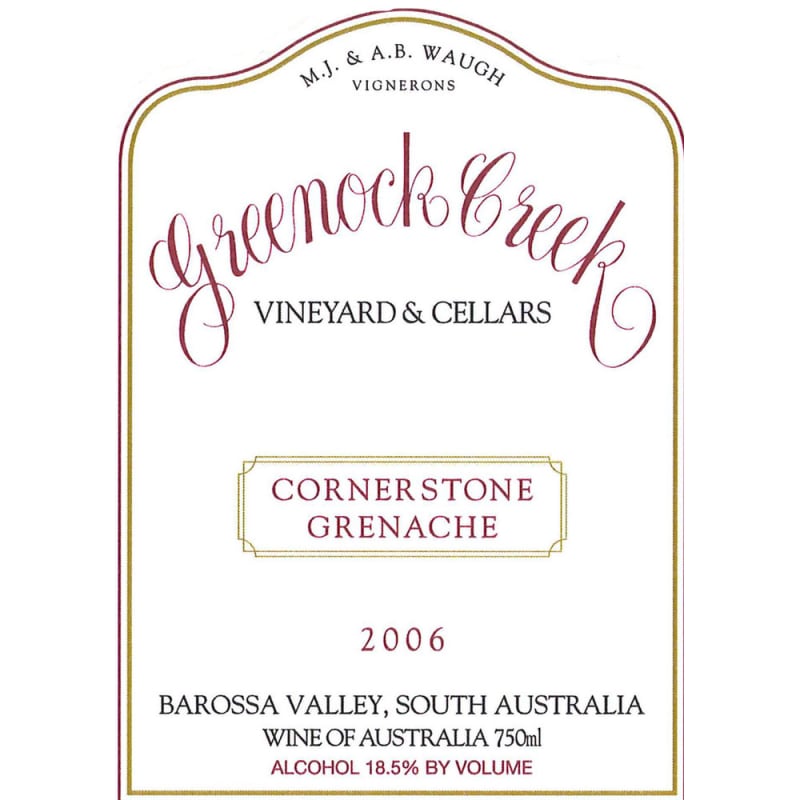

Winemaker Notes
It smells like aromatic prunus,deadly nightshade berries, marshmallow sugar, and a jammy trifle drenched in brandy. Its scarey, yet pretty,and fresh. Its alcohol brushes the nostrils like a warning shot of gunpowder, yet thats quickly mixed with freshvanilla bean, and below that wells a huge swell of blackberry and mulberry conserve. Coconut. Whippedcream. Tip it in, and youre awash with some weird pirates dessert liqueur, more evocative than JohnnyDepps wildest eyeshadowed dreaming.
Professional Ratings
-
Robert Parker's Wine Advocate
The opaque purple 2006 Cornerstone Grenache, sourced from a 63-year-old vineyard, was aged in a mix of new and used French oak hogsheads. It offers up an alluring bouquet of mineral, leather, and wild cherry leading to a full-bodied (18.5% alcohol), super-rich wine with no hard edges. Opulent and pleasure-bent, it could be likened to a great vintage of Henri Bonneau Chateauneuf du Pape on steroids.


Grenache thrives in any warm, Mediterranean climate where ample sunlight allows its clusters to achieve full phenolic ripeness. While Grenache's birthplace is Spain (there called Garnacha), today it is more recognized as the key player in the red blends of the Southern Rhône, namely Châteauneuf-du-Pape, Côtes du Rhône and its villages. Somm Secret—The Italian island of Sardinia produces bold, rustic, single varietal Grenache (there called Cannonau). California, Washington and Australia have achieved found success with Grenache, both flying solo and in blends.

Historically and presently the most important wine-producing region of Australia, the Barossa Valley is set in the Barossa zone of South Australia, where more than half of the country’s wine is made. Because the climate is very hot and dry, vineyard managers work diligently to ensure grapes reach the perfect levels of phenolic ripeness.
The intense heat is ideal for plush, bold reds, particularly Shiraz on its own or Rhône Blends. Often Shiraz and Cabernet partner up for plump and powerful reds.
While much less prevalent, light-skinned varieties such as Riesling, Viognier or Semillon produce vibrant Barossa Valley whites.
Most of Australia’s largest wine producers are based here and Shiraz plantings date back as far as the 1850s or before. Many of them are dry farmed and bush trained, still offering less than one ton per acre of inky, intense, purple juice.