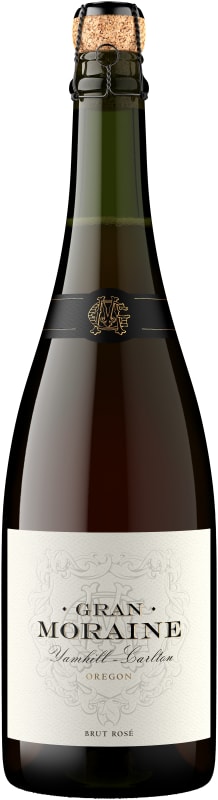


Winemaker Notes
Aromas of strawberry shortcake, canned pear, white peach, lightly toasted broiche, and rose petals. The palate flirts with tangerine, kumquat, nectarine on the finish with warm watermelon rind and lemon meringue pie. Balanced fatness and acidity on the texture, vibrant and exceptionally clean all the way through to the finish, phenomenally precise.
Blend: 57% Chardonnay, 43% Pinot Noir
Professional Ratings
-
James Suckling
Pretty, light and creamy, showing aromas of white peaches and wild strawberries. Mineral and delicate, offering bright bubbles and a long grapefruit finish. Lovely. Four years en tirage. Made with a perpetual reserve system. Dosage 5 g/L.
-
Wilfred Wong of Wine.com
COMMENTARY: The Gran Moraine Brut Rosé is fresh, lovely, and persistent. TASTING NOTES: This wine sails onto the palate with red fruit flavors that lasts long and crisp in the finish. Pair it with grilled salmon. (Tasted: May 11, 2021, San Francisco, CA)
-
Wine Spectator
This sparkler is fragrant and dusty dry, offering lovely strawberry, watermelon and rose petal accents that finish on a steely note.


What are the different types of sparkling rosé wine?
Rosé sparkling wines like Champagne, Prosecco, Cava, and others make a fun and festive alternative to regular bubbles—but don’t snub these as not as important as their clear counterparts. Rosé Champagnes (i.e., those coming from the Champagne region of France) are made in the same basic way as regular Champagne, from the same grapes and the same region. Most other regions where sparkling wine is produced, and where red grape varieties also grow, also make a rosé version.
How is sparkling rosé wine made?
There are two main methods to make rosé sparkling wine. Typically, either white wine is blended with red wine to make a rosé base wine, or only red grapes are used but spend a short period of time on their skins (maceration) to make rosé colored juice before pressing and fermentation. In either case the base wine goes through a second fermentation (the one that makes the bubbles) through any of the various sparkling wine making methods.
What gives rosé Champagne and sparkling wine their color and bubbles?
The bubbles in sparkling wine are formed when the base wine undergoes a secondary fermentation, which traps carbon dioxide inside the bottle or fermentation vessel. During this stage, the yeast cells can absorb some of the wine’s color but for the most part, the pink hue remains.
How do you serve rosé sparkling wine?
Treat rosé sparkling wine as you would treat any Champagne, Prosecco, Cava, and other sparkling wine of comparable quality. For storing in any long-term sense, these should be kept at cellar temperature, about 55F. For serving, cool to about 40F to 50F. As for drinking, the best glasses have a stem and a flute or tulip shape to allow the bead (bubbles) and beautiful rosé hue to show.
How long do rosé Champagne and sparkling wine last?
Most rosé versions of Prosecco, Champagne, Cava or others around the “$20 and under” price point are intended for early consumption. Those made using the traditional method with extended cellar time before release (e.g., Champagne or Crémant) can typically improve with age. If you are unsure, definitely consult our Customer Care team for guidance.

Yamhill-Carlton, characterized by pastoral, rolling hills composed of shallow, quick-draining, ancient marine soil, is ideal for Pinot noir and other cool-climate-loving varieties. It is in the rain shadow of the Coast Range to its west, whose highest point climbs to an altitude of 3,500 feet. Yamhill-Carlton is actually surrounded by mountains on three sides: Chehalem Mountains to the north, the Dundee Hills to the east and the western Coast Range to its west, which, when it lets Pacific air through, serves to cool the region.
Vineyards grow on the ridges surrounding the two small communities of Yamhill and Carlton and cover about 1,200 acres of this 60,000 acre region, which roughly makes a horse-shoe shape on a map.