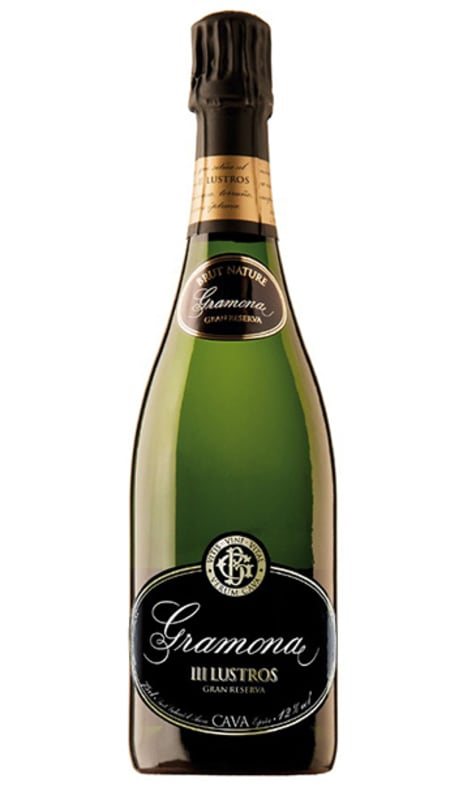


Winemaker Notes
Straw hue with golden highlights. Intense with clear notes of maturity under a constant veil of freshness. Baked apple and sweet pears. Ripe citrus, grapefruit peel. Faded flowers and a herbal backdrop reminiscent of fennel and rosemary. The ageing notes run through a gamut of aromas which includes hazelnuts, pastries, toast, brioche and toffee. The cava becomes more and more expressive as it opens up in the glass. Powerful on entry with great structure. The carbon dioxide is fine and creamy. Loads of candied fruit balanced by the notes from ageing. The balsamic aromas come through again. Lively, refreshing finish on the palate. The aftertaste is never-ending.
This is very much a cava for enjoying with good food. With its balance of structure, creaminess and freshness, it works well with all food types and recipes. Appetizers, foie gras, terrines and cold meats. Seafood and fish. Poultry and even rice dishes, stews and hotpots.
Professional Ratings
-
James Suckling
Very attractive smoke and candied lemon-peel nose. Then a lot of power on the very dry palate, but more than enough freshness to carry the long finish.
-
Wine Enthusiast
Peachy aromas are slightly briny and suggestive of scrambled eggs. This is a touch flat on the palate, without much activity or punch. Minerally apple flavors finish with notes of green herb and stone fruit pit, while this is smooth as well as quiet on the finish.


Representing the topmost expression of a Champagne house, a vintage Champagne is one made from the produce of a single, superior harvest year. Vintage Champagnes account for a mere 5% of total Champagne production and are produced about three times in a decade. Champagne is typically made as a blend of multiple years in order to preserve the house style; these will have non-vintage, or simply, NV on the label. The term, "vintage," as it applies to all wine, simply means a single harvest year.

A superior source of white grapes for the production of Spain’s prized sparkling wine, Cava, the Penedes region is part of Catalunya and sits just south of Barcelona. Medio Penedès is the most productive source of the Cava grapes, Macabeo, Xarel-lo, and Parellada. Penedes also grows Garnacha and Tempranillo (here called Ull de Llebre in Catalan), for high quality reds and rosès.